
A considered reference · 25 subjects

The Watch Reference Library

Connect the mechanisms, functions and companies that shape the way we measure time.

Independent educational writing, with sources attached to each subject. This edition is a defined selection; the library continues to grow.

The visual archive

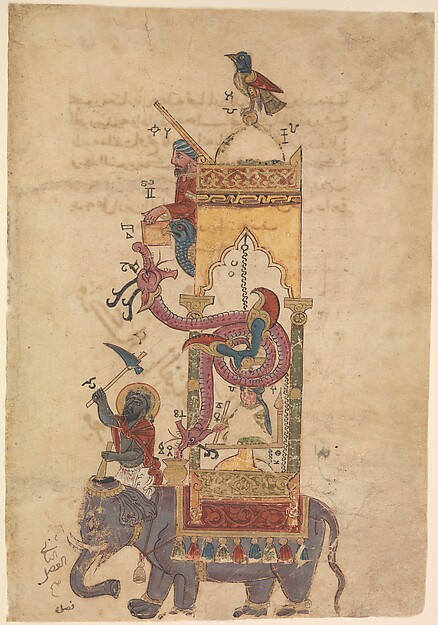
"The Elephant Clock", Folio from a Book of the Knowledge of Ingenious Mechanical Devices by al-Jazari
"The Elephant Clock", Folio from a Book of the Knowledge of Ingenious Mechanical Devices by al-Jazari"The Elephant Clock", Folio from a Book of the Knowledge of Ingenious Mechanical Devices by al-Jazari · dated 715 AH/1315 CEThe Metropolitan Museum of Art · CC0 / Public domain · License
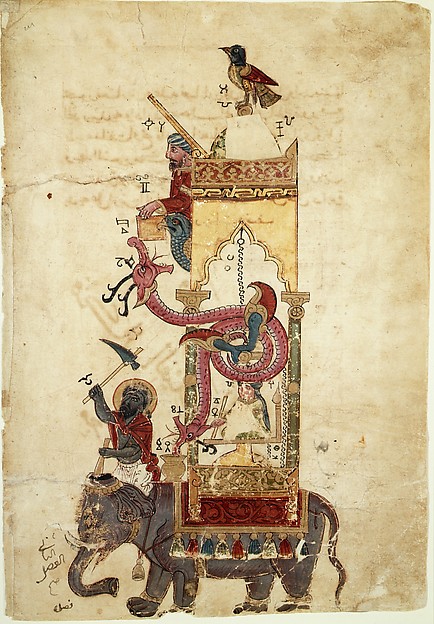
"The Elephant Clock", Folio from a Book of the Knowledge of Ingenious Mechanical Devices by al-Jazari — additional museum view
"The Elephant Clock", Folio from a Book of the Knowledge of Ingenious Mechanical Devices by al-Jazari"The Elephant Clock", Folio from a Book of the Knowledge of Ingenious Mechanical Devices by al-Jazari · dated 715 AH/1315 CE · Additional museum viewThe Metropolitan Museum of Art · CC0 / Public domain · License
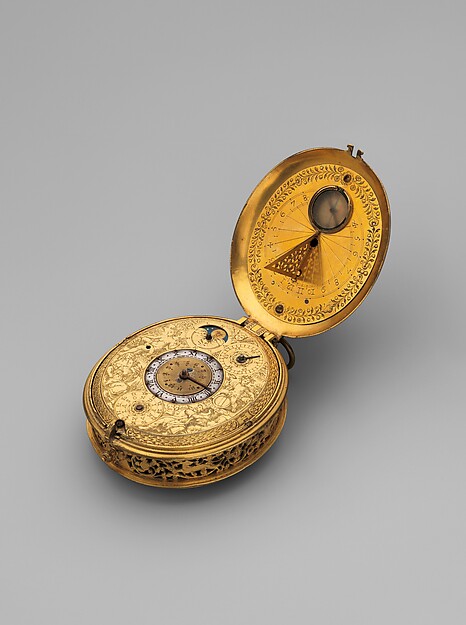
Clock watch with astronomical dial and sundial
Clock watch with astronomical dial and sundialClock watch with astronomical dial and sundial · ca. 1605–10The Metropolitan Museum of Art · CC0 / Public domain · License
01Watch concepts

How to read a watch: three questions before the brand name

Read purpose, power and function separately, then bring them together in one clear description.

Introductory visual literacy with reference-specific examples. Catalogue descriptions do not establish the condition, authenticity or suitability of an individual watch.

Reading time
4 minutes
Guide reviewed
2026-10-04

Begin with purpose, not prestige

Before reading a logo, look at what the watch makes easy. Can you identify the minute hand immediately? Is there an obvious scale for measuring an interval? Does the case appear compact, broad, long or thick? These questions turn a photograph into something to investigate. Labels such as dress, dive and pilot describe overlapping design traditions; they do not tell you everything about the mechanism or establish a ranking of quality.

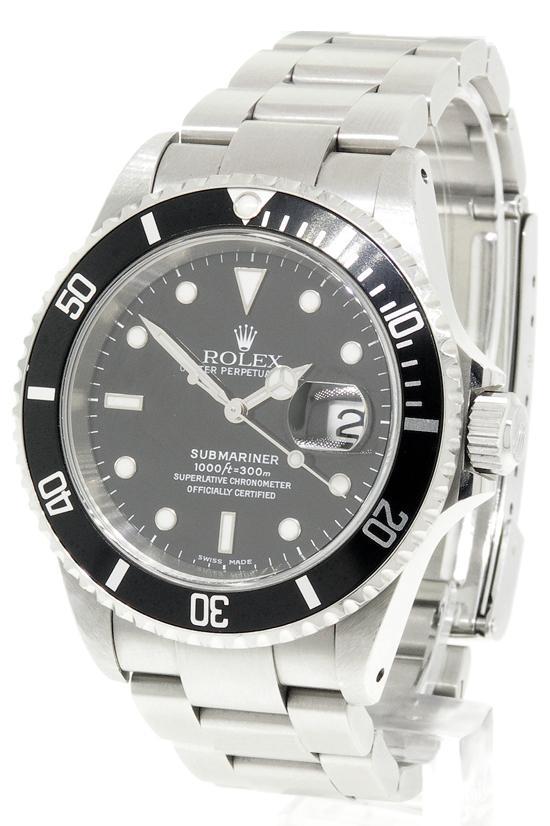
The Rolex Submariner reference 124060 is a useful concrete example. Its broad hands, luminous markers and rotating minute scale make time and elapsed-time readings prominent. First describe those visible choices; only then consult the maker’s specifications. A familiar underwater silhouette does not establish the present water resistance of an individual watch, and a photograph cannot tell you how its bracelet feels on your wrist.

Evidence: Rolex: Submariner reference 124060

Then ask where its energy comes from

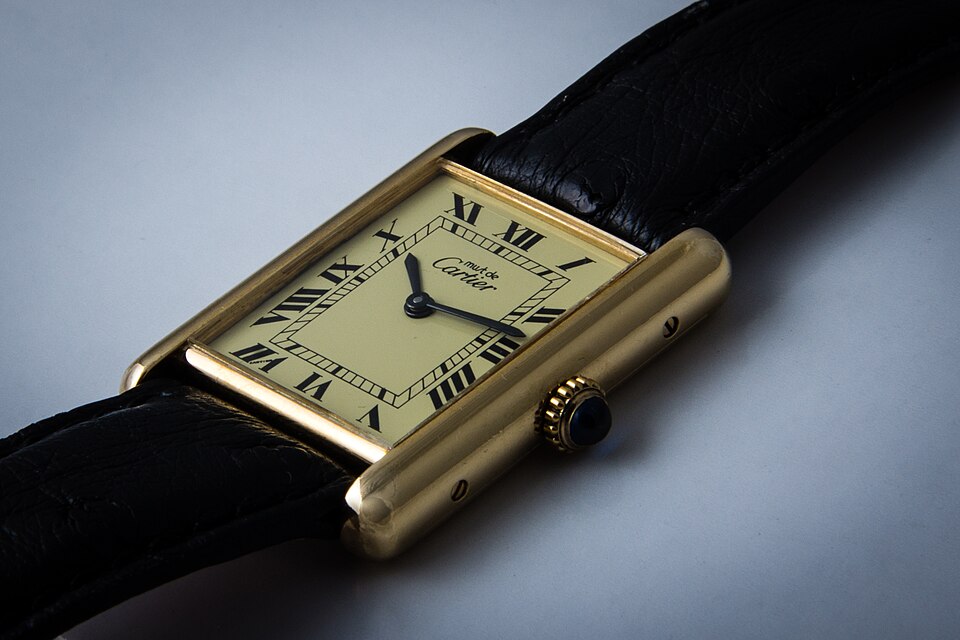
Mechanical watches store energy in a mainspring. Manual winding replenishes it through the crown; automatic winding adds a weight that moves with the watch. Both remain mechanical. Quartz describes an electronic timing reference, while analogue describes a display with hands. The two words answer different questions. Cartier’s user guide identifies the Tank Must WSTA0041 as quartz: its traditional-looking hands do not make it a mechanical watch.

Keep a second distinction in mind: the energy supply is not the same thing as the regulating system. A light-powered watch can still be quartz. A watch’s power reserve describes its available running time under stated conditions, not its daily accuracy. If an unfamiliar specification combines several terms, separate them into energy, regulation and display before deciding that the description is contradictory.

Evidence: FH: Mechanical watch and quartz watch, Cartier: Tank Must WSTA0041 user guide, Citizen: Eco-Drive technology, Patek Philippe: Glossary

Finally, identify the additional functions

A complication provides something beyond straightforward time indication. A chronograph measures an interval; a calendar supplies date information; a travel display follows another time zone. A chronometer label concerns tested timekeeping performance. A watch may be both a chronograph and a chronometer, but neither term implies the other. The useful question is what each hand, window or scale actually communicates.

Do not assume a long central seconds hand always shows ordinary running seconds, or that every small dial is a chronograph counter. Nor does an exposed mechanism necessarily add a function: opening the dial changes what you can see. Read the model description and its diagram before touching controls. Identifying a pusher visually is different from knowing which operation it safely performs.

Evidence: FH: Chronograph, chronometer, complication

Make a description that another reader can check

Try three separate sentences. First describe the appearance: a rectangular case, two hands and a restrained dial, for example. Next record the documented movement type and exact reference. Finally list the stated functions. This simple method keeps observations separate from specifications and prevents a nickname from doing the work of an identification.

Compare the quartz Tank Must WSTA0041 with the self-winding Submariner 124060. Both use hands, but their energy systems and reading priorities differ. The Submariner’s bezel adds an elapsed-time reference without turning the watch into a chronograph. A comparison can explain these differences without deciding that one watch is inherently more serious. It can also mark what remains unknown: condition, fit and service history need evidence beyond a catalogue.

Evidence: Cartier: Tank Must WSTA0041 user guide, Rolex: Submariner reference 124060, FH: Chronograph, chronometer, complication

A small vocabulary for looking closely

Calibre means the movement design or designation. The crown is a control used for setting and, on many mechanical watches, winding. A pusher is a separate control pressed to operate a function. An aperture is an opening in the dial through which information appears. The crystal is the transparent cover; lugs are the projecting attachments that help hold a strap or bracelet.

Use these words to describe relationships rather than to decorate a sentence. “A date aperture at three o’clock” locates a display. “The crown is on the right” locates a control. Neither statement proves how the calendar is adjusted. Learning the nouns should make your next question more precise, not make an uncertain identification sound certain.

Evidence: Patek Philippe: Glossary

Self-check: describe before you operate

Choose an official image of a watch and write down three things you can see, three things its specifications establish, and one thing you cannot know from either. Then ask: does a watch with hands have to be mechanical? Does a rotating timing bezel make it a chronograph? Does a longer reserve prove better accuracy? The answers are no, no and no; each confuses separate categories.

Finish with one honest sentence: “This is a [movement type] watch, reference [identifier], showing [functions], with [one observed design detail].” Leave a blank where the evidence is missing. This is a reading exercise; there is no need to wind, open, immerse or test a watch to complete it.

Evidence: FH: Mechanical watch and quartz watch, FH: Chronograph, chronometer, complication, Rolex: Submariner reference 124060

Choose your next reading path

Continue to Mechanical, quartz and Spring Drive for the energy chain, then Chronograph and chronometer for timing vocabulary. Use Dive watches and water resistance when a bezel or depth rating catches your eye. Finally, read Watchmaking beyond the logo to separate the maker, collection, reference and calibre. Return to the same photograph afterwards: the aim is to notice more, not simply memorise more names.

Evidence: FH: Mechanical watch and quartz watch, FH: Chronograph, chronometer, complication

Sources & reading

Original educational explanation. Section sources support technical and historical statements; comparisons, reading paths and paper exercises are editorial teaching devices. These pages are not operating manuals, authentication reports or purchase recommendations. Source review dates are inherited from the supplied research packet; the review export does not claim fresh verification.

  1. Rolex: Submariner reference 124060primary · 2026-10-04

    Manufacturer specification for this reference; no independent test or permission for an unexamined watch is implied.

  2. FH: Mechanical watch and quartz watchprimary · 2026-10-04

    Used for energy, winding and display principles only; dated market statistics and blanket accuracy claims are not repeated.

  3. Cartier: Tank Must WSTA0041 user guideprimary · 2026-10-04

    Reference-specific quartz identification, not a claim about every Tank or current retail configuration.

  4. Citizen: Eco-Drive technologyprimary · 2026-10-04

    Charging principle only; no generic charging time, lifetime or maintenance promise is imported.

  5. Patek Philippe: Glossaryprimary · 2026-10-04

    Used narrowly for case/movement terminology, gongs and explicit grande/petite-sonnerie behavior; historical product counts are ignored.

  6. FH: Chronograph, chronometer, complicationprimary · 2026-10-04

    Terminology only; no universal chronometer numerical limit is inferred.

  7. FH: Mechanical watch and quartz watchprimary · 2026-10-03 · Earlier edition source retained

    Primary sources linked below support the historical and technical account. Observational questions and explanatory comparisons are original editorial interpretation.
  8. FH: Chronograph, chronometer, complicationprimary · 2026-10-03 · Earlier edition source retained

    Primary sources linked below support the historical and technical account. Observational questions and explanatory comparisons are original editorial interpretation.

02Watch concepts

Mechanical, quartz and Spring Drive

A movement is the timekeeping engine. Understanding its energy source and regulator makes its behaviour much easier to explain.

Educational overview. Specifications and operating instructions vary by exact reference and production period.

A useful comparison starts with four questions

Ask what supplies the energy, what establishes the timing reference, how the time is displayed, and what the exact calibre promises. Manual and automatic describe winding; they are not competing kinds of oscillator. Likewise, light power describes an electrical supply and does not stop the movement being quartz. Spring Drive retains a spring-powered train but uses electronic reference and braking. A single badge rarely answers all four questions.

Use the movement lab above to follow those separate paths. Then turn to the individual instructions for winding, charging and setting. A movement family is useful for understanding principles; an owner’s routine depends on the reference, including whether the seconds hand stops during setting, how its calendar should be adjusted, and which reserve indication it provides.

Evidence: FH: Mechanical watch and quartz watch, Citizen: Eco-Drive technology, Grand Seiko: Spring Drive

Read the units before comparing the numbers

An accuracy figure needs a time interval and a test context. Grand Seiko’s mechanical comparison distinguishes a tested mean daily rate from normal usage accuracy. Its 9F quartz table states an annual accuracy specification. Comparing the bare numbers while dropping “per day” or “per year” produces an answer to a question no manufacturer actually asked.

For an arithmetic illustration, a hypothetical constant gain of 3 seconds a day would accumulate to 21 seconds over seven days. That calculation does not predict a real watch: rate may vary with conditions. Nor should an annual tolerance simply be divided into a guaranteed daily result. Check the stated conditions and reference before drawing a performance comparison.

Evidence: Grand Seiko: Mechanical movement comparison, Grand Seiko: 9F quartz mechanism and specifications

Reserve describes endurance, not punctuality

Power reserve asks how long the movement can continue under specified conditions after winding or charging. Accuracy asks how well its time agrees with a reference. A long reserve and a small timing deviation measure different achievements. A spring-powered watch left for the weekend may stop; a light-powered watch kept in a dark drawer may need a charging plan. Neither event alone identifies a defect.

Start with the current instructions, rather than a generic number for the movement family. Reserve, power saving and charge warnings differ between calibres. Citizen, for example, describes an insufficient-charge indication in which the seconds hand advances in two-second intervals. An unusual step pattern can carry an operational message; it should not automatically be read as evidence of a different movement type.

Evidence: Citizen: Eco-Drive technology, Grand Seiko: Spring Drive, Grand Seiko: Mechanical movement comparison

Keep a small observation log

This is an original owner-observation exercise, not a laboratory test. Compare with the same reliable time reference at roughly the same time each day. Record the watch’s offset, elapsed time, whether it was reset, approximate wearing hours and how it rested overnight. Keep identifying numbers private. Several ordinary observations are more informative than one hurried glance.

Use signed offsets: plus means the watch is ahead, minus means behind. If a watch is 4 seconds ahead on Monday and 13 seconds ahead at the same time on Thursday, with no reset, its offset changed by 9 seconds in three days: an observed average gain of 3 seconds a day over that interval. The result describes that interval and your reading method. It does not locate a fault, certify the movement or reveal its performance in unobserved positions.

For a high-accuracy quartz watch, daily reading uncertainty may be larger than the change you are trying to observe. Keep the observation period and uncertainty in view. If there is a persistent marked change from familiar behaviour, share the record with a service provider. Do not open the case or adjust regulating components as part of this exercise.

Original editorial exercise and owner questions; no diagnostic or certification claim.

A smooth hand is a display clue

Grand Seiko explains that its 9F seconds hand receives two rapid pulses per second which appear as one step to the eye. Its Spring Drive system produces a continuous glide through electronic braking. Those are documented implementations, not a universal visual identification key. A photograph or a short video may hide the very timing detail the viewer thinks it proves.

Finish by matching the mechanism to a routine, rather than declaring one family the winner. Consider winding or charging, intended use, the setting experience and realistic care. Follow the connected guides for the difference between a chronometer test and everyday observation, and for agreeing a service brief. Understanding a movement should make ownership calmer and more precise.

Evidence: Grand Seiko: Spring Drive, Grand Seiko: 9F quartz mechanism and specifications

Open the focused study

Reading time
6 minutes

The mechanical chain

In a conventional mechanical movement, a wound mainspring stores energy. Gears convey that energy, the escapement releases it in controlled increments, and the balance and spring establish the rhythm. Hand-wound watches ask the wearer to replenish the spring through the crown. Automatic watches add an oscillating weight that can wind it through movement of the wrist. Neither system creates energy from nothing.

The practical question is not which label sounds more sophisticated, but how the mechanism fits a routine. Someone rotating several watches will experience winding and setting differently from someone wearing one watch daily. A display back can make the energy path more visible, but visibility is not itself a performance certificate.

Evidence: FH: Mechanical watch and quartz watch, Citizen: Eco-Drive technology, Grand Seiko: Spring Drive

Quartz and light-powered quartz

A quartz oscillator provides an electronic timing reference. Hands do not prove that a watch is mechanical: analogue quartz watches use an electrically driven motor and a gear train. Citizen’s Eco-Drive is an instructive charging example. Light is converted to electricity and surplus energy is stored in a rechargeable cell. “Solar” therefore describes the energy supply, rather than a competing form of time indication.

A light-powered watch still needs appropriate charging conditions. Its reserve in darkness, charging time and power-saving behaviour depend on the calibre. “No routine battery replacement” should not be stretched into a claim that every component lasts indefinitely or the watch never needs attention.

Evidence: FH: Mechanical watch and quartz watch, Citizen: Eco-Drive technology, Grand Seiko: Spring Drive

Where Spring Drive fits

Grand Seiko’s Spring Drive is powered by a mainspring, but regulates the motion through a quartz reference, an integrated circuit and electromagnetic braking. The unwinding spring also generates the small electrical supply for that regulating system. The result is the characteristic continuously gliding seconds hand. It is best explained on its own terms rather than squeezed into the ordinary battery-quartz versus traditional-mechanical distinction.

Grand Seiko introduced its 9R Spring Drive in 2004. Individual calibres differ, so precision, reserve and winding information should always be checked at reference level. A movement family explains a principle; it does not guarantee that every watch carrying the name has identical specifications.

Evidence: FH: Mechanical watch and quartz watch, Citizen: Eco-Drive technology, Grand Seiko: Spring Drive

Sources & reading

  1. FH: Mechanical watch and quartz watchprimary · 2026-10-03

    Primary sources linked below support the historical and technical account. Observational questions and explanatory comparisons are original editorial interpretation.
  2. Citizen: Eco-Drive technologyprimary · 2026-10-03

    Primary sources linked below support the historical and technical account. Observational questions and explanatory comparisons are original editorial interpretation.
  3. Grand Seiko: Spring Driveprimary · 2026-10-03

    Primary sources linked below support the historical and technical account. Observational questions and explanatory comparisons are original editorial interpretation.

  4. Grand Seiko: Mechanical movement comparison

    Manufacturer explanation and named-calibre specifications; mean daily rate and normal usage accuracy have different contexts.

  5. Grand Seiko: 9F quartz mechanism and specifications

    Named 9F implementation only; not every quartz watch. Annual accuracy is not a daily certification result.

03Watch concepts

Chronograph and chronometer are different ideas

One measures elapsed time; the other concerns tested timekeeping performance. A watch can be either, both or neither.

Educational overview. Specifications and operating instructions vary by exact reference and production period.

Open the focused study

Reading time
2 minutes

Reading the elapsed-time instrument

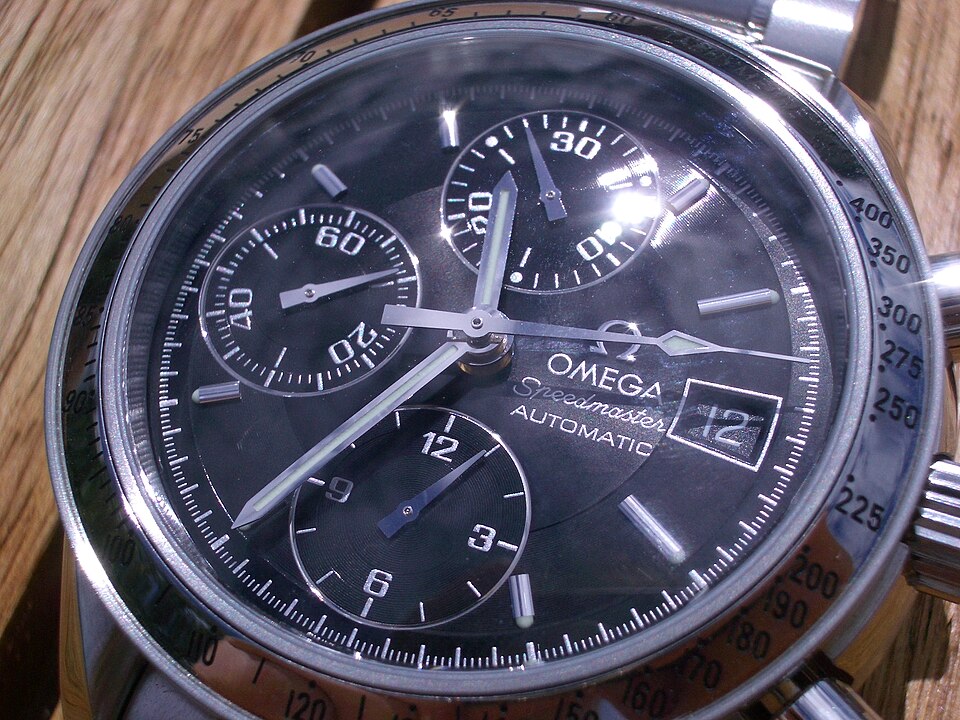
A chronograph supplements ordinary time indication with a timer that can be started, stopped and reset. On many analogue models, the long central seconds hand belongs to the chronograph, while a smaller subdial carries continuously running seconds. Reading a photograph without identifying these roles can make a perfectly functioning watch seem stopped. The number and arrangement of counters vary; do not assume every counter records the same interval.

Evidence: FH: Chronograph, chronometer, complication, Patek Philippe: Chronograph watches, COSC: Chronograph or chronometer?, COSC: Chronometer Certified

Two useful chronograph variations

A flyback lets the running chronograph return to zero and begin another interval in a single operation. It is useful for successive measurements. A split-seconds, or rattrapante, uses an additional chronograph hand to record an intermediate reading while the main elapsed-time measurement continues. These solve different problems: restarting a measurement is not the same as holding an intermediate time.

Patek Philippe’s technical explanations provide concrete examples of flyback architecture and a history of split-seconds wrist chronographs. The name on the dial alone does not tell you the safe operating sequence. Ordinary chronographs should not be treated as flybacks; consult the model’s instructions before pressing reset during timing.

Evidence: FH: Chronograph, chronometer, complication, Patek Philippe: Chronograph watches, COSC: Chronograph or chronometer?, COSC: Chronometer Certified

What certification does and does not say

A chronometer label relates to precision testing. COSC tests mechanical and quartz instruments under programmes appropriate to their construction; its mechanical certification uses defined positions and temperatures. A laboratory result is meaningful evidence about a stated test, not a promise that an owner will see the same deviation every day in every circumstance.

Ask which organisation tested the watch, whether the programme concerns the movement or the completed watch, and what limits apply to that particular certification. Do not turn the familiar mechanical daily-rate figures into a universal rule for quartz or every modern testing scheme. Equally, an uncertified watch is not automatically inaccurate: absence of a particular certificate is different from a measured failure. These distinctions make technical comparisons more useful than reading “chrono” as a general synonym for quality.

Evidence: FH: Chronograph, chronometer, complication, Patek Philippe: Chronograph watches, COSC: Chronograph or chronometer?, COSC: Chronometer Certified

Sources & reading

  1. FH: Chronograph, chronometer, complicationprimary · 2026-10-03

    Primary sources linked below support the historical and technical account. Observational questions and explanatory comparisons are original editorial interpretation.

  2. Patek Philippe: Chronograph watchesprimary · 2026-10-03

    Primary sources linked below support the historical and technical account. Observational questions and explanatory comparisons are original editorial interpretation.

  3. COSC: Chronograph or chronometer?primary · 2026-10-03

    Primary sources linked below support the historical and technical account. Observational questions and explanatory comparisons are original editorial interpretation.

  4. COSC: Chronometer Certifiedprimary · 2026-10-03

    Primary sources linked below support the historical and technical account. Observational questions and explanatory comparisons are original editorial interpretation.

04Watch concepts

Date, annual calendar and perpetual calendar

Understand what the mechanism remembers, what the dial displays and when the owner still has to intervene.

Calendar principles and reference-specific examples, checked 4 October 2026. No universal setting sequence is supplied; the exact watch manual governs adjustment.

Reading time
4 minutes
Guide reviewed
2026-10-04

Start with the month-end problem

A basic mechanical date display usually follows a 31-day cycle. After a 30-day month, it needs help to reach the first of the next month; February also needs correction. An annual calendar handles the difference between 30 and 31 days but leaves the February-to-March transition to its owner. These descriptions assume that the watch has stayed running and remains correctly set. A stopped watch does not continue remembering the passing days by itself.

Patek Philippe introduced its Annual Calendar in 1996. Its 5205 provides a useful display example, with day, date and month arranged in three apertures. Those windows tell you what information is visible, not how much calendar logic lies underneath. A complete calendar can show day, date and month without automatically managing their irregular lengths. Read the mechanism’s description instead of counting indicators.

Evidence: Patek Philippe: Calendar watches, Vacheron Constantin: Complete-calendar care explanation

The perpetual calendar’s longer memory

A conventional perpetual calendar incorporates the four-year leap-year pattern. The Gregorian rule is slightly more demanding: years divisible by four are leap years, except century years that are not divisible by 400. Thus 2000 and 2400 qualify, while 2100 does not. A mechanism programmed only for the four-year cycle needs help at that exception. “Perpetual” is a watchmaking category, not a promise that every such watch handles every future date.

IWC’s Big Pilot’s Watch Perpetual Calendar IW503605 offers a clear example. Its 2021 technical release describes connected indications adjusted from one crown and identifies 2100 as a correction point. The four-digit year display does not remove that limitation. Showing a year and calculating every rule associated with that year are different engineering tasks; a generous display range should never be mistaken for an unlimited calendar programme.

Evidence: US Naval Observatory: Leap years, IWC: Big Pilot’s Watch Perpetual Calendar, 2021 technical release

Living with a mechanical calendar

Before correcting a calendar, identify the exact reference and calibre, find the matching instructions, and check the permitted adjustment times and directions. There is no safe universal shortcut based on the words annual or perpetual. If the indications disagree or the correct procedure is unclear, stop and ask the manufacturer or a qualified watchmaker rather than experimenting with the correctors.

Designs can change substantially while retaining familiar-looking dials. IWC’s 2026 ProSet, using calibre 82665, explicitly adds synchronised forward and backward crown adjustment. That is a property of this construction, not permission to reverse an older IWC calendar. The contrast shows why a current brand overview cannot replace the manual belonging to the watch in front of you.

Evidence: IWC: Perpetual Calendar IWC-ProSet, 2026 technical release

The same result can come from different mechanisms

Mechanical calendar programmes encode information through the shapes and relationships of parts. One approach starts from a long month and advances past dates that should not appear. MB&F describes a different approach in the Legacy Machine Perpetual, developed with Stephen McDonnell: begin with a 28-day baseline, then add the extra days required. Both approaches aim to keep the displayed date aligned with the calendar, but they need not share the same construction or setting behavior.

Display design is another independent choice. Patek Philippe’s 5236 groups day, date and month into one broad in-line aperture. It can look more visually compact than a calendar with several subdials while still carrying a perpetual mechanism. A calm dial is not evidence of a simple movement; a crowded dial is not proof of a more capable calendar.

Evidence: MB&F: Legacy Machine Perpetual, Patek Philippe: Calendar watches

Calendar terms, including the Moon

Date means the numbered day of the month; weekday identifies Monday through Sunday. A leap-year indicator tells you the mechanism’s position in its four-year programme. A corrector is a control for changing an indication, not an invitation to press it whenever convenient. “Instantaneous” describes the manner of a display change; it does not, by itself, identify an annual or perpetual calendar.

A moon-phase display follows a different cycle: the Moon’s changing illuminated appearance. It is not simply a date display with a picture. A maker’s theoretical moon-phase error interval assumes appropriate running and setting; it is not the watch’s power reserve, service interval or guarantee of centuries without intervention. Keep civil-calendar logic, astronomical indication and maintenance on separate lines of your notes.

Evidence: Patek Philippe: Glossary, US Naval Observatory: Phases of the Moon, IWC: Big Pilot’s Watch Perpetual Calendar, 2021 technical release

Self-check: three midnight transitions

On paper, imagine correctly set, continuously running examples of a simple date, an annual calendar and a conventional four-year perpetual. What happens after 30 April? The simple date needs correction; the other two should recognise the short month. What happens at the end of an ordinary February? The annual needs correction, while the perpetual should handle the change. What is special about February 2100? The century exception exceeds the ordinary four-year programme.

Now look at a calendar photograph and ask what evidence would distinguish those three mechanisms. The answer is a reliable reference-level description or manual, not the number of windows. Do not create these scenarios by advancing an unfamiliar real watch: the paper comparison teaches the principle without imposing an operating sequence.

Evidence: Patek Philippe: Calendar watches, US Naval Observatory: Leap years

A reading path from dates to ownership

Read the Patek Philippe and IWC profiles for contrasting calendar traditions, then Servicing and restoration for the difference between maintaining a mechanism and preserving an object. If a calendar is combined with travel time, use the GMT reading-room study next. Ask which time display drives the date; the answer belongs to the particular calibre, not to the GMT label alone.

Evidence: Patek Philippe: Calendar watches, IWC: Big Pilot’s Watch Perpetual Calendar, 2021 technical release

Sources & reading

Original educational explanation. Section sources support technical and historical statements; comparisons, reading paths and paper exercises are editorial teaching devices. These pages are not operating manuals, authentication reports or purchase recommendations. Source review dates are inherited from the supplied research packet; the review export does not claim fresh verification.

  1. Patek Philippe: Calendar watchesprimary · 2026-10-04

    Used for calendar categories, 1996 introduction and named display examples; no universal first claim beyond Patek’s named invention.

  2. Vacheron Constantin: Complete-calendar care explanationprimary · 2026-10-04

    Official indexed passage read; direct page retrieval failed. Used only to distinguish day/date/month display from automatic month-length management. No annual-calendar leap-year wording or operating instructions are imported.

  3. US Naval Observatory: Leap yearsprimary · 2026-10-04

    Civil-calendar arithmetic, not operating instructions for any watch.

  4. IWC: Big Pilot’s Watch Perpetual Calendar, 2021 technical releaseprimary · 2026-10-04

    Claims belong to IW503605/calibre 52615 as described in the dated 7 April 2021 release.

  5. IWC: Perpetual Calendar IWC-ProSet, 2026 technical releaseprimary · 2026-10-04

    Dated 14 April 2026; backward-setting permission applies to the ProSet construction, not earlier IWC calendars.

  6. MB&F: Legacy Machine Perpetualprimary · 2026-10-04

    Manufacturer explanation and named design credit; its absolute safety/robustness language is not adopted.

  7. Patek Philippe: Glossaryprimary · 2026-10-04

    Used narrowly for case/movement terminology, gongs and explicit grande/petite-sonnerie behavior; historical product counts are ignored.

  8. US Naval Observatory: Phases of the Moonprimary · 2026-10-04

    Astronomical explanation of lunar phases only; watch-display approximations vary by calibre.

  9. Patek Philippe: Calendar watchesprimary · 2026-10-03 · Earlier edition source retained

    Primary sources linked below support the historical and technical account. Observational questions and explanatory comparisons are original editorial interpretation.

  10. Patek Philippe: Grand complicationsprimary · 2026-10-03 · Earlier edition source retained

    Primary sources linked below support the historical and technical account. Observational questions and explanatory comparisons are original editorial interpretation.

  11. IWC: Perpetual calendarprimary · 2026-10-03 · Earlier edition source retained

    Primary sources linked below support the historical and technical account. Observational questions and explanatory comparisons are original editorial interpretation.

05Watch concepts

Dive watches and water resistance

Read the timing instrument, the manufacturer’s rating and the present condition as three connected questions.

Educational watch literacy, not diving instruction or permission to expose a specific watch to water. Manufacturer instructions, current condition and appropriate professional assessment take priority.

Reading time
4 minutes
Guide reviewed
2026-10-04

What makes the category useful

A diving watch combines resistance to water entry with features intended to make underwater timing usable. The Federation of the Swiss Watch Industry distinguishes ISO 22810, covering water-resistant watches, from ISO 6425, covering diver’s watches. The latter involves more than a depth number: legibility, a dive-time indication and resistance to relevant stresses matter too. An underwater appearance alone does not establish that a watch meets a named standard.

Separate three questions when reading a description. What has the manufacturer claimed for this reference? Which test or standard supports that claim? What evidence exists about this individual watch’s present condition? A specification answers the first question; it cannot, by itself, answer the third. Nor should you describe a model as independently certified unless the documentation actually identifies such certification.

Evidence: FH: A reality check on watches’ water resistance, ISO: ISO 22810:2010 public abstract

Why a bezel turns one way

On a typical elapsed-time bezel, the starting marker is aligned with the minute hand. As the hand moves, its position against the bezel shows minutes since the start. Imagine starting at 10:10 and looking again at 10:25: the indicated interval is 15 minutes. This is a different reading from the ordinary time shown against the fixed dial, even though the same minute hand participates in both.

A 60-minute scale repeats after an hour; it does not independently count elapsed hours. A conventional unidirectional elapsed-time bezel turns so that an accidental movement normally makes the displayed interval larger, not smaller. That conservative direction reduces one type of reading error; it is not a complete safety system. The bezel does not measure remaining gas, depth, exertion or decompression obligations. Treat it as an elapsed-time scale, never as a substitute for dive training, planning and appropriate equipment.

Evidence: FH: What is a unidirectional bezel?, Rolex: Submariner user guide

A rating is not a permanent condition

The number marked in metres or bar describes a water-resistance specification associated with testing. It should not be converted into a universal permission table for every activity or every watch. The manufacturer’s instructions, the precise model, crown and pusher requirements, and the watch’s condition remain important. A historic rating on a vintage dial does not establish how its seals perform today.

Water-resistance checks belong with an appropriately equipped professional. A test provides evidence about the condition tested, rather than an everlasting guarantee. If the service history is unknown or something appears damaged, resolve that uncertainty before water exposure. The strap and its attachment also deserve attention: keeping water out of the case and keeping the watch on the wrist are separate practical requirements.

Evidence: FH: A reality check on watches’ water resistance, FH: How should I care for my watch?, Seiko: 4R35/4R36 diver’s watch precautions

Read two actual manuals, not a generic chart

Rolex’s modern Submariner guide describes the secured screw-down crown and warns against unscrewing it underwater. The guide also distinguishes the standard Submariner from the Date version. This is useful evidence about those models, not proof that every watch with a screw-down crown has the same rating or operating rules.

Seiko’s diver-specific 4R35/4R36 manual asks the owner to check winding, crown security, bezel function and band attachment before diving, and prohibits operating the crown or buttons underwater. A watch with a related movement name may belong to a different category, so match the whole manual to the watch. Follow its aftercare directions only when the watch is in the condition those directions assume; do not immerse an uncertain vintage or damaged example as a cleaning experiment.

Evidence: Rolex: Submariner user guide, Seiko: 4R35/4R36 diver’s watch precautions

The terms that prevent confusion

Water resistance concerns resistance to water entry under stated conditions. A pressure test checks that capability through a defined procedure. A gasket is a sealing component. The bezel is the ring around the dial; on a dive watch it may carry the elapsed-minute scale. Luminous markings help a reading in darkness, but their mere presence says nothing about certification.

Elapsed time means the interval since a chosen start. It is not remaining time unless a separate calculation establishes a limit. A 24-hour travel bezel serves a different reading system from a 60-minute dive bezel. Before discussing colour, finish or heritage, identify the scale’s units and purpose. Similar-looking rings can ask the wearer to perform very different tasks.

Evidence: FH: A reality check on watches’ water resistance, FH: What is a unidirectional bezel?, Rolex: Submariner user guide

Self-check: a useful desk exercise

Draw a simple dial and put a starting marker at the ten-minute position. Move your imagined minute hand to twenty-five minutes: the elapsed reading is 15. Shift the starting marker five minutes backwards around the dial: the reading becomes 20. This explains the intended conservative effect without handling a watch, entering water or treating a schematic as dive instruction.

Now consider an old diver with a clear depth marking but no known service record. Can the marking alone establish that it is ready for swimming? No. And if a modern watch has a large depth rating but its manual forbids underwater pusher use, does the number override the warning? Again, no. Capability and permitted operation must be read together.

Evidence: FH: What is a unidirectional bezel?, FH: A reality check on watches’ water resistance, Seiko: 4R35/4R36 diver’s watch precautions

A reading path from design to condition

Read the Rolex and Blancpain profiles for different historical approaches to underwater watches. Continue to Case materials and finishing for the distinction between scratch resistance, corrosion resistance and impact vulnerability. Finish with Servicing and restoration when the subject is an actual older watch. These readings add context; a condition assessment and the correct manual still come before a water-use decision.

Evidence: FH: A reality check on watches’ water resistance, FH: How should I care for my watch?

Sources & reading

Original educational explanation. Section sources support technical and historical statements; comparisons, reading paths and paper exercises are editorial teaching devices. These pages are not operating manuals, authentication reports or purchase recommendations. Source review dates are inherited from the supplied research packet; the review export does not claim fresh verification.

  1. FH: A reality check on watches’ water resistanceprimary · 2026-10-04

    No generic activity-permission table is reproduced; exact manufacturer instructions and condition remain controlling.

  2. ISO: ISO 22810:2010 public abstractprimary · 2026-10-04

    Public title and scope only; full paid standard was not accessed and no clause-level certification audit is claimed.

  3. FH: What is a unidirectional bezel?primary · 2026-10-04

    Explains conservative elapsed-time indication; deliberately does not treat the bezel as an air-supply or decompression instrument.

  4. Rolex: Submariner user guideprimary · 2026-10-04

    Applies to the modern Submariner models covered by this guide; not vintage models or other brands.

  5. FH: How should I care for my watch?primary · 2026-10-04

    Used for professional water-resistance checking and material/care cautions; no universal service interval is supplied.

  6. Seiko: 4R35/4R36 diver’s watch precautionsprimary · 2026-10-04

    The diver-specific 4R35/4R36 instructions must not be applied to every watch containing a 4R movement.

  7. FH: A reality check on watches’ water resistanceprimary · 2026-10-03 · Earlier edition source retained

    Primary sources linked below support the historical and technical account. Observational questions and explanatory comparisons are original editorial interpretation.

  8. FH: What is a unidirectional bezel?primary · 2026-10-03 · Earlier edition source retained

    Primary sources linked below support the historical and technical account. Observational questions and explanatory comparisons are original editorial interpretation.

  9. FH: How should I care for my watch?primary · 2026-10-03 · Earlier edition source retained

    Primary sources linked below support the historical and technical account. Observational questions and explanatory comparisons are original editorial interpretation.

06Watch concepts

Tourbillons and chiming watches: two kinds of complexity

Separate a rotating regulating assembly from the mechanisms that translate time into sound.

Introduces common tourbillon and striking principles. Chiming sequences and operating restrictions are reference-specific. No measured performance or sound-quality superiority is claimed.

Reading time
4 minutes
Guide reviewed
2026-10-04

What a tourbillon actually changes

Abraham-Louis Breguet received the French tourbillon patent on 26 June 1801. The idea placed the balance and escapement in a rotating carriage, allowing some position-related rate errors to be distributed over its rotation. The historical problem was especially relevant to watches held for long periods in particular orientations. A tourbillon changes the arrangement of the regulating assembly; it does not make gravity disappear.

It is worth separating the patent from a finished commercial watch. Breguet’s archive describes experimental work and later commercialisation, illustrating that a dated invention is one step in a longer manufacturing story. Today an exposed cage can reveal remarkable construction and finishing. Its visibility alone proves neither a particular daily rate nor superiority over an ordinary well-adjusted watch. Accuracy needs evidence about the complete instrument and the conditions under which it was tested.

Evidence: Breguet: The 1801 tourbillon patent

Listening to a minute repeater

A minute repeater sounds the displayed time on demand. In a common quarter-based system, low notes count hours, paired notes count completed quarters, and high notes count the remaining minutes. At 3:47, listen for three hour notes, three quarter pairs and two final minute notes. The quarter pairs represent 45 minutes; the final two bring the total to 47. This is a reading convention, not the pattern of every chiming watch.

Tiny hammers strike sounding elements called gongs. The mechanism must read the time and deliver the correct sequence, while the acoustic construction makes those strikes audible and distinct. When listening to an official recording, ask whether you can separate the groups and follow the rhythm. Recording equipment and playback volume prevent a reliable loudness ranking between watches heard in different videos.

Evidence: Patek Philippe: Chiming watches

Repeating, striking and setting an alarm

A repeater responds to a request; a sonnerie sounds automatically as time passes. In the conventional scheme described by Patek Philippe, a grande sonnerie repeats hours with the quarters, while a petite sonnerie sounds the quarters without repeating the hour count each time; it still strikes the full hour when that hour arrives. Silent modes and combinations vary. The name identifies a function, not every detail of its control system.

An alarm serves another purpose: it draws attention to a chosen time. Jaeger-LeCoultre’s Master Control Memovox Timer Q410257J can express that choice as a target time or a number of hours until the alarm. That is different from a repeater reporting the current time. Start by asking what causes the sound: the wearer’s request, the passing hour, or a preset reminder.

Evidence: Patek Philippe: Glossary, Jaeger-LeCoultre: Master Control Memovox Timer Q410257J

Two watches, two ways to read complexity

Breguet’s Classique Tourbillon Extra-Plat 5367 places its tourbillon near five o’clock, balanced visually by an offset hour chapter. Use it to distinguish the visible rotating assembly from the hands that actually provide the time reading. The opening is informative, but it is not an extra calendar or timer. A complicated construction can coexist with a deliberately sparse display.

Patek Philippe’s 6301P combines grande sonnerie, petite sonnerie and a minute repeater. Here the interesting question is how several sound functions inhabit one watch. Compare that problem with the 5367’s rotating regulator, rather than reducing both to a single measure of complexity. Part count, acoustic character, ease of reading and measured timekeeping performance answer different questions and should be assessed separately.

Evidence: Breguet: Classique Tourbillon Extra-Plat 5367BR/29/9WU, Patek Philippe: Chiming watches

A glossary for looking and listening

Carriage or cage: the rotating structure supporting the tourbillon assembly. Balance: the oscillating part that works with its spring as a mechanical timing element. Gong: a sounding element struck by a hammer. Repeater: an on-demand time-striking function. Sonnerie: an automatic striking function. Quarter: a completed fifteen-minute division of the hour in the common repeater system.

These definitions are a starting point for observation, not instructions for a slide, selector or crown. Never infer a safe operating sequence from a video of a different reference. If permitted actions during striking are unclear, leave the controls alone until the exact manual or a qualified specialist resolves the question.

Evidence: Breguet: The tourbillon principle, Patek Philippe: Glossary

Self-check: hear the arithmetic

On paper, decode this imagined quarter-based sequence: four low notes, two quarter pairs, then seven high notes. Four hours plus thirty minutes plus seven minutes gives 4:37. At 6:00 there would be six hour notes and no completed quarters or additional minutes. These examples explain the counting system; an actual watch may use different tones or a different striking architecture.

Now test three statements. “Every visible balance is a tourbillon” is false: the rotating carriage is the distinguishing arrangement. “A repeater is an alarm” is false: their triggers and messages differ. “A tourbillon guarantees a better daily rate” is unsupported without comparative measurements. A satisfying explanation should say what the mechanism does and what evidence would be needed for a stronger claim.

Evidence: Breguet: The tourbillon principle, Patek Philippe: Chiming watches, Jaeger-LeCoultre: Master Control Memovox Timer Q410257J

A reading path through the mechanism

Begin with Escapements and regulation to understand the balance and the release of energy, then read Breguet for the tourbillon’s historical setting. Use the Patek Philippe profile for the relationship between calendars and sound. The extended Jaeger-LeCoultre study provides another view of functional invention. Keep the categories separate as you explore; a watch can combine them without making them synonymous.

Evidence: Breguet: The 1801 tourbillon patent, Patek Philippe: Glossary

Sources & reading

Original educational explanation. Section sources support technical and historical statements; comparisons, reading paths and paper exercises are editorial teaching devices. These pages are not operating manuals, authentication reports or purchase recommendations. Source review dates are inherited from the supplied research packet; the review export does not claim fresh verification.

  1. Breguet: The 1801 tourbillon patentprimary · 2026-10-04

    Manufacturer historical archive; period performance rhetoric is not treated as proof of present-day superior accuracy.

  2. Patek Philippe: Chiming watchesprimary · 2026-10-04

    Common quarter-based minute-repeater system only; audio quality comparisons remain listening questions, not measured rankings.

  3. Patek Philippe: Glossaryprimary · 2026-10-04

    Used narrowly for case/movement terminology, gongs and explicit grande/petite-sonnerie behavior; historical product counts are ignored.

  4. Jaeger-LeCoultre: Master Control Memovox Timer Q410257Jprimary · 2026-10-04

    Reference-specific alarm behavior; not a claim about every Memovox or the existing extended JLC study.

  5. Breguet: Classique Tourbillon Extra-Plat 5367BR/29/9WUprimary · 2026-10-04

    Reference-specific display description, with no product-photo reproduction or independently measured performance claims.

  6. Breguet: The tourbillon principleprimary · 2026-10-04

    Regulator architecture and positional-error context only; no universal accuracy improvement is promised.

  7. Breguet: The 1801 tourbillon patentprimary · 2026-10-03 · Earlier edition source retained

    Primary sources linked below support the historical and technical account. Observational questions and explanatory comparisons are original editorial interpretation.

  8. Patek Philippe: Chiming watchesprimary · 2026-10-03 · Earlier edition source retained

    Primary sources linked below support the historical and technical account. Observational questions and explanatory comparisons are original editorial interpretation.

  9. Patek Philippe: Glossaryprimary · 2026-10-03 · Earlier edition source retained

    Primary sources linked below support the historical and technical account. Observational questions and explanatory comparisons are original editorial interpretation.

07Watch concepts

1969: three routes to the automatic chronograph

The history is richer than a single unqualified claim to being first.

Educational overview. Specifications and operating instructions vary by exact reference and production period.

Open the focused study

Reading time
2 minutes

Define the race before naming a winner

“First” can refer to a public announcement, a functioning prototype, manufacture at scale, or watches that customers could actually buy. These are different milestones. The automatic chronograph is a particularly clear example of why a serious reference should state its criterion instead of repeating the strongest sentence in a brand’s publicity.

During 1969, Zenith, the Chronomatic partnership associated with Heuer and other makers, and Seiko all brought significant automatic chronograph programmes into view. Their architectures and launch narratives should be compared rather than collapsed into one contest with an obvious finish line.

Evidence: Zenith: Historical timeline, TAG Heuer: The colourful era, 1969–1985, Seiko: One hundred stories, innovation

Zenith and the Chronomatic programme

Zenith dates its El Primero announcement to 10 January 1969 and emphasises an integrated, high-frequency automatic chronograph. A rate of 36,000 vibrations per hour is central to its technical story. Heuer’s official history instead records March 1969 presentations in Geneva and New York for Calibre 11 models in the Autavia, Carrera and Monaco collections.

These accounts answer different questions. One is especially useful for the timing of an announcement and the character of a calibre; the other documents the presentation of a family of commercial watches. Reading them side by side is more informative than deciding that one brand’s slogan erases the other programme.

Evidence: Zenith: Historical timeline, TAG Heuer: The colourful era, 1969–1985, Seiko: One hundred stories, innovation

Why Seiko belongs in the same chapter

Seiko’s Calibre 6139 was also commercialised in 1969, with a column wheel and vertical clutch. Leaving it out would turn an international technical story into a Swiss-only narrative. Seiko’s own material specifies the technical scope of its claims, which is a good habit to retain when writing about any early invention.

The lesson extends beyond chronographs. Ask what was patented, what was demonstrated, what was produced and when it reached customers. For a museum label, exhibition timeline or introductory article, “one of the pioneering automatic chronographs of 1969” is often more accurate and more useful than a headline that promises a universal verdict.

Evidence: Zenith: Historical timeline, TAG Heuer: The colourful era, 1969–1985, Seiko: One hundred stories, innovation

Sources & reading

  1. Zenith: Historical timelineprimary · 2026-10-03

    Primary sources linked below support the historical and technical account. Observational questions and explanatory comparisons are original editorial interpretation.

  2. TAG Heuer: The colourful era, 1969–1985primary · 2026-10-03

    Primary sources linked below support the historical and technical account. Observational questions and explanatory comparisons are original editorial interpretation.

  3. Seiko: One hundred stories, innovationprimary · 2026-10-03

    Primary sources linked below support the historical and technical account. Observational questions and explanatory comparisons are original editorial interpretation.

09Watch houses

Rolex: the wristwatch as a dependable instrument

From the Oyster case to travelling hour hands, Rolex history is a sequence of practical problems made visible in familiar designs.

Historical and educational profile. Model families developed over time; technical details refer to the stated generation or example.

Reading time
5 minutes
Profile reviewed
2026-10-04

1905–1919: making the wristwatch credible

Rolex began with a commercial proposition rather than a diving watch. In London in 1905, Hans Wilsdorf established a timepiece-distribution business and pursued the idea that a small wristwatch could be a reliable everyday instrument. He used Swiss movements from Bienne; the Rolex name followed in 1908. That sequence matters: the organisation and its ambition preceded the familiar name on the dial.

Precision was an early means of demonstrating the proposition. Rolex records a Bienne chronometric certificate in 1910 and a Kew class A certificate in 1914. Wilsdorf moved the business to Geneva in 1919, with Montres Rolex S.A. registered there the following year. These milestones concern measured timekeeping and corporate development, setting the stage for a second challenge: protecting that performance outside the testing room.

Evidence: Rolex: History 1905–1919

1926–1931: a protected movement, then automatic winding

The Oyster of 1926 approached protection as a system. Its original bezel, back and winding crown screwed against the middle case, closing routes through which moisture and dirt could enter. Rolex’s earlier Submarine of 1922 had enclosed a watch within an additional case, which had to be opened for winding and setting. Comparing the two makes the improvement tangible: sealing needed to coexist with convenient access to the controls.

In 1931 Rolex patented its Perpetual rotor mechanism. Wrist motion could now help replenish the mainspring through a rotating weight. Oyster and Perpetual therefore describe different engineering ideas: one concerns the case, the other the energy supply. Their combination explains much of the brand’s subsequent vocabulary. Automatic winding still depends on motion and a finite reserve; the word “Perpetual” here does not describe a calendar or an inexhaustible power source.

Evidence: Rolex: Behind the crown — Mastering waterproofness, Rolex: History 1926–1945

1945–1956: everyday information becomes a design signature

The Datejust arrived in 1945 with a date window and the Jubilee bracelet created for it. Its significance is easy to overlook beside more dramatic professional watches: a calendar could be integrated into an automatic wrist chronometer without making the dial difficult to read. Date indication became part of the everyday visual language of the watch.

The Day-Date followed in 1956, adding the weekday written in full and appearing in gold or platinum with the President bracelet. The distinction is functional as well as stylistic. Neither name means that the watch calculates the changing lengths of all months. They illustrate how information, case treatment and bracelet design can establish separate identities within a recognisable family.

Evidence: Rolex: History 1926–1945, Rolex: History 1953–1967

1953 onward: the professional watch is a specific answer

Rolex dates both the Explorer and Submariner to 1953. The Explorer grew from the company’s expedition associations; the Submariner addressed underwater use with a rotating elapsed-time bezel. The Sea-Dweller of 1967 added a helium escape valve for a different problem: releasing helium during decompression after saturation-diving exposure. Its valve is not a general-purpose upgrade needed for every encounter with water.

The modern Submariner’s 60-minute bezel demonstrates how an exterior component can perform a calculation. Align its zero marker with the minute hand and subsequent hand positions show elapsed minutes. Counterclockwise-only rotation makes an accidental displacement increase the indicated elapsed time. A GMT bezel, despite a similar circular appearance, has a different scale and purpose. Reading the markings reveals more than recognising the silhouette.

Evidence: Rolex: History 1953–1967, Rolex: Submariner user guide

A Rolex Submariner-Date with a black dial, black timing bezel and steel-colored bracelet.

Rolex Submariner-Date, identified on the source page as reference 16610.

Compare the bezel scale and the date aperture as different kinds of information. This later family example does not establish specifications for the 1953 launch watch.

Photo: Rolex-Submariner.jpg by FrankWilliams / Wikimedia Commons. Public-domain dedication by the photographer. Original image; no local edits.

All watch-photo credits

1955 and 1982: two generations of travel time

The GMT-Master appeared in 1955 as long-distance flying made simultaneous time-zone awareness increasingly useful. Its association with Pan American World Airways placed the watch in a concrete working environment. A hand completing one revolution in 24 hours could be read against a matching bezel scale, while conventional hands supplied the familiar twelve-hour display. The divided bezel colours also gave the scale a day-and-night structure.

Rolex’s chronology dates the GMT-Master II to 1982. Its important change was an independently adjustable local hour hand, which could move in hour steps without disturbing the minute and 24-hour hands. This made arrival in another time zone less disruptive to the reference time. The extra “II” consequently identifies a meaningful operating difference, not simply a new bezel colour. A travel watch should be understood through what changes when its owner moves.

Evidence: Rolex: GMT-Master II — Time zone to time zone, Rolex: GMT-Master II — In connection with the world

1963–2000: the Daytona’s separate stopwatch

The Cosmograph launched in 1963 and acquired the Daytona name through its motor-racing associations. A chronograph adds an elapsed-time mechanism to ordinary timekeeping. On this watch the outer tachymetric scale can turn the duration of travel over a known distance into an average speed; it does not sense speed directly. The pushers and counters should therefore be read as a separate measuring instrument sharing the case.

The movement history changes the meaning of an apparently continuous design. Automatic calibre 4030 arrived in 1988; Rolex’s own calibre 4130 followed in 2000. Those dates prevent a modern Daytona from standing in for every earlier example. Winding arrangements and movement architecture evolved even while the three-counter racing-watch identity remained recognisable.

Evidence: Rolex: Cosmograph Daytona — Born to race, Rolex Newsroom: The Cosmograph Daytona models

Refinement beneath the familiar exterior

The present Submariner family offers a useful technical comparison. Calibre 3230 powers the time-only model and 3235 the date version; both use the Chronergy escapement and have an approximately 70-hour reserve. Studying these named movements is more informative than assigning one specification to every historical Submariner. The bracelet’s Glidelock adjustment also shows that wearability is an engineering concern alongside the movement.

Precision claims require the same attention to scope. Rolex explains its modern Superlative Chronometer process as two stages: movement chronometer testing, followed by testing of the cased watch under its own protocol. Its stated finished-watch rate tolerance is −2/+2 seconds per day. This is a defined testing claim, distinct from the chronograph function and from a depth rating. Follow those distinctions and the familiar Rolex dial becomes a compact account of construction, function and verification.

Evidence: Rolex Newsroom: The Submariner models, Rolex: Oyster Story — Precision

Selected chronology

Dates describe the stated event or generation, rather than every watch in a family.

  1. 1905 / 1908
    Wilsdorf’s London business begins; the Rolex name follows.

    Evidence: Rolex: History 1905–1919

  2. 1926 / 1931
    Oyster case and Perpetual rotor mark separate construction and winding developments.

    Evidence: Rolex: Behind the crown — Mastering waterproofness, Rolex: History 1926–1945

  3. 1945 / 1956
    Datejust and Day-Date establish two calendar-led families.

    Evidence: Rolex: History 1926–1945, Rolex: History 1953–1967

  4. 1953 / 1967
    Explorer and Submariner precede the saturation-diving Sea-Dweller.

    Evidence: Rolex: History 1953–1967, Rolex: Submariner user guide

  5. 1955 / 1982
    GMT-Master and GMT-Master II mark different travel-time architectures.

    Evidence: Rolex: GMT-Master II — Time zone to time zone, Rolex: GMT-Master II — In connection with the world

  6. 1963 / 1988 / 2000
    Cosmograph launch; automatic calibre 4030; Rolex calibre 4130.

    Evidence: Rolex: Cosmograph Daytona — Born to race, Rolex Newsroom: The Cosmograph Daytona models

Sources & reading

Manufacturer histories describe the house’s own account. Source review dates are inherited from the supplied research packet; the review export does not claim fresh verification.

  1. Rolex: History 1905–1919primary · 2026-10-04

    Section-level source links support dates, model histories and technical descriptions. These are primary manufacturer accounts; the explanations and comparisons are original editorial interpretation.

  2. Rolex: Behind the crown — Mastering waterproofnessprimary · 2026-10-04

    Section-level source links support dates, model histories and technical descriptions. These are primary manufacturer accounts; the explanations and comparisons are original editorial interpretation.

  3. Rolex: History 1926–1945primary · 2026-10-04

    Section-level source links support dates, model histories and technical descriptions. These are primary manufacturer accounts; the explanations and comparisons are original editorial interpretation.

  4. Rolex: History 1953–1967primary · 2026-10-04

    Section-level source links support dates, model histories and technical descriptions. These are primary manufacturer accounts; the explanations and comparisons are original editorial interpretation.

  5. Rolex: Submariner user guideprimary · 2026-10-04

    Section-level source links support dates, model histories and technical descriptions. These are primary manufacturer accounts; the explanations and comparisons are original editorial interpretation.

  6. Rolex: GMT-Master II — Time zone to time zoneprimary · 2026-10-04

    Section-level source links support dates, model histories and technical descriptions. These are primary manufacturer accounts; the explanations and comparisons are original editorial interpretation.

  7. Rolex: GMT-Master II — In connection with the worldprimary · 2026-10-04

    Section-level source links support dates, model histories and technical descriptions. These are primary manufacturer accounts; the explanations and comparisons are original editorial interpretation.

  8. Rolex: Cosmograph Daytona — Born to raceprimary · 2026-10-04

    Section-level source links support dates, model histories and technical descriptions. These are primary manufacturer accounts; the explanations and comparisons are original editorial interpretation.

  9. Rolex Newsroom: The Cosmograph Daytona modelsprimary · 2026-10-04

    Section-level source links support dates, model histories and technical descriptions. These are primary manufacturer accounts; the explanations and comparisons are original editorial interpretation.

  10. Rolex Newsroom: The Submariner modelsprimary · 2026-10-04

    Section-level source links support dates, model histories and technical descriptions. These are primary manufacturer accounts; the explanations and comparisons are original editorial interpretation.

  11. Rolex: Oyster Story — Precisionprimary · 2026-10-04

    Section-level source links support dates, model histories and technical descriptions. These are primary manufacturer accounts; the explanations and comparisons are original editorial interpretation.

  12. Rolex: History 1905–1919primary · 2026-10-03 · Earlier edition source retained

    Primary sources linked below support the historical and technical account. Observational questions and explanatory comparisons are original editorial interpretation.

  13. Rolex: History 1926–1945primary · 2026-10-03 · Earlier edition source retained

    Primary sources linked below support the historical and technical account. Observational questions and explanatory comparisons are original editorial interpretation.

  14. Rolex: History 1953–1967primary · 2026-10-03 · Earlier edition source retained

    Primary sources linked below support the historical and technical account. Observational questions and explanatory comparisons are original editorial interpretation.

  15. Rolex: GMT-Master II and time zonesprimary · 2026-10-03 · Earlier edition source retained

    Primary sources linked below support the historical and technical account. Observational questions and explanatory comparisons are original editorial interpretation.

10Watch houses

Patek Philippe: calendars, chronographs and the shape of tradition

Keyless winding, disciplined design and complicated mechanisms connect nearly two centuries of Patek Philippe history.

Historical and educational profile. Model families developed over time; technical details refer to the stated generation or example.

Reading time
6 minutes
Profile reviewed
2026-10-04

1839–1851: two partnerships and an everyday invention

The company began in Geneva in 1839 as Patek, Czapek & Co., founded by Antoine Norbert de Patek and watchmaker Franciszek Czapek. Its eventual name records a later partnership. At the Paris Industrial Exposition in 1844, Patek encountered Jean Adrien Philippe’s keyless winding system; Philippe joined him in Geneva in 1845. The firm adopted the Patek, Philippe & Cie name in 1851.

Keyless winding is a useful starting point because its benefit is immediate: the owner need not carry a separate winding key. A seemingly ordinary interaction with the crown contains an important chapter of watchmaking development. This origin also complicates the idea of Patek Philippe as a house concerned only with elaborate displays. Making an essential daily action easier belonged to its programme before many of its celebrated complications.

Evidence: Patek Philippe: The Founders

1932: new custodians, a clear round watch

During the Great Depression, brothers Charles and Jean Stern acquired the company in 1932. Their business, Cadrans Stern Frères, had supplied dials to Patek Philippe. The connection makes the watch face an especially revealing place to study the house: a dial must translate a mechanism into something the wearer can understand, whether it carries two hands or several calendars.

The Calatrava collection also dates to 1932. Patek Philippe associates its round, restrained design with Bauhaus thinking and functional clarity. The name should be distinguished from the Calatrava Cross emblem, formally registered in 1887. A symbol can appear across the manufacture’s work without making every watch a Calatrava. Look at the placement of the hands, the weight of the markers and the space around them before reducing this family to a synonym for simplicity.

Evidence: Patek Philippe: The Stern Family, Patek Philippe: The Calatrava Cross

1968 and 1976: two alternatives to the round dress watch

The Golden Ellipse of 1968 brought a softly shaped case between a circle and a rectangle, with proportions inspired by the golden ratio. Its sparse display makes small decisions unusually visible: slender hands, index lengths and the relationship between dial and case carry much of the design. Modern examples use the thin automatic calibre 240, whose off-centre mini-rotor provides a different architecture from a full-width winding weight above the movement.

The Nautilus, launched in 1976, pursued another direction. A porthole-inspired case, rounded octagonal bezel and horizontally patterned dial gave it a sporting identity. Alternating polished and satin surfaces make its geometry change with the light. Later calendar and chronograph versions show that a model family can retain its outline while changing its mechanical content. The Golden Ellipse and Nautilus are therefore useful companions in study: distinctive form is not confined to one style or level of complication.

Evidence: Patek Philippe: Golden Ellipse collection, Patek Philippe: Nautilus collection

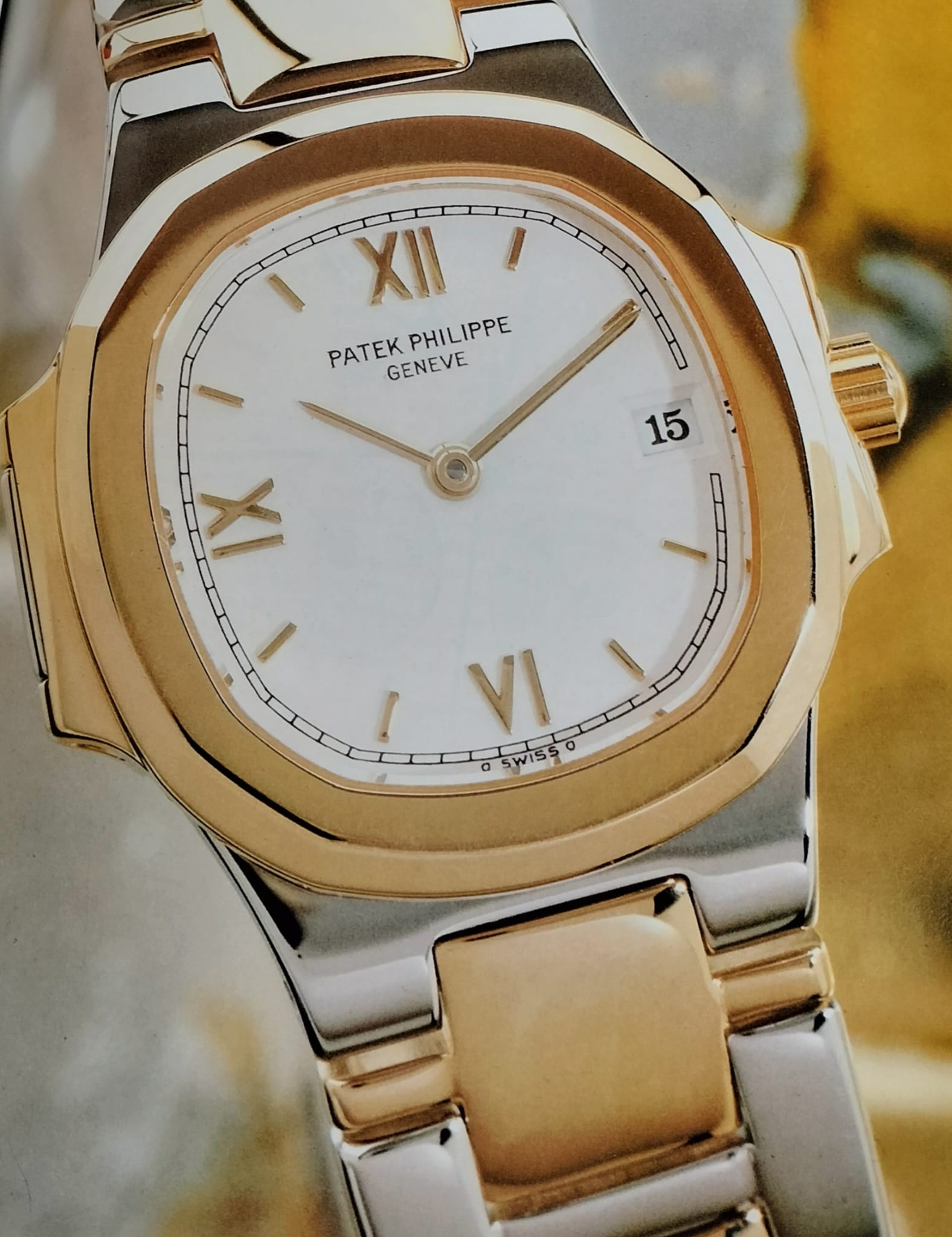
Close-up of a two-tone Patek Philippe Nautilus with a light dial and date window.

A two-tone Patek Philippe Nautilus; the photographer identifies this example as quartz. This later variant is distinct from the original 1976 mechanical Nautilus.

Notice the continuous case-and-bracelet outline. The movement type is attributed to the photographer, rather than authenticated from this still image.

Photo: Patek Philippe Nautilus, qui in versione femminile in oro e acciaio e con movimento al quarzo, risalente ai primi anni Novanta.jpg by Clyde94 / Wikimedia Commons. CC BY-SA 4.0. Original image; no local edits. ShareAlike applies to adapted images.

All watch-photo credits

Calendars: teaching a mechanism the irregular year

Patek Philippe’s calendar history includes a wristwatch completed in 1925 using a movement made in 1898. That gap is instructive: the date of a movement’s creation and the date of the finished watch can tell different stories. Moving a complicated mechanism to the wrist was its own design problem.

The Annual Calendar introduced in 1996 offers a particularly clear lesson in mechanical logic. An ordinary date display cycles through 31 numbers; an annual calendar also distinguishes 30-day from 31-day months. February still requires a correction. A perpetual calendar goes further by incorporating the usual four-year leap-year cycle. Most such mechanisms nevertheless need intervention at exceptional non-leap century years, including 2100.

Complexity also changes how information is arranged. Compare the arched apertures of Reference 5205 with the single broad day-date-month opening of Reference 5236. Both demand attention to reading order, but the mechanisms do not provide the same calendar programme. Attractive symmetry alone cannot tell the viewer whether a calendar is annual or perpetual.

Evidence: Patek Philippe: Calendar Watches

Chronographs: architecture as well as elapsed seconds

Patek Philippe records a specially commissioned split-seconds wrist chronograph in 1923 and series-produced wrist chronographs from 1927. A split-seconds mechanism supplies two superimposed timing hands: one can pause for an intermediate reading while the other continues. Reuniting them enables another comparison without ending the overall measurement. This is different from a flyback, which rapidly resets and restarts a timing sequence.

A later milestone arrived in 2009 when the manually wound CH 29-535 PS debuted in Reference 7071. The manufacture’s proprietary calibre became a basis for further versions, including the perpetual-calendar chronograph introduced in Reference 5270 in 2011. These relationships make movement names worth learning. They reveal a developing mechanical platform beneath watches whose dial layouts, cases and intended audiences may differ considerably.

Evidence: Patek Philippe: Chronograph Watches

Chiming watches: reading time through the ear

A minute repeater converts the displayed time into an on-demand sequence of sounds. In the conventional Patek Philippe arrangement, low notes count hours, paired notes count completed quarters, and high notes count the remaining minutes. Hammers strike gongs around the movement. The challenge is not merely producing enough components: the sequence must be distinct, paced intelligibly and acoustically convincing inside a small case.

Patek Philippe introduced longer cathedral gongs in 2000 and the double-sided Grandmaster Chime in 2014, whose functions include five chiming modes. A sonnerie adds another distinction by striking automatically at scheduled intervals. Listening therefore exposes differences that a photograph cannot communicate. A complicated dial is only one possible expression of a complicated watch.

Evidence: Patek Philippe: The Patek Philippe Sound

2005 onward: new materials within a traditional craft

The Advanced Research programme began in 2005 and makes technological change explicit. Its early Annual Calendar examples included Reference 5250 in 2005 and Reference 5350 in 2006; the latter introduced the Spiromax balance spring in silicon-based Silinvar. Here the focus is the regulator and its materials rather than an additional indication on the dial. The outwardly traditional watch can contain substantial experimentation.

The Patek Philippe Seal, created in 2009, likewise extends the discussion beyond appearance. Its requirements encompass the complete mechanical watch, including functionality, accuracy, exterior components and finishing. Under this lens, a polished bevel is one part of an overall construction standard. Decoration, reliable operation and legible display deserve separate examination rather than being treated as interchangeable signs of quality.

Evidence: Patek Philippe: Advanced Research, Patek Philippe: The Patek Philippe Seal

Reading a particular watch through its records

The house produces manual, automatic and quartz movements, so its name alone does not specify a power system. Its archival records can identify movement and case numbers, dial details, manufacture date and sale date. Keeping those dates distinct gives an individual watch a more precise history. Compare the record, the actual mechanism and the visible configuration; then return to the basic question shared by Calatrava, Nautilus and complicated watches alike: how clearly does this particular object express what it does?

Evidence: Patek Philippe: The Finest Timepieces in the World — collections, movements and archives

Selected chronology

Dates describe the stated event or generation, rather than every watch in a family.

  1. 1839 / 1851
    Original partnership begins; the Patek, Philippe & Cie name follows.

    Evidence: Patek Philippe: The Founders

  2. 1932
    Stern acquisition and Calatrava collection.

    Evidence: Patek Philippe: The Stern Family, Patek Philippe: The Calatrava Cross

  3. 1968 / 1976
    Golden Ellipse and Nautilus offer distinctive case architectures.

    Evidence: Patek Philippe: Golden Ellipse collection, Patek Philippe: Nautilus collection

  4. 1996
    Annual Calendar introduced.

    Evidence: Patek Philippe: Calendar Watches

  5. 2009 / 2011
    CH 29-535 PS debuts; Reference 5270 adds the perpetual-calendar chronograph chapter.

    Evidence: Patek Philippe: Chronograph Watches

  6. 2005 onward
    Advanced Research develops new regulating materials.

    Evidence: Patek Philippe: Advanced Research, Patek Philippe: The Patek Philippe Seal

Sources & reading

Manufacturer histories describe the house’s own account. Source review dates are inherited from the supplied research packet; the review export does not claim fresh verification.

  1. Patek Philippe: The Foundersprimary · 2026-10-04

    Section-level source links support dates, model histories and technical descriptions. These are primary manufacturer accounts; the explanations and comparisons are original editorial interpretation.

  2. Patek Philippe: The Stern Familyprimary · 2026-10-04

    Section-level source links support dates, model histories and technical descriptions. These are primary manufacturer accounts; the explanations and comparisons are original editorial interpretation.

  3. Patek Philippe: The Calatrava Crossprimary · 2026-10-04

    Section-level source links support dates, model histories and technical descriptions. These are primary manufacturer accounts; the explanations and comparisons are original editorial interpretation.

  4. Patek Philippe: Golden Ellipse collectionprimary · 2026-10-04

    Section-level source links support dates, model histories and technical descriptions. These are primary manufacturer accounts; the explanations and comparisons are original editorial interpretation.

  5. Patek Philippe: Nautilus collectionprimary · 2026-10-04

    Section-level source links support dates, model histories and technical descriptions. These are primary manufacturer accounts; the explanations and comparisons are original editorial interpretation.

  6. Patek Philippe: Calendar Watchesprimary · 2026-10-04

    Section-level source links support dates, model histories and technical descriptions. These are primary manufacturer accounts; the explanations and comparisons are original editorial interpretation.

  7. Patek Philippe: Chronograph Watchesprimary · 2026-10-04

    Section-level source links support dates, model histories and technical descriptions. These are primary manufacturer accounts; the explanations and comparisons are original editorial interpretation.

  8. Patek Philippe: The Patek Philippe Soundprimary · 2026-10-04

    Section-level source links support dates, model histories and technical descriptions. These are primary manufacturer accounts; the explanations and comparisons are original editorial interpretation.

  9. Patek Philippe: Advanced Researchprimary · 2026-10-04

    Section-level source links support dates, model histories and technical descriptions. These are primary manufacturer accounts; the explanations and comparisons are original editorial interpretation.

  10. Patek Philippe: The Patek Philippe Sealprimary · 2026-10-04

    Section-level source links support dates, model histories and technical descriptions. These are primary manufacturer accounts; the explanations and comparisons are original editorial interpretation.

  11. Patek Philippe: The Finest Timepieces in the World — collections, movements and archivesprimary · 2026-10-04

    Section-level source links support dates, model histories and technical descriptions. These are primary manufacturer accounts; the explanations and comparisons are original editorial interpretation.

  12. Patek Philippe: Timepieces and archivesprimary · 2026-10-03 · Earlier edition source retained

    Primary sources linked below support the historical and technical account. Observational questions and explanatory comparisons are original editorial interpretation.

  13. Patek Philippe: Calendar watchesprimary · 2026-10-03 · Earlier edition source retained

    Primary sources linked below support the historical and technical account. Observational questions and explanatory comparisons are original editorial interpretation.

  14. Patek Philippe: Grand complicationsprimary · 2026-10-03 · Earlier edition source retained

    Primary sources linked below support the historical and technical account. Observational questions and explanatory comparisons are original editorial interpretation.

11Watch houses

Audemars Piguet: complications, design and the expanding Royal Oak

From a network of Vallée de Joux specialists to an unusually adaptable sports-watch design, Audemars Piguet connects complicated mechanisms with the architecture of the case and bracelet.

Educational overview. Specifications and operating instructions vary by exact reference and production period.

Reading time
5 minutes
Profile reviewed
2026-10-04

A workshop before a famous silhouette

Audemars Piguet locates its beginnings in Le Brassus in 1875. Its own historical research makes a useful distinction: Jules Louis Audemars and Edward Auguste Piguet signed their surviving partnership agreement in December 1881, and a production register begins in 1882. The founders later chose 1875 as the starting date. A foundation story can contain several genuine milestones without requiring them to be the same event.

Their surroundings matter. The Vallée de Joux supported an interconnected community of specialists making parts, finishing mechanisms and assembling complicated watches. Early watchmaking was often organised through these relationships. Understanding that network gives more substance to the word manufacture than imagining that every historical component emerged from one self-contained building.

This background also helps explain why a story centred only on the Royal Oak is incomplete. Calendars, striking mechanisms and carefully finished movements belong to the house’s earlier history. The 1972 watch gave those capabilities a different external language; it did not create its maker’s interest in watchmaking.

Evidence: AP Chronicles: The epic AP saga

The Royal Oak 5402 as an integrated object

The Royal Oak reference 5402 appeared at the Basel Fair in 1972, following development of Gérald Genta’s design. Its 39 mm steel case, octagonal bezel, patterned dial and tapering bracelet formed a continuous composition. Calibre 2121 supplied automatic winding and a date. The watch’s visual identity depended on the relationship among these elements as much as on any one recognisable detail.

The original monocoque construction joined case middle and back into a main structure. Looking at the archive’s component photographs reveals how the first bracelet links participate in the case architecture. “Integrated bracelet” is therefore worth examining as a physical connection rather than using it only as a style label.

A useful viewing exercise is to follow the edge of the bezel into the bracelet. Broad brushed surfaces and bright borders send light in different directions. That contrast can make steel visually complex without precious stones or an elaborate dial. This is an observation about the design, not a test of a watch’s accuracy or durability.

Evidence: AP Chronicles: 5402, First Royal Oak Model

A blue-dial Audemars Piguet Royal Oak with an octagonal bezel and integrated bracelet, worn on a wrist.

A blue-dial Audemars Piguet Royal Oak on the wrist, identified on the source page as reference 15202. This later example is distinct from the original 1972 reference 5402.

Look at the case-to-bracelet transition and the screw-set bezel. The exact reference identification follows the source description rather than independent authentication.

Photo: Audemars Piguet Royal Oak ref. 15202.jpg by OpaleHorse / Wikimedia Commons. CC BY-SA 4.0. Wikimedia Commons 960px web rendition; no local edits. ShareAlike applies to adapted images.

All watch-photo credits

Jacqueline Dimier and the making of a collection

The first Royal Oak was one model, but its lasting influence came partly from adaptation. Jacqueline Dimier developed the 29 mm reference 8638 introduced in 1976. The 35 mm reference 4100 followed in 1977. These watches required decisions about proportion and wearability, rather than simply reducing a drawing by a fixed percentage.

As the family grew, different materials, dial treatments and quartz mechanisms entered the picture. Those variations are important evidence: the Royal Oak has never meant one unchanging size or a single movement philosophy. A small quartz example and a mechanical “Jumbo” can share design ancestry while offering different experiences.

Compare where the bezel sits relative to the dial opening, the width of the bracelet at the case and the amount of visible wrist around the watch. This gives a more revealing account of size than diameter alone. Dimier’s contribution also makes the history a continuing design practice, rather than a single moment attributed to a single designer.

Evidence: Audemars Piguet: Fifty years of design, AP Chronicles: Royal Oak II, Birth of the First Women’s Model

The quiet importance of the perpetual calendar

In 1978, reference 5548 introduced the automatic perpetual-calendar Calibre 2120/2800. Its 3.95 mm movement combined a thin automatic base with additional calendar work beneath the dial. It represented a different response to the period’s electronic-watch competition: compact mechanical complexity that could be worn in an elegant case.

AP Chronicles identifies the underlying contributions of LeCoultre and Dubois-Dépraz in its movement record. Naming specialist participants helps readers understand what development, assembly and finishing can involve. Collaboration is part of the history to describe accurately, rather than a fact to conceal or a reason to dismiss the finished watch.

The mechanism reached the Royal Oak in 1984 through reference 5554. A familiar exterior now carried a longer mechanical memory, distinguishing the unequal months and leap-year cycle. The addition changed how the dial was organised and how the owner interacted with the watch. A moon display, date and month subdials are visible clues, but the mechanism’s programming is what makes a calendar perpetual.

Evidence: AP Chronicles: Royal Oak Calendar watches 1983–1996, AP Chronicles: Calibres 2120/2800 and 2120/2800SQ

Offshore and a different sense of scale

Emmanuel Gueit designed the Royal Oak Offshore, introduced in 1993 with a 42 mm case and chronograph. The exposed dark gasket, rubber-clad controls and more substantial forms made its relationship to the earlier watch apparent while changing its character. This was an expansion of the family’s vocabulary, rather than a replacement for the original proportions.

The contrast is educational. On a time-and-date Royal Oak, the dial can emphasise surface pattern and open space. A chronograph needs additional timing information and controls. A larger case also changes the mass seen above the wrist. Comparing those design demands is more useful than judging every descendant by how closely it copies the 5402.

Evidence: Audemars Piguet: Fifty years of design

How to study an individual example

Start by identifying the reference, approximate period and movement. Then read the exterior in layers: bezel, dial opening, case flank, bracelet transition and clasp. An openworked movement invites another kind of looking. Follow which metal has been removed, which structures remain to support moving parts, and how those structures frame the indications.

Finishing and construction deserve separate descriptions. A bright bevel describes a surface; a calendar or chronograph describes a function. Neither tells the whole story. Reference-specific documentation is especially valuable because a family can retain an immediately recognisable outline while changing substantially beneath it.

Finally, compare a simple Royal Oak with a complicated example and a non-Royal Oak calendar watch. The exercise returns the house to its broader history: exterior design, thinness and complicated watchmaking are related threads, each capable of leading the reader somewhere different.

Evidence: AP Chronicles: 5402, First Royal Oak Model, AP Chronicles: Royal Oak Calendar watches 1983–1996

Selected chronology

Dates describe the stated event or generation, rather than every watch in a family.

  1. 1875 / 1881
    Workshop origins; the surviving partnership agreement was signed in 1881.

    Evidence: AP Chronicles: The epic AP saga

  2. 1972
    Royal Oak 5402 introduced with Calibre 2121.

    Evidence: AP Chronicles: 5402, First Royal Oak Model

  3. 1976 / 1977
  4. 1978
    Reference 5548 introduces Calibre 2120/2800.

    Evidence: AP Chronicles: Calibres 2120/2800 and 2120/2800SQ

  5. 1984
    Royal Oak 5554 brings the perpetual calendar to the collection.

    Evidence: AP Chronicles: Royal Oak Calendar watches 1983–1996

  6. 1993
    Royal Oak Offshore introduces Gueit’s larger chronograph interpretation.

    Evidence: Audemars Piguet: Fifty years of design

Sources & reading

Manufacturer histories describe the house’s own account. Source review dates are inherited from the supplied research packet; the review export does not claim fresh verification.

  1. AP Chronicles: The epic AP sagaprimary · 2026-10-04

    House archives and technical explanations support the dated history. The comparisons and looking exercises are original editorial interpretation. Brand-supplied images are not licensed by these source citations.

  2. AP Chronicles: 5402, First Royal Oak Modelprimary · 2026-10-04

    House archives and technical explanations support the dated history. The comparisons and looking exercises are original editorial interpretation. Brand-supplied images are not licensed by these source citations.

  3. Audemars Piguet: Fifty years of designprimary · 2026-10-04

    House archives and technical explanations support the dated history. The comparisons and looking exercises are original editorial interpretation. Brand-supplied images are not licensed by these source citations.

  4. AP Chronicles: Royal Oak II, Birth of the First Women’s Modelprimary · 2026-10-04

    House archives and technical explanations support the dated history. The comparisons and looking exercises are original editorial interpretation. Brand-supplied images are not licensed by these source citations.

  5. AP Chronicles: Royal Oak Calendar watches 1983–1996primary · 2026-10-04

    House archives and technical explanations support the dated history. The comparisons and looking exercises are original editorial interpretation. Brand-supplied images are not licensed by these source citations.

  6. AP Chronicles: Calibres 2120/2800 and 2120/2800SQprimary · 2026-10-04

    House archives and technical explanations support the dated history. The comparisons and looking exercises are original editorial interpretation. Brand-supplied images are not licensed by these source citations.

  7. Audemars Piguet: Fifty years of Royal Oak designprimary · 2026-10-03 · Earlier edition source retained

    Primary sources linked below support the historical and technical account. Observational questions and explanatory comparisons are original editorial interpretation.

12Watch houses

Vacheron Constantin: continuity, invention and unexpected shapes

A Genevan history that connects industrial tools, slender movements, off-centre dials and watches treated as miniature works of art.

Historical and educational profile. Technical details apply to the stated model or generation, not every watch bearing the family name.

Reading time
5 minutes
Profile reviewed
2026-10-04

1755–1839: a workshop becomes a lasting partnership

Jean-Marc Vacheron established his Genevan workshop in 1755. The second name arrived in 1819, when François Constantin joined Jacques Barthélémi Vacheron, the founder’s grandson. Vacheron Constantin describes its history as uninterrupted manufacture: that is a claim about continuing activity, not unchanged ownership, premises or products. Keeping those distinctions separate makes the long chronology more useful than simply counting birthdays.

There is a practical surprise in this cultivated history. In 1839 Georges Auguste Leschot adapted the pantograph to watchmaking, helping reproduce movement components at controlled scales. Precision manufacturing and hand finishing could support each other. Consistent geometry made good work repeatable; decoration and adjustment gave individual components their final quality.

Evidence: Vacheron Constantin: historical heritage

Thinness is an engineering problem

The house’s 1955 bicentenary brought calibre 1003, a hand-wound movement just 1.64 mm thick. Its significance lies in the arrangement of a complete mechanism within a very shallow space. Reducing thickness constrains the height of wheels, the stiffness of supporting parts and the clearance between moving components. A slender watch is therefore not automatically a simple watch to construct.

Vacheron’s timeline also records the 1996 Saltarello, pairing a jumping hour with retrograde minutes. Here the minute hand travels along an arc and returns to its starting point rather than circling continuously. These examples reveal two different ambitions: reducing a movement’s volume and changing how its information reaches the wearer.

Evidence: Vacheron Constantin: Our timeline

American 1921: a deliberate change of perspective

The American 1921 makes asymmetry immediately visible. Its cushion-shaped case, rotated time display and corner crown interrupt the expectation that twelve must sit at the top of the wrist. Vacheron’s current account connects the angled dial with reading time while driving, with less movement of the wrist. It is best presented as the house’s explanation of the design, rather than embellished with an invented commissioning story.

The enjoyable test is simply to turn your forearm and see when the dial becomes upright to your eyes. This is a lesson in viewing angle as much as styling. A modern Historiques interpretation carries that idea forward without becoming an original watch made in 1921.

Evidence: Vacheron Constantin: Roaring Twenties Icon

222 and Overseas: related territory, distinct histories

The 222 was introduced in 1977 for the manufacture’s 222nd anniversary. Jorg Hysek designed it, an important attribution in a field where almost any angular seventies bracelet watch can be casually assigned to Gérald Genta. Its integrated bracelet and sharply defined case made a more sporting expression of the house’s design vocabulary.

The Historiques 222 returned in yellow gold in 2022 and in steel in 2025. These are contemporary reinterpretations, so specifications should be checked independently from a vintage example. Overseas, introduced in 1996, occupies its own continuing sports-watch family. Similar intended lifestyles do not make the 222 and Overseas the same model, nor does a shared logo guarantee interchangeable bracelets or components.

Evidence: Vacheron Constantin: Historiques 222, Vacheron Constantin: historical heritage

Reading the families before reading the price

Patrimony foregrounds restrained lines and the visual economy of mid-century dress watches. Traditionnelle makes a more overt connection to classical Genevan watchmaking. Historiques revisits particular designs; Overseas supplies the contemporary sporting branch. Each is a useful route into the catalogue, but none is a movement specification or a universal promise of a particular complication.

Compare one time-only reference with a calendar or tourbillon from the same family. Look at case thickness, dial hierarchy, winding method and the information you would actually use. The exercise prevents the collection name from doing all the thinking. It also reveals why a spare two-hand dial can be as deliberate a design decision as a crowded display.

Evidence: Vacheron Constantin: All collections

Métiers d’Art: the surface is part of the watch

The Métiers d’Art approach places decorative crafts such as engraving, enamelling, guilloché and gem setting alongside movement construction. These are distinct processes. Engraving removes material to create relief or texture; enamel builds a glass-like coloured surface through firing; guilloché produces controlled repeating patterns. Identifying the process is more revealing than calling every decorated dial hand painted.

For a close look, follow where one material meets another and how the decoration works around the time display. The design must leave the watch readable while giving the craft enough room to be seen. That balance links these expressive pieces to the house’s quieter watches: both depend on deciding what the eye should notice first.

Evidence: Vacheron Constantin: Métiers d’Art craftsmanship

Collecting: separate identity, condition and documentation

An appealing vintage Vacheron needs more than a plausible date. Ask which reference and calibre it contains, what has been replaced, and whether the dial, case and movement belong together. Service records and clear photographs answer different questions from a presentation box. A highly polished case may also communicate its original geometry differently from an example retaining its edges.

Vacheron offers heritage documentation, including a Certificate of Authenticity that requires physical examination by its specialists. Do not treat every archival paper as interchangeable with that process. Before commissioning restoration, agree what will be preserved and what may be replaced. These are questions about the object and its future care, not predictions about financial return.

Evidence: Vacheron Constantin: Heritage documents, Vacheron Constantin: The art of restoration

Selected chronology

Dates describe the stated event or generation, rather than every watch in a family.

  1. 1755 / 1819
    Genevan workshop established; Constantin joins the Vacheron partnership.

    Evidence: Vacheron Constantin: historical heritage

  2. 1839
    Leschot adapts the pantograph to watchmaking.

    Evidence: Vacheron Constantin: historical heritage

  3. 1955
    Ultra-thin calibre 1003 marks the bicentenary.

    Evidence: Vacheron Constantin: Our timeline

  4. 1977 / 2022 / 2025
    222 launch; modern gold and steel Historiques returns.

    Evidence: Vacheron Constantin: Historiques 222

  5. 1996
    Overseas begins; Saltarello demonstrates jumping hours and retrograde minutes.

    Evidence: Vacheron Constantin: historical heritage, Vacheron Constantin: Our timeline

Sources & reading

Manufacturer histories describe the house’s own account. Source review dates are inherited from the supplied research packet; the review export does not claim fresh verification.

  1. Vacheron Constantin: historical heritageprimary · 2026-10-04

    Section links support the historical and technical account. House histories remain manufacturer accounts; collecting questions and explanatory comparisons are original editorial interpretation.

  2. Vacheron Constantin: Our timelineprimary · 2026-10-04

    Section links support the historical and technical account. House histories remain manufacturer accounts; collecting questions and explanatory comparisons are original editorial interpretation.

  3. Vacheron Constantin: Roaring Twenties Iconprimary · 2026-10-04

    Section links support the historical and technical account. House histories remain manufacturer accounts; collecting questions and explanatory comparisons are original editorial interpretation.

  4. Vacheron Constantin: Historiques 222primary · 2026-10-04

    Section links support the historical and technical account. House histories remain manufacturer accounts; collecting questions and explanatory comparisons are original editorial interpretation.

  5. Vacheron Constantin: All collectionsprimary · 2026-10-04

    Section links support the historical and technical account. House histories remain manufacturer accounts; collecting questions and explanatory comparisons are original editorial interpretation.

  6. Vacheron Constantin: Métiers d’Art craftsmanshipprimary · 2026-10-04

    Section links support the historical and technical account. House histories remain manufacturer accounts; collecting questions and explanatory comparisons are original editorial interpretation.

  7. Vacheron Constantin: Heritage documentsprimary · 2026-10-04

    Section links support the historical and technical account. House histories remain manufacturer accounts; collecting questions and explanatory comparisons are original editorial interpretation.

  8. Vacheron Constantin: The art of restorationprimary · 2026-10-04

    Section links support the historical and technical account. House histories remain manufacturer accounts; collecting questions and explanatory comparisons are original editorial interpretation.

  9. Vacheron Constantin: Historiques 222primary · 2026-10-03 · Earlier edition source retained

    Primary sources linked below support the historical and technical account. Observational questions and explanatory comparisons are original editorial interpretation.

  10. Vacheron Constantin: Overseas and collection directoryprimary · 2026-10-03 · Earlier edition source retained

    Primary sources linked below support the historical and technical account. Observational questions and explanatory comparisons are original editorial interpretation.

13Watch houses

Jaeger-LeCoultre: mechanisms, miniaturisation and the Reverso

A manufacture’s story becomes clearer when the problem solved by each invention is made visible.

Educational overview. Specifications and operating instructions vary by exact reference and production period.

Open the focused study

Reading time
2 minutes

The workshop and the mechanism

Jaeger-LeCoultre traces its origins to Antoine LeCoultre’s workshop in the Vallée de Joux in 1833. Its history includes the small Calibre 101 and the Atmos clock, developed from Jean-Léon Reutter’s invention. These examples pull in different directions: one explores miniaturisation, while the other draws operating energy from environmental temperature changes.

They are useful reminders that horology extends beyond a conventional round wristwatch. Size, energy consumption and the arrangement of components are design problems in their own right.

Evidence: Jaeger-LeCoultre: History, Jaeger-LeCoultre: The genesis of Reverso

The Reverso was a collaborative solution

The house’s account connects the Reverso to a request for a watch that could withstand the knocks of polo. René-Alfred Chauvot patented the reversible case concept on 4 March 1931. César de Trey and Jacques-David LeCoultre were involved in bringing it to market, and Wenger helped refine the case.

Early Reversos used Tavannes movements while LeCoultre developed its rectangular Calibre 410, introduced in 1933. That detail makes the story more interesting, not less: a recognisable design emerged through collaboration and staged technical development rather than appearing fully formed from a single workshop.

Evidence: Jaeger-LeCoultre: History, Jaeger-LeCoultre: The genesis of Reverso

Read the case as part of the invention

A Reverso invites attention to the relationship between case, carrier and reverse face. The protective solution also created another surface for personalisation and later watchmaking expression. Compare the functional role of the original solid back with the uses to which the reversible format can be put.

Do not assume that an elegant modern Reverso inherits permission for vigorous sport from its origin story. The exact model’s operating and care instructions are the relevant guide to present use.

Evidence: Jaeger-LeCoultre: History, Jaeger-LeCoultre: The genesis of Reverso

Sources & reading

  1. Jaeger-LeCoultre: Historyprimary · 2026-10-03

    Primary sources linked below support the historical and technical account. Observational questions and explanatory comparisons are original editorial interpretation.

  2. Jaeger-LeCoultre: The genesis of Reversoprimary · 2026-10-03

    Primary sources linked below support the historical and technical account. Observational questions and explanatory comparisons are original editorial interpretation.

14Watch houses

A. Lange & Söhne: rebuilding a Saxon watchmaking language

An 1845 origin, a 1990 re-establishment and a 1994 debut belong in the same story of disciplined mechanics and unconventional displays.

Historical and educational profile. Technical details apply to the stated model or generation, not every watch bearing the family name.

Reading time
5 minutes
Profile reviewed
2026-10-04

1845, 1948 and 1990: three dates, three different meanings

Ferdinand Adolph Lange established his Glashütte enterprise in 1845. The business was expropriated in 1948, breaking the direct corporate continuity that a simple “since 1845” caption can suggest. Walter Lange re-established the name on 7 December 1990 after German reunification. The modern manufacture is therefore a revival with historical roots, not an unchanged nineteenth-century company.

Its first new collection appeared on 24 October 1994 at Dresden’s Royal Palace: Lange 1, Arkade, Saxonia and Tourbillon “Pour le Mérite”. Four different designs announced the return together. This was an ambitious statement about what the revived house could make, rather than a single commemorative watch carrying a recovered name.

Evidence: A. Lange & Söhne: Always looking ahead

A theatre clock becomes a date display

The Lange 1’s outsize date has an unexpected architectural relative: the Five-Minute Clock above the stage at Dresden’s Semper Opera House. Its prominent numerals inspired a wristwatch display that could be read without forcing the whole dial into symmetry. Hours and minutes sit to one side; date, subsidiary seconds and power-reserve information occupy distinct positions elsewhere.

The pleasure of the connection is its change of scale. A display designed for an audience across a room becomes a way to organise information centimetres from the eye. It is inspiration, not a miniature copy of the theatre mechanism. The watch’s imbalance is carefully composed: separate indications remain distinct instead of competing around a shared central axis.

Evidence: A. Lange & Söhne: Five-Minute Clock of the Semper Opera House

The three-quarter plate: structure before ornament

A large plate covering much of the movement is a recognisable Lange feature. It supports the wheel-train arbors together, helping maintain their relative positions. The house reintroduced this three-quarter-plate arrangement after its revival. Its untreated German silver is an alloy of copper, nickel and zinc; the name does not mean that it contains precious silver.

The material develops a warm patina, while striping, screwed chatons and thermally blued screws give the mechanism its distinctive appearance. Look first at what each element supports, then at how it is finished. A plate is a structural part; a stripe is a surface treatment. Understanding both makes the caseback more rewarding than treating it as a collection of decorative colours.

Evidence: A. Lange & Söhne: Three-quarter plate

Twice assembled does not mean twice as many parts

Lange states that each of its manufacture movements is assembled twice. The phrase describes a sequence of workshop operations, not a complication that appears on the dial. Assembly, checking, disassembly and final finishing demand time even when a watch displays only hours and minutes. A spare face can conceal a demanding production process.

This also explains why finishing deserves its own vocabulary. An engraved balance cock is different from a polished bevel, and a functional bearing is different from the precious-metal setting surrounding it. Study one detail at a time. The aim is not to count visible flourishes, but to understand how construction and careful treatment of surfaces coexist in a completed movement.

Evidence: A. Lange & Söhne: Manufacture movements

1999: the Datograph makes elapsed time visible

The Datograph arrived in 1999 with Lange’s first chronograph movement, calibre L951.1. Its combination of column-wheel control, flyback operation, an outsize date and a precisely jumping minute counter established a distinct technical identity. The minute counter advances decisively at the appropriate moment, helping the reader distinguish a completed minute from a hand approaching a mark.

Flyback means the chronograph can reset and restart while running; it does not describe a second hand that follows another elapsed-time hand, as in a split-seconds chronograph. Later Datograph Up/Down versions add their own specifications, including a power-reserve indication. The original launch date is an entry point, not permission to assign one calibre or case size to every Datograph.

Evidence: A. Lange & Söhne: Datograph Up/Down

2009 onward: digital time without a quartz circuit

The Zeitwerk, introduced in 2009, displays hours and minutes through jumping numerals while remaining mechanical. Digital describes the presentation of information here, not the source of power or the regulating technology. Moving numeral discs requires carefully managed energy, particularly when several displays must change together at the hour.

A constant-force mechanism helps govern that switching and supplies more consistent energy to the regulating system. The later calibre L043.6 offers a 72-hour reserve and a separate hour-adjustment pusher. Those specifications belong to that generation. The larger lesson is wonderfully clear: a mechanical watch need not have conventional hour and minute hands, and an unconventional display need not abandon the mainspring and balance.

Evidence: A. Lange & Söhne: Zeitwerk

Collect by generation as well as by family

The Lange 1 illustrates why movement identification matters. Its familiar face survived a substantial change in 2015, when calibre L121.1 replaced the earlier L901.0. The newer construction includes an instantaneously advancing date. A photograph of the front may therefore conceal differences that affect how the watch behaves and how a collector understands its place in the modern history.

When considering an example, record its full reference, calibre, condition and service evidence. Try the thickness and lug shape on the wrist rather than judging only the nominal diameter. Ask for correct setting instructions and a realistic servicing plan. A documented, understood watch is a better collecting foundation than an attractive dial accompanied by an imprecise revival story.

Evidence: A. Lange & Söhne: Time well spent, A. Lange & Söhne: Born in 1994, Lisa and the Lange 1

Selected chronology

Dates describe the stated event or generation, rather than every watch in a family.

  1. 1845 / 1948
    Original Glashütte enterprise established, then expropriated.

    Evidence: A. Lange & Söhne: Always looking ahead

  2. 1990 / 1994
    Re-establishment followed by the first modern collection.

    Evidence: A. Lange & Söhne: Always looking ahead

  3. 1999
    Datograph introduces calibre L951.1.

    Evidence: A. Lange & Söhne: Datograph Up/Down

  4. 2009
    Zeitwerk introduces mechanical jumping-numeral time.

    Evidence: A. Lange & Söhne: Zeitwerk

  5. 2015

Sources & reading

Manufacturer histories describe the house’s own account. Source review dates are inherited from the supplied research packet; the review export does not claim fresh verification.

  1. A. Lange & Söhne: Always looking aheadprimary · 2026-10-04

    Section links support the historical and technical account. House histories remain manufacturer accounts; collecting questions and explanatory comparisons are original editorial interpretation.

  2. A. Lange & Söhne: Five-Minute Clock of the Semper Opera Houseprimary · 2026-10-04

    Section links support the historical and technical account. House histories remain manufacturer accounts; collecting questions and explanatory comparisons are original editorial interpretation.

  3. A. Lange & Söhne: Three-quarter plateprimary · 2026-10-04

    Section links support the historical and technical account. House histories remain manufacturer accounts; collecting questions and explanatory comparisons are original editorial interpretation.

  4. A. Lange & Söhne: Manufacture movementsprimary · 2026-10-04

    Section links support the historical and technical account. House histories remain manufacturer accounts; collecting questions and explanatory comparisons are original editorial interpretation.

  5. A. Lange & Söhne: Datograph Up/Downprimary · 2026-10-04

    Section links support the historical and technical account. House histories remain manufacturer accounts; collecting questions and explanatory comparisons are original editorial interpretation.

  6. A. Lange & Söhne: Zeitwerkprimary · 2026-10-04

    Section links support the historical and technical account. House histories remain manufacturer accounts; collecting questions and explanatory comparisons are original editorial interpretation.

  7. A. Lange & Söhne: Time well spentprimary · 2026-10-04

    Section links support the historical and technical account. House histories remain manufacturer accounts; collecting questions and explanatory comparisons are original editorial interpretation.

  8. A. Lange & Söhne: Born in 1994, Lisa and the Lange 1primary · 2026-10-04

    Section links support the historical and technical account. House histories remain manufacturer accounts; collecting questions and explanatory comparisons are original editorial interpretation.

  9. A. Lange & Söhne: Always looking aheadprimary · 2026-10-03 · Earlier edition source retained

    Primary sources linked below support the historical and technical account. Observational questions and explanatory comparisons are original editorial interpretation.

  10. A. Lange & Söhne: 71 masterpiecesprimary · 2026-10-03 · Earlier edition source retained

    Primary sources linked below support the historical and technical account. Observational questions and explanatory comparisons are original editorial interpretation.

15Watch houses

Cartier: how shape became a watchmaking language

The Santos, Tank and Crash offer three ways to study a wristwatch: as a useful instrument, an exercise in proportion and a deliberately expressive object.

Educational overview. Specifications and operating instructions vary by exact reference and production period.

Reading time
5 minutes
Profile reviewed
2026-10-04

Read the shape before the specifications

Cartier’s watch history is especially rewarding when approached through design. The shape of the case determines the space available for the dial, the relationship between numerals and hands, and the way a strap or bracelet meets the wrist. A watch can communicate a strong identity before the viewer knows what powers it.

The house records timepieces in its registers from 1853, including pocket watches and wearable jewellery forms. That variety gives useful context for the wristwatches that followed. Cartier’s interest in telling the time developed alongside an interest in how an object is worn, seen and incorporated into everyday life.

For a first comparison, place a square Santos beside a rectangular Tank. Ask where the case begins and the attachment ends. Notice the balance between straight lines and softened corners. These observations are original ways of reading the objects; they do not require treating every example as mechanically identical.

Evidence: Cartier: Our style

Santos and the practical appeal of the wrist

Cartier connects the Santos design to Louis Cartier and the aviator Alberto Santos-Dumont in 1904. The practical story is straightforward: a wrist-mounted display made time easier to consult during flight than a pocket watch. This is an important early wristwatch history, without needing the broader and misleading claim that wristwatches did not exist beforehand.

The square outline, exposed bezel screws and curved transition towards the attachment make the design recognisable. Screws do more than secure parts visually: they give the surrounding frame a repeated rhythm. The rounded corners prevent the square from reading as a simple rigid box.

Cartier’s historical collection includes a Santos-Dumont wristwatch dated 1912. It also records the later Santos de Cartier design created in 1978, represented by a 1981 steel-and-gold automatic example. These are different chapters. The original aviation connection should not be used to suggest that every later Santos has the same case, bracelet or mechanism.

Evidence: Cartier: Santos de Cartier watch and its origin, Cartier Collection: Watchmaking

The Tank and the relationship between case and strap

Louis Cartier created the Tank in 1917. Its two long side elements, known as brancards, frame the dial and make the transition towards the strap central to the composition. Looking at the whole outline is more informative than describing it only as a rectangular watch. The edges, dial and attachment work together.

The house’s collection includes an early Tank dated 1920. That museum object is a useful reminder to distinguish the creation of a design from the date of a particular surviving watch. An archive photograph may illustrate a later example even when it accompanies a story about the family’s origin.

To compare Tank variants, start with width and length, then consider thickness, curvature and dial proportions. A narrow elongated case occupies the wrist differently from a shorter, broader one. Roman numerals, a railway-style minute track and a cabochon crown can provide continuity, while the overall balance changes. “Small” and “large” are collection labels, not universal measurements across every generation.

Evidence: Cartier: Tank watches, Cartier Collection: Watchmaking

A Must de Cartier Tank with a gold-colored rectangular case, Roman-numeral dial and dark leather strap.

A Les Must de Cartier Tank photographed by Guy Sie. This family example is not a 1917 original or a Tank Louis Cartier.

Notice the vertical case sides, Roman numerals and strap continuity. Production date, exact reference and metal fineness are not established by this photograph.

Photo: Cartier Tank.jpg by Guy Sie / Wikimedia Commons. CC BY-SA 2.0. Wikimedia Commons 960px web rendition; no local edits. ShareAlike applies to adapted images.

All watch-photo credits

Beyond the familiar rectangle

Cartier’s collection also documents a tonneau wristwatch from 1915 and a London Crash from 1967. The first offers a rounded barrel-like alternative; the second distorts the expected outline far more dramatically. Both help explain why shaped watches deserve their own vocabulary, rather than being treated as departures from a supposedly normal round watch.

The Crash’s origin is often wrapped in an accident story. Cartier’s collection page presents that account as a tradition, so it should remain qualified. The surviving object and its 1967 date provide firmer ground for discussion than an embellished narrative about the precise circumstances of inspiration.

Compare how numerals respond to each case. A designer may preserve a regular central dial, stretch the arrangement or let markings echo the outer boundary. The result affects both expression and legibility. This is one of the pleasures of studying shaped watches: familiar time indications become an exercise in spatial organisation.

Evidence: Cartier Collection: Watchmaking

Mechanisms that respond to the design

A shaped case does not automatically imply a shaped movement. Cartier’s hand-wound 1917 MC is an instructive example because its tonneau form was developed for narrower cases, including Tank Louis Cartier and Crash models. The relationship between a movement’s outline and the space surrounding it is an engineering question as well as a visual one.

Skeleton work offers another connection. Cartier’s account traces the modern Santos skeleton vocabulary to the 2009 Santos 100 Skeleton. In Calibre 9611 MC, bridges take the form of Roman numerals, bringing structural support and the reading of time into the same composition. Removing material therefore becomes part of the design of the display.

The 2021 Tank Must SolarBeat illustrates a different response. Perforations in the Roman numerals allow light to reach photovoltaic cells beneath the dial. The interest lies in how the charging system is accommodated within an established appearance. It should be described as a particular technical implementation, not as a feature of every Tank or every quartz Cartier.

Evidence: Cartier: Movements

Clocks extend the same questions

Cartier’s Model A mystery clocks first appeared in 1912. Their hands seem visually detached from a conventional movement, turning the reading of time into a small puzzle. The historical collection includes a 1918 example combining rock crystal and ornamental materials with the apparently floating display.

This offers a useful comparison with skeleton watches. One invites attention to visible supports and mechanical structure; the other makes the transmission of motion difficult to see. In each case, the display is carefully staged. A technical object can invite curiosity through what it reveals and through what it conceals.

Evidence: Cartier Collection: Watchmaking

A practical method for looking

When studying a Cartier watch, record the collection, exact reference, dimensions and movement type separately. Then describe the case outline, numeral arrangement and attachment. This keeps an observation about style from turning into an unsupported claim about technical specification.

Try the comparison with photographs at the same scale, and include a side view when available. Front views alone cannot show curvature or thickness. A quartz version, a hand-wound version and a skeleton interpretation may each serve the design differently. Understanding those decisions makes Cartier a useful starting point for watch appreciation, even before the discussion reaches a list of complications.

Evidence: Cartier: Our style, Cartier: Movements

Selected chronology

Dates describe the stated event or generation, rather than every watch in a family.

  1. 1904
    Cartier dates the Santos design for Santos-Dumont to this year.

    Evidence: Cartier: Santos de Cartier watch and its origin

  2. 1912
    The first Model A mystery clocks appear.

    Evidence: Cartier Collection: Watchmaking

  3. 1917
    Tank design created.

    Evidence: Cartier: Tank watches

  4. 1967
    London Crash represented in the Cartier Collection.

    Evidence: Cartier Collection: Watchmaking

  5. 1978
    Santos de Cartier design later represented by the collection’s steel-and-gold automatic example.

    Evidence: Cartier Collection: Watchmaking

  6. 2009
    Santos 100 Skeleton establishes the modern numeral-bridge vocabulary.

    Evidence: Cartier: Movements

  7. 2021
    Tank Must introduces the SolarBeat implementation.

    Evidence: Cartier: Movements

Sources & reading

Manufacturer histories describe the house’s own account. Source review dates are inherited from the supplied research packet; the review export does not claim fresh verification.

  1. Cartier: Our styleprimary · 2026-10-04

    House archives and technical explanations support the dated history. The comparisons and looking exercises are original editorial interpretation. Brand-supplied images are not licensed by these source citations.

  2. Cartier: Santos de Cartier watch and its originprimary · 2026-10-04

    House archives and technical explanations support the dated history. The comparisons and looking exercises are original editorial interpretation. Brand-supplied images are not licensed by these source citations.

  3. Cartier Collection: Watchmakingprimary · 2026-10-04

    House archives and technical explanations support the dated history. The comparisons and looking exercises are original editorial interpretation. Brand-supplied images are not licensed by these source citations.

  4. Cartier: Tank watchesprimary · 2026-10-04

    House archives and technical explanations support the dated history. The comparisons and looking exercises are original editorial interpretation. Brand-supplied images are not licensed by these source citations.

  5. Cartier: Movementsprimary · 2026-10-04

    House archives and technical explanations support the dated history. The comparisons and looking exercises are original editorial interpretation. Brand-supplied images are not licensed by these source citations.

  6. Cartier: Our styleprimary · 2026-10-03 · Earlier edition source retained

    Primary sources linked below support the historical and technical account. Observational questions and explanatory comparisons are original editorial interpretation.

  7. Cartier: Santos de Cartierprimary · 2026-10-03 · Earlier edition source retained

    Primary sources linked below support the historical and technical account. Observational questions and explanatory comparisons are original editorial interpretation.

16Watch houses

Omega: industrial precision, working watches and the Moon

From a movement that named the company to spaceflight chronographs and modern certification, Omega’s history is a sequence of practical problems made visible on the wrist.

Educational historical overview. Movement specifications, certification criteria and operating instructions apply to the identified calibre or reference and its production period.

Reading time
5 minutes
Profile reviewed
2026-10-04

1848–1903: a company named after its movement

Omega’s story begins with Louis Brandt’s workshop in 1848, but the name familiar on today’s dials came later. In 1894, his sons Louis-Paul and César introduced the 19-ligne Omega calibre. Its significance lay in bringing an ambitious movement together with production on an industrial scale. In 1903, the company adopted the movement’s name. These are three different milestones: the business’s origin, a technical product launch and the establishment of its enduring identity.

That sequence provides a useful lens for the whole history. Omega was not built around a single case shape or complication. Its identity repeatedly connects precision with reproducible manufacturing. A movement name can therefore be as revealing as a collection name: it points to the machinery, production methods and engineering objectives beneath the dial.

Evidence: Swatch Group: Le nom OMEGA fête ses 125 ans (the Omega name at 125)

1932–1952: timing events and building everyday collections

Omega’s Olympic timekeeping role began in 1932 with 30 stopwatches. That work belonged to a larger measurement system: officials, start signals and finish decisions mattered alongside the instrument. Modern photo-finish equipment makes the same point in a different technological language. Timing a sporting result is a coordinated operation, not simply a watch possessing an impressive rate specification.

The post-war collections gave precision a more personal setting. Seamaster appeared in 1948, before the purpose-built Seamaster 300 diver of 1957. Constellation followed in 1952; Omega’s archive identifies the CK 2648 as an automatic, chronometer-certified watch using calibres 352 or 354. These families show two distinct priorities: protection for active use and formally tested timekeeping. They also explain why an early Seamaster can look much more restrained than the diving watches now associated with the name.

Evidence: Omega: Saluting Omega’s presence in Tokyo, Swatch Group: Omega Seamaster Planet Ocean Ultra Deep Professional, historical lineage, Omega: Constellation CK 2648, 1952 archive record

1957: three professions, three different instruments

The 1957 professional trio brought those practical ambitions into sharper focus. Speedmaster served racing drivers, Seamaster 300 addressed underwater work, and Railmaster was designed for railway personnel and others exposed to magnetic fields. The shared launch year matters because it makes their differences easier to see. Each watch answered a different environmental or measurement problem rather than expressing one generic idea of a sports watch.

The original Railmaster used an inner protective case to shield its movement against fields up to 1,000 gauss. Speedmaster instead made elapsed-time measurement central to its identity, with a tachymeter scale around the dial. Compare the three by asking what the wearer needed to know and what might disturb the watch. The visible design becomes more intelligible when connected to that job.

Evidence: Omega: The return of the Omega Railmaster, Omega: Speedmaster The 1957 Trilogy, reference 311.10.39.30.01.001

1962–1969: personal choice, qualification and lunar use

The route to the Moon was not a single event. On 3 October 1962, Wally Schirra wore a personally purchased Speedmaster CK 2998 during the Mercury programme’s Sigma 7 mission. The model itself had appeared in 1959. Omega dates NASA’s formal flight qualification to 1 March 1965. Personal use came before institutional approval, and neither date is the date of the lunar landing.

During Apollo 11 in July 1969, Buzz Aldrin wore his Speedmaster on the lunar surface. Omega’s account explains that Neil Armstrong left his own watch in the lunar module as a backup for its malfunctioning timer. Armstrong’s flown chronograph subsequently entered the Smithsonian collection through NASA in 1973. The museum object anchors a famous story in a particular instrument with a documented user and transfer history. This is why reference, mission and provenance are more informative than treating every Speedmaster as interchangeable.

Evidence: Omega: The First Omega in Space Makes a Vintage Return, Omega: 60 Years Since NASA Qualification, Swatch Group: The Omega Speedmaster Professional Moonwatch, Apollo 11 anniversary, Smithsonian National Air and Space Museum: Chronograph, Armstrong, Apollo 11

Reading the instrument behind the story

A chronograph keeps ordinary time while allowing a separate elapsed-time measurement. Begin by distinguishing the running-seconds display from the central chronograph hand and its accumulating counters. The tachymeter then translates a measured interval into a rate. For example, covering one kilometre in 30 seconds corresponds to 120 kilometres per hour; covering one mile in the same interval corresponds to 120 miles per hour. The scale needs a known distance and a suitable timing interval.

Historical styling is a separate layer. Omega’s 2017 tribute to the original Broad Arrow Speedmaster uses calibre 1861, while the 2024 First Omega in Space revival uses calibre 3861. Both deliberately refer to earlier watches, but their movement descriptions identify different contemporary constructions. Read the reference and calibre together, then enjoy the visual quotation on its own terms.

Evidence: Omega: Speedmaster The 1957 Trilogy, reference 311.10.39.30.01.001, Omega: The First Omega in Space Makes a Vintage Return

Close-up of an Omega Speedmaster Automatic with three subdials, a date window and a tachymeter bezel.

An Omega Speedmaster Automatic with a date window, photographed by Hobo. This image illustrates a different Speedmaster variant from the hand-wound Moonwatch discussed in the history.

Compare the three subdials with the separate date window. The exact reference and movement calibre remain unverified; this is a variant comparison, not a NASA or Apollo illustration.

Photo: OmegaSpeedMaster.JPG by Hobo (source summary; uploader account Richardmilgate) / Wikimedia Commons. Public-domain dedication by the photographer. Wikimedia Commons 960px web rendition; no local edits.

All watch-photo credits

1999–2007: Co-Axial changes the internal conversation

In 1999, Omega introduced calibre 2500 with the Co-Axial escapement invented by George Daniels. The escapement controls the release of mainspring energy and supplies impulses that sustain the balance’s oscillation. Co-Axial’s importance concerns how those impulses are delivered and how friction is managed. It is a change to the regulating mechanism, rather than a new dial function like a calendar or chronograph.

The next important step came in 2007 with calibre 8500, designed around the Co-Axial architecture. This progression distinguishes adopting an invention from creating a movement platform around it. It also reconnects the modern house with its nineteenth-century concern for industrial production. The useful achievement to study is how a demanding mechanism becomes repeatable in series manufacture, not merely whether it appears in a rare demonstration piece.

Evidence: Swatch Group: The Omega Co-Axial story (English text on Italian archive page)

2015 onward: from movement architecture to measured performance

The Globemaster introduced Omega’s Master Chronometer era in 2015. Here the question changes again: an escapement describes construction, whereas certification describes tested performance. METAS’s programme considers the complete watch’s chronometric behaviour, water resistance, power reserve and magnetic resistance. Its requirements include exposure to 1.5 tesla, equivalent to 15,000 gauss, and a chronometer-qualified movement.

The testing system also has an institutional structure. The applicant tests movements and watches, while METAS independently monitors the process, analyses results and performs sample checks. The designation is open to qualifying Swiss Made watches from other brands as well. Read an Omega through these separate layers: collection and historical purpose, calibre and mechanical architecture, then certification and its defined tests. That approach makes room for the romance of the Moonwatch while revealing a much broader history of manufacturing and measurement.

Evidence: Omega: Celebrating 10 Years of Master Chronometer Certification, METAS: Master Chronometer certification, METAS: N001 version 1.2, requirements for mechanical-watch certification

Selected chronology

Dates describe the stated event or generation, rather than every watch in a family.

  1. 1848 / 1894 / 1903
    Brandt workshop, Omega calibre, and adoption of the Omega company name.

    Evidence: Swatch Group: Le nom OMEGA fête ses 125 ans (the Omega name at 125)

  2. 1932 / 1948 / 1952
  3. 1957
    Speedmaster, Seamaster 300 and Railmaster form the professional trio.

    Evidence: Omega: The return of the Omega Railmaster, Omega: Speedmaster The 1957 Trilogy, reference 311.10.39.30.01.001

  4. 1962 / 1965 / 1969
  5. 1999 / 2007
    Co-Axial calibre 2500 and purpose-designed calibre 8500.

    Evidence: Swatch Group: The Omega Co-Axial story (English text on Italian archive page)

  6. 2015

Sources & reading

Manufacturer histories describe the house’s own account. Source review dates are inherited from the supplied research packet; the review export does not claim fresh verification.

  1. Swatch Group: Le nom OMEGA fête ses 125 ans (the Omega name at 125)primary · 2026-10-04

    Official manufacturer histories and technical documentation support the dated account; Omega’s spaceflight discussion also uses a Smithsonian collection record, and certification is checked against METAS. Comparisons and reading exercises are original editorial interpretation.

  2. Omega: Saluting Omega’s presence in Tokyoprimary · 2026-10-04

    Official manufacturer histories and technical documentation support the dated account; Omega’s spaceflight discussion also uses a Smithsonian collection record, and certification is checked against METAS. Comparisons and reading exercises are original editorial interpretation.

  3. Swatch Group: Omega Seamaster Planet Ocean Ultra Deep Professional, historical lineageprimary · 2026-10-04

    Official manufacturer histories and technical documentation support the dated account; Omega’s spaceflight discussion also uses a Smithsonian collection record, and certification is checked against METAS. Comparisons and reading exercises are original editorial interpretation.

  4. Omega: Constellation CK 2648, 1952 archive recordprimary · 2026-10-04

    Official manufacturer histories and technical documentation support the dated account; Omega’s spaceflight discussion also uses a Smithsonian collection record, and certification is checked against METAS. Comparisons and reading exercises are original editorial interpretation.

  5. Omega: The return of the Omega Railmasterprimary · 2026-10-04

    Official manufacturer histories and technical documentation support the dated account; Omega’s spaceflight discussion also uses a Smithsonian collection record, and certification is checked against METAS. Comparisons and reading exercises are original editorial interpretation.

  6. Omega: Speedmaster The 1957 Trilogy, reference 311.10.39.30.01.001primary · 2026-10-04

    Official manufacturer histories and technical documentation support the dated account; Omega’s spaceflight discussion also uses a Smithsonian collection record, and certification is checked against METAS. Comparisons and reading exercises are original editorial interpretation.

  7. Omega: The First Omega in Space Makes a Vintage Returnprimary · 2026-10-04

    Official manufacturer histories and technical documentation support the dated account; Omega’s spaceflight discussion also uses a Smithsonian collection record, and certification is checked against METAS. Comparisons and reading exercises are original editorial interpretation.

  8. Omega: 60 Years Since NASA Qualificationprimary · 2026-10-04

    Official manufacturer histories and technical documentation support the dated account; Omega’s spaceflight discussion also uses a Smithsonian collection record, and certification is checked against METAS. Comparisons and reading exercises are original editorial interpretation.

  9. Swatch Group: The Omega Speedmaster Professional Moonwatch, Apollo 11 anniversaryprimary · 2026-10-04

    Official manufacturer histories and technical documentation support the dated account; Omega’s spaceflight discussion also uses a Smithsonian collection record, and certification is checked against METAS. Comparisons and reading exercises are original editorial interpretation.

  10. Smithsonian National Air and Space Museum: Chronograph, Armstrong, Apollo 11primary · 2026-10-04

    Official manufacturer histories and technical documentation support the dated account; Omega’s spaceflight discussion also uses a Smithsonian collection record, and certification is checked against METAS. Comparisons and reading exercises are original editorial interpretation.

  11. Swatch Group: The Omega Co-Axial story (English text on Italian archive page)primary · 2026-10-04

    Official manufacturer histories and technical documentation support the dated account; Omega’s spaceflight discussion also uses a Smithsonian collection record, and certification is checked against METAS. Comparisons and reading exercises are original editorial interpretation.

  12. Omega: Celebrating 10 Years of Master Chronometer Certificationprimary · 2026-10-04

    Official manufacturer histories and technical documentation support the dated account; Omega’s spaceflight discussion also uses a Smithsonian collection record, and certification is checked against METAS. Comparisons and reading exercises are original editorial interpretation.

  13. METAS: Master Chronometer certificationprimary · 2026-10-04

    Official manufacturer histories and technical documentation support the dated account; Omega’s spaceflight discussion also uses a Smithsonian collection record, and certification is checked against METAS. Comparisons and reading exercises are original editorial interpretation.

  14. METAS: N001 version 1.2, requirements for mechanical-watch certificationprimary · 2026-10-04

    Official manufacturer histories and technical documentation support the dated account; Omega’s spaceflight discussion also uses a Smithsonian collection record, and certification is checked against METAS. Comparisons and reading exercises are original editorial interpretation.

  15. Omega: Sixty years since NASA qualificationprimary · 2026-10-03 · Earlier edition source retained

    Primary sources linked below support the historical and technical account. Observational questions and explanatory comparisons are original editorial interpretation.

  16. Omega: The first Omega in spaceprimary · 2026-10-03 · Earlier edition source retained

    Primary sources linked below support the historical and technical account. Observational questions and explanatory comparisons are original editorial interpretation.

17Watch houses

Grand Seiko: three technologies, one idea of the everyday watch

Mechanical, quartz and Spring Drive form a continuous pursuit of precision, while distinctive surfaces and hands turn engineering into a recognisable visual language.

Educational historical overview. Movement specifications, certification criteria and operating instructions apply to the identified calibre or reference and its production period.

Reading time
5 minutes
Profile reviewed
2026-10-04

1960–1969: establishing a standard of its own

Grand Seiko began in 1960 with calibre 3180 and an ambition to make a precise, practical Japanese wristwatch competitive internationally. Its early progress was concrete: the 1964 Self-Dater added a calendar and improved water resistance, while the Grand Seiko Standard established in 1966 formalised the house’s mechanical accuracy requirements. The initial standard specified a mean daily rate between minus three and plus six seconds, tightened to minus three and plus five in 1969.

The late 1960s also expanded the technical vocabulary. The automatic 61GS and hand-wound 45GS arrived in 1968 with 36,000 vibrations per hour, or ten beats each second. Those watches linked the pursuit of stable timekeeping with higher balance frequency. The 1969 V.F.A. models, whose initials mean Very Fine Adjusted, carried the ambition further through intensive adjustment. Precision was already a programme of testing and refinement, not simply a word printed on a dial.

Evidence: Grand Seiko: History, 1960–1979

1967: the 44GS gives precision a visible shape

The 44GS, produced by Daini Seikosha in 1967, became the pivotal expression of Grand Seiko Style. Broad planes, sharply defined facets and controlled reflections gave the watch an identity that could be recognised without reading its name. Zaratsu-polished case surfaces were intended to reflect their surroundings cleanly, while faceted hands and markers created alternating brightness and shadow across the display.

This is best understood by moving a watch under a light rather than viewing one static photograph. A hand can change from bright to almost black as its angle changes, while another facet remains visible. The design uses geometry to create contrast. The original 44GS supplies an important reference point, but Grand Seiko’s own historical account describes the style as adaptable. Later cases can preserve the treatment of light without reproducing every dimension or contour of the 1967 model.

Evidence: Grand Seiko GS9 Club: History, the 44GS and Grand Seiko Style

1988–1993: quartz joins the central story

The 95GS of 1988 introduced quartz to Grand Seiko, with an annual accuracy specification of ten seconds. The 9F83 followed in 1993. This chronology challenges the idea that the brand’s serious watchmaking exists only in its mechanical models. Quartz was a deliberate route toward the same goals of precise indication and daily usefulness.

The important comparison separates energy, regulation and display. A conventional quartz watch uses battery power, an electronically monitored quartz oscillator and a motor-driven gear train. Its seconds hand may advance once per second, but the oscillator is working at a much higher frequency. With 9F, Grand Seiko concentrated on transmitting electronic precision to a clear, stable display.

Evidence: Grand Seiko: History, 1980–1999, Grand Seiko: 9F Quartz movement and mechanisms

Inside 9F: small mechanisms with visible consequences

The 9F Twin Pulse Control Motor delivers two rapid impulses for each apparent one-second advance. That provides the torque needed for the brand’s substantial hands while conserving battery power. A backlash-adjustment mechanism uses a small spring to limit the seconds hand’s tremble after each step. The goal is not just an accurate oscillator but an indication that settles cleanly where the wearer can read it.

Temperature compensation addresses another problem: quartz frequency shifts as temperature changes. Grand Seiko matches the oscillator’s characteristics to its integrated circuit and checks temperature 540 times a day. On date-equipped versions, a spring-loaded mechanism changes the calendar rapidly. These are distinct solutions to rate stability, hand behaviour and calendar operation. Taken together, they explain why a seemingly simple three-hand quartz watch can contain substantial engineering beyond the basic electronic timekeeping circuit.

Evidence: Grand Seiko: 9F Quartz movement and mechanisms

1998 onward: mechanical watchmaking returns and develops

The 9S55 arrived in 1998 as Grand Seiko’s first new mechanical movement in twenty years. A revised testing standard accompanied it, using 17 days, six positions and three temperatures. The movement and its assessment therefore developed together. High-frequency mechanics returned with calibre 9S85 in 2009, continuing the interest in faster-beating balances visible in the 1960s.

Calibre 9SA5, introduced in 2020, combines a 5 Hz balance with an approximately 80-hour reserve. Its Dual Impulse Escapement delivers energy directly to the balance in one direction and indirectly through the lever in the other. Twin barrels support the energy supply. The interesting advance is the combination of frequency and endurance: increasing the number of beats creates demands on energy use, so a long reserve requires more than simply choosing a faster oscillator.

Evidence: Grand Seiko: History, 1980–1999, Grand Seiko: History, 2000–2019, Grand Seiko: Caliber 9SA5, Dual Impulse Escapement and specifications, Grand Seiko: About the Evolution 9 Style

2004: Spring Drive separates winding from regulation

Grand Seiko introduced Spring Drive calibre 9R65 in 2004, with automatic winding and a 72-hour power reserve. A mainspring drives the hands, but a conventional balance and escapement do not regulate their speed. Instead, the gear train turns a glide wheel that generates electricity for a quartz oscillator and integrated circuit. The circuit compares the wheel’s motion with the reference signal and applies electromagnetic braking when necessary.

This architecture explains the smoothly gliding seconds hand. It also resolves a common classification problem: automatic winding describes how energy is stored; quartz regulation describes how the rate is controlled. The two can coexist. Spring Drive is therefore neither ordinary battery-powered quartz nor a purely mechanical oscillator system. Its appeal lies in this particular allocation of jobs, with stored spring energy moving the display and electronic comparison controlling the flow.

Evidence: Grand Seiko: History, 2000–2019, Grand Seiko: 9R Spring Drive

From Snowflake to Evolution 9: studying actual watches

The SBGA211 Snowflake makes a useful case study. Its textured dial refers to wind-shaped snow in the Hotaka mountains, while the case and bracelet use Grand Seiko’s High-Intensity Titanium. Inside is the 9R65 Spring Drive movement. Those details explain three different experiences: the shifting dial texture, relatively light feel and continuous seconds-hand motion. A nature-inspired surface is most interesting when considered alongside the watch’s physical construction.

Grand Seiko established its separate brand identity in 2017, placing its own name prominently at twelve o’clock. The Evolution 9 design developed around the 2020 generation, and the SLGH005 White Birch illustrates its connection to the earlier Grand Seiko Style. Comparing it with the Snowflake is particularly instructive: both invite close attention to texture, yet their movements answer the problem of regulation differently. The brand becomes richer when each watch is read as a combination of design, material and a specific timekeeping system.

Evidence: Grand Seiko: SBGA211 Snowflake, features and specifications, Grand Seiko: History, 2000–2019, Grand Seiko: About the Evolution 9 Style

Selected chronology

Dates describe the stated event or generation, rather than every watch in a family.

  1. 1960 / 1966
    Grand Seiko begins; its mechanical standard follows.

    Evidence: Grand Seiko: History, 1960–1979

  2. 1967
    44GS establishes the influential Grand Seiko Style.

    Evidence: Grand Seiko GS9 Club: History, the 44GS and Grand Seiko Style

  3. 1988 / 1993
  4. 1998 / 2009 / 2020
  5. 2004
    Grand Seiko Spring Drive 9R65 introduced.

    Evidence: Grand Seiko: History, 2000–2019, Grand Seiko: 9R Spring Drive

  6. 2017 onward

Sources & reading

Manufacturer histories describe the house’s own account. Source review dates are inherited from the supplied research packet; the review export does not claim fresh verification.

  1. Grand Seiko: History, 1960–1979primary · 2026-10-04

    Official Grand Seiko histories, movement documentation and model records support the dated account. Comparisons between display, materials and movement systems are original editorial interpretation.

  2. Grand Seiko GS9 Club: History, the 44GS and Grand Seiko Styleprimary · 2026-10-04

    Official Grand Seiko histories, movement documentation and model records support the dated account. Comparisons between display, materials and movement systems are original editorial interpretation.

  3. Grand Seiko: History, 1980–1999primary · 2026-10-04

    Official Grand Seiko histories, movement documentation and model records support the dated account. Comparisons between display, materials and movement systems are original editorial interpretation.

  4. Grand Seiko: 9F Quartz movement and mechanismsprimary · 2026-10-04

    Official Grand Seiko histories, movement documentation and model records support the dated account. Comparisons between display, materials and movement systems are original editorial interpretation.

  5. Grand Seiko: History, 2000–2019primary · 2026-10-04

    Official Grand Seiko histories, movement documentation and model records support the dated account. Comparisons between display, materials and movement systems are original editorial interpretation.

  6. Grand Seiko: Caliber 9SA5, Dual Impulse Escapement and specificationsprimary · 2026-10-04

    Official Grand Seiko histories, movement documentation and model records support the dated account. Comparisons between display, materials and movement systems are original editorial interpretation.

  7. Grand Seiko: About the Evolution 9 Styleprimary · 2026-10-04

    Official Grand Seiko histories, movement documentation and model records support the dated account. Comparisons between display, materials and movement systems are original editorial interpretation.

  8. Grand Seiko: 9R Spring Driveprimary · 2026-10-04

    Official Grand Seiko histories, movement documentation and model records support the dated account. Comparisons between display, materials and movement systems are original editorial interpretation.

  9. Grand Seiko: SBGA211 Snowflake, features and specificationsprimary · 2026-10-04

    Official Grand Seiko histories, movement documentation and model records support the dated account. Comparisons between display, materials and movement systems are original editorial interpretation.

  10. Grand Seiko: History, 1980–1999primary · 2026-10-03 · Earlier edition source retained

    Primary sources linked below support the historical and technical account. Observational questions and explanatory comparisons are original editorial interpretation.

  11. Grand Seiko: Spring Driveprimary · 2026-10-03 · Earlier edition source retained

    Primary sources linked below support the historical and technical account. Observational questions and explanatory comparisons are original editorial interpretation.

18Watch houses

Zenith: the factory, the fast beat and the saved tools

Precision at Zenith connects industrial organisation, observatory trials and a chronograph whose survival depended on preserving the means to make it.

Historical and educational profile. Technical details apply to the named reference, calibre or generation; a family name is not a universal specification.

Reading time
5 minutes
Profile reviewed
2026-10-04

1865: precision begins with the workshop

Georges Favre-Jacot established his watchmaking enterprise in Le Locle in 1865. His ambition involved bringing different watchmaking trades into a coordinated manufacturing site. Before studying a movement, it is worth picturing that organisation: components have to arrive with consistent dimensions, in the correct sequence, ready for assembly and adjustment. A successful watch is also the result of a successful production system.

Zenith’s account links the company’s eventual name to its celebrated Zenith calibre, recognised at the Paris exhibition of 1900. The story is more useful as a connection between product and identity than as a claim that the factory invented industrial watchmaking single-handedly. Manufacture describes how work is organised; it does not eliminate the skill of individual craftspeople.

Evidence: Zenith: Georges Favre-Jacot

Calibre 135: timing trials before El Primero

The calibre 135 supplies an essential counterweight to the famous chronograph. Produced from 1949 to 1962, it existed as a commercial movement and as the 135-O prepared for observatory competitions. Zenith credits the competition version with five consecutive first prizes in the wristwatch category at Neuchâtel from 1950 through 1954. Those results belong to specially prepared movements and their regulators, not automatically to every watch carrying the brand.

A chronometer concerns tested timekeeping performance; a chronograph measures an interval. The distinction explains why a simple-looking watch can have an important precision history. The modern G.F.J., introduced in 2025, revisits the 135’s architecture through a re-engineered movement. It should not be mistaken for an untouched competition calibre from the nineteen-fifties.

Evidence: Zenith: G.F.J. and the historical calibre 135

1969: what the fast beat actually means

Zenith announced El Primero on 10 January 1969. Its integrated automatic chronograph combined self-winding with an interval timer, rather than treating those functions as mutually exclusive. Integrated means that the chronograph is designed into the movement’s overall construction. The column wheel coordinates the chronograph’s operations; the clutch connects or separates the timing mechanism from its driving train.

The familiar frequency of 36,000 vibrations an hour equals ten beats each second, or five complete oscillations. That creates a basis for tenth-second interval timing, not a guarantee that a watch gains or loses only one tenth of a second per day. Other automatic-chronograph projects also reached the public in 1969. Announcements, production readiness and retail availability are different milestones, so a single unqualified “first” obscures more than it explains.

Evidence: Zenith: manufacture timeline, Zenith: Chronomaster 2 and calibre 3600 technical release, TAG Heuer: official historical timeline

Charles Vermot: saving the ability to make a movement

According to Zenith’s account, management decided in 1975 to stop producing El Primero as the industry shifted towards quartz. Watchmaker Charles Vermot preserved the plans and production tools in a concealed part of the manufacture’s attic. They later helped the company resume making the movement. The memorable object in this story is therefore not a finished watch but a collection of equipment that might otherwise have disappeared.

Treat the account as the house’s retrospective history, without adding imaginary conversations or a dramatic last-minute rescue. Its broader lesson is practical: drawings alone do not capture every fixture, tool and learned production method. Keeping those resources together can preserve an industrial capability that would be costly and difficult to reconstruct.

Evidence: Zenith: Charles Vermot and the manufacture attic

Chronomaster: learn the display before timing anything

The Chronomaster Original carries forward the round-case language and overlapping coloured counters of the 1969 A386. In the modern calibre 3600 version, the central chronograph hand makes a complete turn in ten seconds. Its circuit therefore cannot be read like the usual sixty-second sweep. The graduations, counter labels and the actual motion of the hand must be understood together.

This makes a useful learning exercise: time a short interval, stop the chronograph, and identify where whole seconds and their fractions are shown. Then compare the result with an older El Primero display. Shared ancestry does not imply identical indications. The cited modern model adds stop-seconds and a stated sixty-hour power reserve; those specifications should not be projected backwards across every generation.

Evidence: Zenith: Chronomaster Original and El Primero 3600

Defy: another way to be a Zenith

1969 also brought the Defy A3642, whose angular case and fourteen-sided bezel offered a different visual proposition from a round chronograph. The 2022 Revival A3642 revisited that design, including the open-link ladder bracelet associated with the original. The result is a useful reminder that Zenith’s design history is not confined to three overlapping counters.

Study the case from the side as well as from above. Facets, bevels and the relationship between bezel and bracelet create the impression of strength before the mechanism is visible. That impression is design, not a substitute for a water-resistance specification. An original A3642 and its modern revival also require separate checks of movement, materials, dimensions and service condition.

Evidence: Zenith: the 1969 Defy and Revival A3642, Zenith: Defy Revival A3642 technical sheet

Care: preserve function and understand the intervention

Choose the operating instructions for the exact calibre before using the crown, date corrector or chronograph. Zenith separates its online manuals by generation, a sensible warning against assuming that a familiar-looking watch operates exactly like another. If the reference is uncertain, establish its identity before experimenting with the controls.

A complete Zenith service includes disassembly, cleaning, lubrication, adjustment and functional tests, with gaskets replaced and water resistance checked to the watch’s specifications. For an older example, ask what replacement of hands, dial or exterior components would involve before approving restoration. A service record explains work performed; a handsome case alone does not establish internal condition. Continue with the chronograph, chronometer and servicing guides to connect the history with everyday observation.

Evidence: Zenith: complete maintenance service, Zenith: operating instructions and user manuals

Selected chronology

Dates describe the stated event or generation, rather than every watch in a family.

  1. 1865
    Favre-Jacot establishes his Le Locle watchmaking enterprise.

    Evidence: Zenith: Georges Favre-Jacot

  2. 1949–1962
    Calibre 135 is produced in commercial and observatory-trial versions.

    Evidence: Zenith: G.F.J. and the historical calibre 135

  3. 1969
    El Primero is announced in January; the Defy A3642 also appears that year.

    Evidence: Zenith: manufacture timeline, Zenith: the 1969 Defy and Revival A3642

  4. Mid-1970s
    Vermot preserves El Primero production resources during its interruption.

    Evidence: Zenith: Charles Vermot and the manufacture attic

  5. 2022 / 2025
    Revival A3642 revisits the Defy; G.F.J. reinterprets calibre 135.

    Evidence: Zenith: the 1969 Defy and Revival A3642, Zenith: G.F.J. and the historical calibre 135

Sources & reading

Manufacturer histories describe the house’s own account. Source review dates are inherited from the supplied research packet; the review export does not claim fresh verification.

  1. Zenith: Georges Favre-Jacotprimary · 2026-10-04

    Manufacturer history; the profile does not adopt the page’s universal first-manufacture claim.

  2. Zenith: G.F.J. and the historical calibre 135primary · 2026-10-04

    Distinguishes commercial 135, observatory 135-O and the modern re-engineered movement.

  3. Zenith: manufacture timelineprimary · 2026-10-04

    Used for dated events, not to adjudicate competing first-automatic-chronograph claims. Vermot episode is labelled 1976 here; his dedicated page dates the shutdown decision to 1975.

  4. Zenith: Chronomaster 2 and calibre 3600 technical releaseprimary · 2026-10-04

    Used for integrated construction, lateral clutch and column-wheel architecture; no universal accuracy superlative is adopted.

  5. TAG Heuer: official historical timelineprimary · 2026-10-04

    Used for origins and dated introductions; universal first claims are not adopted.

  6. Zenith: Charles Vermot and the manufacture atticprimary · 2026-10-04

    Retrospective manufacturer account, explicitly attributed in the profile.

  7. Zenith: Chronomaster Original and El Primero 3600primary · 2026-10-04

    Official heritage, technical and care sources support the sections. Manufacturer recollections are identified; explanatory comparisons and study prompts are original editorial interpretation.

  8. Zenith: the 1969 Defy and Revival A3642primary · 2026-10-04

    Historical design and modern revival are kept distinct; marketing comparisons with quartz are not repeated.

  9. Zenith: Defy Revival A3642 technical sheetprimary · 2026-10-04

    Official heritage, technical and care sources support the sections. Manufacturer recollections are identified; explanatory comparisons and study prompts are original editorial interpretation.

  10. Zenith: complete maintenance serviceprimary · 2026-10-04

    Official heritage, technical and care sources support the sections. Manufacturer recollections are identified; explanatory comparisons and study prompts are original editorial interpretation.

  11. Zenith: operating instructions and user manualsprimary · 2026-10-04

    Official heritage, technical and care sources support the sections. Manufacturer recollections are identified; explanatory comparisons and study prompts are original editorial interpretation.

  12. Zenith: Historical timelineprimary · 2026-10-03 · Earlier edition source retained

    Primary sources linked below support the historical and technical account. Observational questions and explanatory comparisons are original editorial interpretation.

19Watch houses

TAG Heuer: measuring an interval, shaping a sporting watch

From stopwatches and dashboard instruments to Carrera and Monaco, the house’s history becomes clearer when the timing function leads the story.

Historical and educational profile. Technical details apply to the named reference, calibre or generation; a family name is not a universal specification.

Reading time
5 minutes
Profile reviewed
2026-10-04

1860–1887: a practical complication takes shape

Édouard Heuer opened his workshop in Saint-Imier in 1860, initially making pocket watches. The later association with racing grew from a wider interest in practical time measurement. A wrist chronograph needs to keep ordinary time while allowing a separate indication to start, stop and return to zero. Making that interaction dependable is a mechanical problem as well as a matter of attractive dial design.

Heuer’s 1887 patent improved the oscillating pinion. This coupling uses a movable shaft carrying gears to engage or disengage the chronograph’s drive. It is a useful small component to study: the wearer presses a button, but the mechanism must translate that gesture into controlled contact between moving parts. The achievement is more specific than the vague claim that Heuer invented the chronograph.

Evidence: TAG Heuer: official historical timeline, TAG Heuer: pocket-watch development and oscillating pinion

The stopwatch: fractions have a purpose

The Mikrograph of 1916 brought hundredth-second timing to Heuer’s mechanical stopwatch vocabulary. Its context included sport and industrial measurement, where observers wanted to compare brief events. This was an interval-measuring instrument, not a claim that an ordinary wristwatch would remain accurate to a hundredth of a second over an entire day.

Distinguish three things when reading such claims: the smallest division displayed, the rate of the mechanism, and the uncertainty introduced by starting or stopping it. A finely graduated scale cannot remove human reaction time. That distinction also helps explain the later importance of electronic timing systems. Heuer’s heritage includes the apparatus around an event, not just the watch photographed on a participant’s wrist.

Evidence: TAG Heuer: Anatomy of a stopwatch

Autavia and Carrera: two routes to legibility

Autavia began as the name of a dashboard timer in 1933, combining automobile and aviation. In 1962 it became a wrist chronograph with a rotating bezel. Different bezel scales offered different tasks: elapsed minutes, another hour reference, or specialised timing work. A bezel is therefore worth reading as an instrument rather than treating it as a decorative border.

The Carrera followed in 1963, taking its name from the Carrera Panamericana road race. Jack Heuer favoured a clear dial and a restrained arrangement of counters, markers and scales. Its more open composition contrasts productively with the Autavia’s conspicuous outer ring. Compare the two by asking which information is easiest to find, then check the exact reference. Neither collection name fixes the movement, case shape or complications for every generation.

Evidence: TAG Heuer: vintage Heuer Autavia collection, TAG Heuer: the Carrera’s origin and design

Calibre 11: collaboration inside the case

The automatic Calibre 11 project brought together Heuer, Breitling, Büren and Dubois-Dépraz, with Hamilton entering the story through its acquisition of Büren. An automatic base movement with a micro-rotor, a small winding weight set within the movement, was combined with a chronograph module. That modular arrangement differs from a chronograph conceived as an integrated movement, without making either approach inherently good or bad.

The consortium presented its watches on 3 March 1969. Heuer used the movement in Autavia, Carrera and the new Monaco. The left-side crown became a conspicuous sign of the unusual construction and a marketing cue for self-winding. Keep the claim bounded: this was one of the competing automatic-chronograph developments of 1969. The historical Calibre 11 architecture should also not be inferred solely from the same name on a much later watch.

Evidence: TAG Heuer: history of Calibre 11 and Monaco Chronomatic, Breitling: Project 99 participants and presentation

Monaco and Le Mans: separate the film from the folklore

Steve McQueen wore a blue Heuer Monaco in the film Le Mans, released in 1971. TAG Heuer’s model archive identifies the watch as reference 1133B and reproduces Jack Heuer’s recollection of supplying timing equipment to the production. This places the famous wristwatch within a larger set of sporting props rather than an isolated celebrity endorsement.

The same archive is refreshingly specific about the limits of that recollection: Jack was not present when McQueen chose the watch and depended on other people’s accounts. There is no need to repeat uncertain dialogue to appreciate the result. The square case, circular minute track and contrasting registers produce an immediately recognisable design; the film gave that design a lasting visual association.

Evidence: TAG Heuer: vintage Heuer Monaco and the Le Mans film

The TAG era: a broader idea of the sports watch

Techniques d’Avant-Garde acquired Heuer in 1985; the Formula 1 collection arrived in 1986. Its colourful quartz watches mark a different chapter from the hand-wound racing chronographs of the nineteen-sixties. Quartz was part of the company’s development, not a gap to erase from its history. In 2015, the Connected watch added a digital branch alongside conventional watchmaking.

This breadth makes reference-level reading essential. A collection name may connect several technologies and several generations of design. Ask separately how a watch is powered, how it regulates time, what it displays and what support it will need. A mechanical chronograph, a quartz watch and a connected device can share sporting imagery while asking very different things of their owner.

Evidence: TAG Heuer: A History Written in Seconds

Care: sporting associations do not replace instructions

For a modern TAG Heuer, the manufacturer warns that water resistance can change as seals age or components suffer impacts. Its guidance says to close the crown correctly, avoid operating pushers underwater and have regularly water-exposed watches checked by an authorised service centre. Use the exact model’s instructions rather than transferring the specifications of an Aquaracer to a Carrera or a vintage Monaco.

With older chronographs, establish the calibre and service history before testing unfamiliar controls. Ask a repairer to explain proposed cosmetic changes as well as movement work, especially where legible original markings matter to the watch’s character. The next useful reading is the difference between chronographs and chronometers, followed by the servicing guide: one explains the function; the other helps frame informed questions about preserving it.

Evidence: TAG Heuer: Is my watch water-resistant?

Selected chronology

Dates describe the stated event or generation, rather than every watch in a family.

  1. 1860 / 1887
    Heuer workshop opens; an improved oscillating pinion is patented.

    Evidence: TAG Heuer: official historical timeline, TAG Heuer: pocket-watch development and oscillating pinion

  2. 1916
    Mikrograph develops the house’s hundredth-second stopwatch work.

    Evidence: TAG Heuer: Anatomy of a stopwatch

  3. 1933 / 1962 / 1963
    Dashboard Autavia precedes wrist Autavia and Carrera.

    Evidence: TAG Heuer: vintage Heuer Autavia collection, TAG Heuer: the Carrera’s origin and design

  4. 1969
    Calibre 11 is presented with Autavia, Carrera and Monaco watches.

    Evidence: TAG Heuer: history of Calibre 11 and Monaco Chronomatic

  5. 1971
    Le Mans brings McQueen’s Monaco to the cinema screen.

    Evidence: TAG Heuer: vintage Heuer Monaco and the Le Mans film, TAG Heuer: A History Written in Seconds

  6. 1985 / 1986 / 2015
    TAG acquisition precedes Formula 1; Connected later adds a digital branch.

    Evidence: TAG Heuer: A History Written in Seconds

Sources & reading

Manufacturer histories describe the house’s own account. Source review dates are inherited from the supplied research packet; the review export does not claim fresh verification.

  1. TAG Heuer: official historical timelineprimary · 2026-10-04

    Used for origins and dated introductions; universal first claims are not adopted.

  2. TAG Heuer: pocket-watch development and oscillating pinionprimary · 2026-10-04

    Official heritage, technical and care sources support the sections. Manufacturer recollections are identified; explanatory comparisons and study prompts are original editorial interpretation.

  3. TAG Heuer: Anatomy of a stopwatchprimary · 2026-10-04

    The profile distinguishes displayed interval resolution from whole-watch daily accuracy and user reaction time.

  4. TAG Heuer: vintage Heuer Autavia collectionprimary · 2026-10-04

    Official heritage, technical and care sources support the sections. Manufacturer recollections are identified; explanatory comparisons and study prompts are original editorial interpretation.

  5. TAG Heuer: the Carrera’s origin and designprimary · 2026-10-04

    Official heritage, technical and care sources support the sections. Manufacturer recollections are identified; explanatory comparisons and study prompts are original editorial interpretation.

  6. TAG Heuer: history of Calibre 11 and Monaco Chronomaticprimary · 2026-10-04

    Retrospective house account; the 1969 announcement is not presented as an uncontested universal first.

  7. Breitling: Project 99 participants and presentationprimary · 2026-10-04

    Used to corroborate the consortium members and presentation date, not its universal-first claim.

  8. TAG Heuer: vintage Heuer Monaco and the Le Mans filmprimary · 2026-10-04

    Jack Heuer explicitly describes the watch-selection conversation as hearsay. The profile omits dialogue and personal-motive claims.

  9. TAG Heuer: A History Written in Secondsprimary · 2026-10-04

    Uses acquisition in 1985 and the Formula 1 launch in 1986; avoids collapsing both events into one date.

  10. TAG Heuer: Is my watch water-resistant?primary · 2026-10-04

    Manufacturer care guidance; model-specific instructions and current condition govern use.

  11. TAG Heuer: The colourful era, 1969–1985primary · 2026-10-03 · Earlier edition source retained

    Primary sources linked below support the historical and technical account. Observational questions and explanatory comparisons are original editorial interpretation.

  12. TAG Heuer: Vintage Monaco collectionprimary · 2026-10-03 · Earlier edition source retained

    Primary sources linked below support the historical and technical account. Observational questions and explanatory comparisons are original editorial interpretation.

20Watch houses

Blancpain: from the dive instrument to the calendar dial

Fifty Fathoms and Villeret tell complementary stories about legibility, practical controls and the modern revival of mechanical watchmaking.

Historical and educational profile. The 1735 origin and early dive-watch accounts are attributed to Blancpain. No claim of uninterrupted production or exclusive first modern diver is made. Bathyscaphe dating follows the current house account with older uncertainty acknowledged.

Reading time
5 minutes
Profile reviewed
2026-10-04

1735 and the modern revival belong in the same introduction

Blancpain traces its name to Jehan-Jacques Blancpain’s registration as a watchmaker in Villeret’s village records in 1735. That is the house’s stated origin, not sufficient evidence by itself for an unbroken production line. Its chronology records a change of leadership after Frédéric-Emile Blancpain’s death in 1932, with Betty Fiechter succeeding him, and entry into the SSIH group in 1961.

The modern revival has its own dates. Jacques Piguet acquired Blancpain in 1982; the house places Jean-Claude Biver’s arrival in 1983. Blancpain and Frédéric Piguet were sold to SMH, later Swatch Group, in 1992. Their formal manufacturing merger followed in 2010. These transitions explain the present house more accurately than a single uninterrupted-sounding slogan.

Evidence: Blancpain: History

1953: designing a system for an underwater task

Blancpain dates the Fifty Fathoms launch to 1953. The significant idea was a combination: a protected case, an automatically wound movement, a dark dial with luminous indications and a bezel for tracking elapsed minutes. Each feature addressed a different problem, from seeing the display to limiting how often the crown needed to be handled.

Calling it a foundational modern dive watch is more useful than trying to settle every competing “first” in one sentence. Earlier water-resistant watches and other contemporary diving designs belong to the wider history. When looking at a Fifty Fathoms, identify the practical job of each part. A bezel measures elapsed time; it does not measure depth, remaining air or decompression requirements.

Evidence: Blancpain: Fifty Fathoms, 70th anniversary background

An early bezel did not work exactly like every modern one

In Blancpain’s published account of Jean-Jacques Fiechter’s recollections, the original bezel had to be pushed before it could turn. The locking arrangement guarded against accidental movement. The same account describes a double-sealed crown and a caseback-sealing arrangement intended to keep its sealing ring correctly positioned. Water protection was a set of interacting details rather than a magical property of the case metal.

That distinction matters when writing captions for old watches. A modern unidirectional bezel is not automatically an accurate description of an early locking design. Identify the generation before explaining how to operate it. It is a small correction that makes a historical object more interesting: safety-related engineering evolved, even where the basic silhouette remained familiar.

Evidence: Blancpain, Lettres du Brassus: History and Legend of the Fifty Fathoms

1957: a dial that could report a problem

The MIL-SPEC moisture indicator is one of the house’s most revealing details. Blancpain dates its appearance to 1957 and describes it as a way to warn that moisture had entered the watch. In shared professional equipment, the next wearer needed information about what might have happened during the previous use. A visually striking patch on a vintage dial could therefore have a very practical purpose.

A moisture indicator is not a depth gauge, and its presence today does not certify the condition of an old watch’s seals. Modern commemorative versions also need to be distinguished from historical service-issued examples. Similar graphics can carry different histories; documentation must establish the identity of the particular object.

Evidence: Blancpain: Fifty Fathoms 70th Anniversary Act 3

Bathyscaphe: making the diving idea easier to wear daily

The Bathyscaphe translated the diving-watch concept into a smaller, more everyday form. Blancpain’s current anniversary history dates its introduction to 1956 and says the name had already been registered in 1953. An older house account gives the less precise “approximately 1956 or 1957”. That difference is worth retaining in research notes rather than pretending every retrospective source always agreed.

The important design distinction is consistent across those accounts: Fiechter wanted an alternative to the large, purpose-led Fifty Fathoms. Today the Bathyscaphe name covers its own range of dimensions, materials and complications. A family connection does not mean that every version is equally small, or that a contemporary example reproduces one particular 1950s reference.

Evidence: Blancpain: Bathyscaphe 70th anniversary history, Blancpain, Lettres du Brassus: Fifty Fathoms Bathyscaphe

Villeret: complicated information with discreet controls

Blancpain’s Villeret vocabulary offers another entry into the house: a stepped bezel, measured proportions and traditional calendar displays. The modern complete-calendar moon-phase design is traced by the manufacture to 1983. A complete calendar shows date, weekday and month, but should not be confused with a perpetual calendar that mechanically accounts for the leap-year cycle.

On specified modern Villeret calendar models, correctors beneath the lugs allow fingertip adjustment while keeping the case sides visually clean. Blancpain also describes protected calendar mechanisms on particular references. Do not extend that promise to every old calendar watch: setting instructions are reference-specific. The hidden controls make a good viewing exercise, showing how an elegant exterior can depend on practical engineering behind it.

Evidence: Blancpain: Villeret technical background, Blancpain, Lettres du Brassus: Villeret Refreshed

A small window, and a useful collecting lesson

A light story in Blancpain’s Fiechter account concerns a diver puzzled by the new date window: its little number occasionally changed. Presented as the house’s reported recollection, it is a charming reminder that a feature now taken for granted could once seem unnecessary on specialised equipment. It also makes the difference between a calendar and a dive-timing function immediately clear.

For collecting, establish the reference before debating whether a date belongs on the dial. Ask about replacement hands, bezel parts, dial treatment and documented servicing. Have water resistance assessed for the individual watch before deciding how to use it. A famous diving ancestry is historical information, not a present-day guarantee about an aged seal.

Evidence: Blancpain, Lettres du Brassus: History and Legend of the Fifty Fathoms

Selected chronology

Dates describe the stated event or generation, rather than every watch in a family.

  1. 1735
    Blancpain’s stated origin is a watchmaker’s village-record registration.

    Evidence: Blancpain: History

  2. 1953
    House dates the Fifty Fathoms launch.

    Evidence: Blancpain: Fifty Fathoms, 70th anniversary background

  3. 1956
    Current house history dates the Bathyscaphe introduction.

    Evidence: Blancpain: Bathyscaphe 70th anniversary history

  4. 1957
    MIL-SPEC moisture indicator appears in the house chronology.

    Evidence: Blancpain: Fifty Fathoms 70th Anniversary Act 3

  5. 1982 / 1983
    Piguet acquisition and Biver’s arrival mark the modern revival.

    Evidence: Blancpain: History

  6. 1992 / 2010
    SMH acquisition precedes the formal Frédéric Piguet merger.

    Evidence: Blancpain: History

Sources & reading

Manufacturer histories describe the house’s own account. Source review dates are inherited from the supplied research packet; the review export does not claim fresh verification.

  1. Blancpain: Historyprimary · 2026-10-04

    Manufacturer chronology; origin date is attributed to village records, not asserted as proof of uninterrupted production.

  2. Blancpain: Fifty Fathoms, 70th anniversary backgroundprimary · 2026-10-04

    Launch date and general design features only; unqualified first-diver claim is not repeated.

  3. Blancpain, Lettres du Brassus: History and Legend of the Fifty Fathomsprimary · 2026-10-04

    Jeffrey S. Kingston’s house-published account of Jean-Jacques Fiechter’s recollections. Used for bezel engineering and attributed date-window anecdote only. Its No Radiations discussion is not adopted.

  4. Blancpain: Fifty Fathoms 70th Anniversary Act 3primary · 2026-10-04

    Section links support the historical and technical account. House histories remain manufacturer accounts; collecting questions and explanatory comparisons are original editorial interpretation.

  5. Blancpain: Bathyscaphe 70th anniversary historyprimary · 2026-10-04

    Current house history specifies 1956; older house writing uses approximately 1956 or 1957.

  6. Blancpain, Lettres du Brassus: Fifty Fathoms Bathyscapheprimary · 2026-10-04

    Section links support the historical and technical account. House histories remain manufacturer accounts; collecting questions and explanatory comparisons are original editorial interpretation.

  7. Blancpain: Villeret technical backgroundprimary · 2026-10-04

    Section links support the historical and technical account. House histories remain manufacturer accounts; collecting questions and explanatory comparisons are original editorial interpretation.

  8. Blancpain, Lettres du Brassus: Villeret Refreshedprimary · 2026-10-04

    Section links support the historical and technical account. House histories remain manufacturer accounts; collecting questions and explanatory comparisons are original editorial interpretation.

  9. Blancpain: History and legend of Fifty Fathomsprimary · 2026-10-03 · Earlier edition source retained

    Primary sources linked below support the historical and technical account. Observational questions and explanatory comparisons are original editorial interpretation.

  10. Blancpain: Fifty Fathoms retrospectiveprimary · 2026-10-03 · Earlier edition source retained

    Primary sources linked below support the historical and technical account. Observational questions and explanatory comparisons are original editorial interpretation.

21Watch houses

Breitling: the watch as a calculating instrument

Independent pushers, circular slide rules, a slow-moving dive timer and electronic instruments reveal a house with more than one kind of tool watch.

Historical and educational profile. Technical details apply to the stated model or generation, not every watch bearing the family name.

Reading time
5 minutes
Profile reviewed
2026-10-04

1884–1934: the chronograph acquires familiar controls

Léon Breitling opened his Saint-Imier workshop in 1884. The house’s early identity centred on measuring elapsed time, rather than on the aviation image now often associated with its name. Its chronology connects Gaston Breitling with the 1915 wrist-chronograph pusher separated from the crown, and Willy Breitling with a second, reset-only pusher patented in 1933 and put into production the following year.

The significance is easiest to understand at the wrist: ordinary time setting, starting and stopping an interval, and returning the timer to zero become distinct operations. This helped establish the familiar two-pusher chronograph layout. It does not make every two-pusher watch a Breitling invention in its entirety, nor does the word chronograph say anything by itself about chronometer certification.

Evidence: Breitling: Era of Inventors

The Navitimer: a calculation scale around a chronograph

Breitling dates the Navitimer’s development to 1952 in connection with the Aircraft Owners and Pilots Association. Its house history distinguishes the AOPA-distributed watch from the later public release. The circular slide rule adapted an idea used on the earlier Chronomat, enabling calculations through the alignment of logarithmic scales rather than through an electronic processor.

This is the source of the Navitimer’s dense, purposeful dial. The slide rule and chronograph are separate tools sharing the watch: one compares scales, the other measures an interval. Try a straightforward multiplication before attempting a flight calculation. Learning the scales also clarifies what the watch cannot do by itself: it requires the user to supply the quantities and interpret the units.

Evidence: Breitling: Navitimer, the pilot instrument

1962: an astronaut asks for a different day

According to Breitling’s account, astronaut Scott Carpenter contacted the company to request changes to the Navitimer for his mission. The most revealing was a 24-hour time display, useful when repeated orbital sunrises no longer map neatly onto an ordinary day. He wore the resulting Cosmonaute on Mercury-Atlas 7 on 24 May 1962.

The story is striking enough without inflating it into “the first watch in space”, a broader and inaccurate claim. The technical point is the dial: the hour hand makes one circuit in a full day rather than twelve hours. A modern Cosmonaute reinterpretation continues that reading habit, but it is a different object from Carpenter’s mission watch, with its own movement and construction.

Evidence: Breitling: Stories, Cosmonaute, Breitling: Navitimer Cosmonaute historical background

Superocean: when a slower hand is easier to read

The Superocean family began in 1957. Among its most intriguing later branches was the “Slow Motion” chronograph, whose central timing hand took an hour to make one revolution. Minutes, the useful unit for the intended underwater task, occupied the main scale instead of being relegated to a small counter.

The drawback was equally instructive: a slowly moving hand could make it hard to see whether timing was active. Breitling added a dial indicator to show the chronograph’s state. This is a small lesson in interface design. Improving one kind of legibility can create another problem that needs its own solution. Do not assume a contemporary Superocean has this historical mechanism simply because it shares the family name.

Evidence: Breitling: Superocean historical development

1969: cooperation behind the Chrono-Matic

Breitling joined Heuer-Leonidas, Hamilton-Buren and Dubois-Dépraz in the automatic-chronograph project commonly called Project 99. The partners presented calibre 11 on 3 March 1969. Its architecture combined automatic winding and a chronograph through specialised contributions, rather than one company doing every step independently. The crown on the left and pushers on the right made the layout immediately recognisable.

This belongs in the wider 1969 story alongside competing developments, where announcement, production and market availability are different milestones. Calling it one of that year’s pioneering automatic-chronograph programmes preserves its importance without collapsing the debate into a promotional “first”. The partnership is itself a significant part of the engineering story.

Evidence: Breitling: Project 99

1979–1985: a new owner, two technical directions

Ernest Schneider took over Breitling in 1979, beginning a new ownership chapter after the founding family. The 1984 Chronomat followed the work on a chronograph for Italy’s Frecce Tricolori aerobatic team. Its prominent bezel rider tabs and rounded-link bracelet created a recognisable new identity. This Chronomat should not be confused with the earlier slide-rule watch simply because the name returned.

Schneider’s era also embraced quartz, rather than presenting mechanical watches as the only legitimate instruments. The Aerospace appeared in 1985 with analogue and digital indications. Breitling’s subsequent B01 manufacture movement, introduced in 2009, belongs to another mechanical-development milestone. These are parallel technical choices across a changing business, not one unchanged movement tradition stretching back to 1884.

Evidence: Breitling: Instruments for Professionals, Breitling: Chronomat, the all-purpose icon, Breitling: Professional watches

Collect the actual reference, not only the logo

Breitling’s long-lived names reward careful identification. Early Navitimer dials can have different winged signatures, including association-specific versions, while later generations changed movements, dimensions and display details. Begin with a full reference and clear photographs, then compare them with period documentation. A familiar silhouette alone cannot settle whether parts belong together or whether a dial has been restored.

For a modern purchase, compare the tasks you want the watch to perform: a circular slide rule, a chronograph, an analogue-digital display and a diving bezel invite different interactions. Ask for reference-specific operating instructions and service information. Wearability, legibility and documented condition provide a practical basis for a collection without relying on forecasts about resale prices.

Evidence: Breitling: Navitimer, the pilot instrument, Breitling: Professional watches

Selected chronology

Dates describe the stated event or generation, rather than every watch in a family.

  1. 1884
    Léon Breitling opens a Saint-Imier workshop.

    Evidence: Breitling: Era of Inventors

  2. 1915 / 1933–1934
    Independent chronograph controls; second-pusher patent followed by production.

    Evidence: Breitling: Era of Inventors

  3. 1952
    House dates Navitimer development for the AOPA context.

    Evidence: Breitling: Navitimer, the pilot instrument

  4. 1957
    Superocean family begins.

    Evidence: Breitling: Superocean historical development

  5. 1962
    Scott Carpenter wears the Cosmonaute on Mercury-Atlas 7.

    Evidence: Breitling: Navitimer Cosmonaute historical background

  6. 1969
    Project 99 partners present calibre 11.

    Evidence: Breitling: Project 99

  7. 1979 / 1984 / 1985
  8. 2009
    Breitling introduces its B01 manufacture movement.

    Evidence: Breitling: Instruments for Professionals

Sources & reading

Manufacturer histories describe the house’s own account. Source review dates are inherited from the supplied research packet; the review export does not claim fresh verification.

  1. Breitling: Era of Inventorsprimary · 2026-10-04

    Section links support the historical and technical account. House histories remain manufacturer accounts; collecting questions and explanatory comparisons are original editorial interpretation.

  2. Breitling: Navitimer, the pilot instrumentprimary · 2026-10-04

    House account distinguishes 1952 development, AOPA distribution and later public release; conflicting retrospective early-production dates are not flattened into one universal launch date.

  3. Breitling: Stories, Cosmonauteprimary · 2026-10-04

    Section links support the historical and technical account. House histories remain manufacturer accounts; collecting questions and explanatory comparisons are original editorial interpretation.

  4. Breitling: Navitimer Cosmonaute historical backgroundprimary · 2026-10-04

    Section links support the historical and technical account. House histories remain manufacturer accounts; collecting questions and explanatory comparisons are original editorial interpretation.

  5. Breitling: Superocean historical developmentprimary · 2026-10-04

    Used for family origin and slow-motion operation. Inconsistent catalogue captions for ref. 2005 sub-variants are not used to assign a precise launch year.

  6. Breitling: Project 99primary · 2026-10-04

    Partnership and public-presentation date only; exclusive first-to-market wording is not adopted.

  7. Breitling: Instruments for Professionalsprimary · 2026-10-04

    Section links support the historical and technical account. House histories remain manufacturer accounts; collecting questions and explanatory comparisons are original editorial interpretation.

  8. Breitling: Chronomat, the all-purpose iconprimary · 2026-10-04

    Section links support the historical and technical account. House histories remain manufacturer accounts; collecting questions and explanatory comparisons are original editorial interpretation.

  9. Breitling: Professional watchesprimary · 2026-10-04

    Section links support the historical and technical account. House histories remain manufacturer accounts; collecting questions and explanatory comparisons are original editorial interpretation.

  10. Breitling: Navitimer historyprimary · 2026-10-03 · Earlier edition source retained

    Primary sources linked below support the historical and technical account. Observational questions and explanatory comparisons are original editorial interpretation.

22Watch houses

IWC Schaffhausen: industrial thinking in a wristwatch

An American founder, Rhine-powered production and unusually practical mechanisms connect IWC’s pilot, travel, sports and calendar watches.

Historical and educational profile. Technical details apply to the stated model or generation, not every watch bearing the family name.

Reading time
5 minutes
Profile reviewed
2026-10-04

1868: an American plan in German-speaking Switzerland

Florentine Ariosto Jones founded the International Watch Company in Schaffhausen in 1868. The American watchmaker’s proposal combined mechanised production methods with Swiss watchmaking skills. Schaffhausen offered factory space, an established local horological tradition and power from the Rhine, geographically separate from the better-known French-speaking watchmaking centres.

That setting is a useful antidote to imagining all Swiss watches emerging from the same sort of mountain workshop. IWC’s story concerns organisation and manufacturing as well as individual inventions. The name on a later Pilot’s Watch belongs to a company already making pocket-watch movements decades before aviation became its best-known visual association. Founding history and model-family history should therefore be read on separate timelines.

Evidence: IWC: Our story

1936–1948: a pilot’s watch has to be readable

IWC dates its Special Pilot’s Watch to 1936 and the Mark 11 to 1948. Its catalogue identifies calibre 89, developed under technical director Albert Pellaton, with the latter. These are different stages of an instrument-watch history, not earlier names for every present-day Big Pilot. The much larger 1940 Big Pilot used another movement and a different physical format.

For a useful first look, set aside the romantic aircraft imagery and examine contrast, hand shapes, orientation marks and the clarity of the minute track. Those are the means by which a watch communicates under awkward viewing conditions. Modern pilot styling may echo historical solutions without reproducing the original military specification, dimensions or intended method of wearing.

Evidence: IWC: 2017 catalogue, Pilot’s Watches and manufacture movements

1939: the Portugieser’s size began with its movement

IWC’s account of the Portugieser starts with a request from Portuguese customers for large wristwatches with high timekeeping performance. The 1939 solution put the pocket-watch calibre 74 into a wristwatch case. Its broad dial was therefore connected to the chosen mechanism, rather than simply anticipating a later fashion for oversized watches.

This is a useful family to study through proportion. The space between numerals, the minute track, the subsidiary seconds and the edge of the dial establishes a particular visual rhythm. Subsequent chronographs and calendars add functions to that vocabulary. A marine-chronometer-inspired ambition does not turn every Portugieser into a certified marine chronometer; certification and historical inspiration remain separate questions.

Evidence: IWC: Time machines, Portugieser background

1950: why Pellaton winding looks different

Albert Pellaton’s automatic winding system converts the rotor’s motion into a rocking action through an eccentric, heart-shaped cam. Two pawls take turns advancing the winding wheel, allowing motion in either direction to contribute energy. IWC dates the system’s patent to 1950. The important idea is the route by which wrist movement reaches the mainspring, not simply the presence of a visible rotor.

Later versions use ceramic for selected highly stressed components. That is an evolution of the mechanism, not a material description that should be applied retroactively to every vintage Pellaton movement. Compare an original calibre with a modern example and ask which parts changed and why. Automatic winding still replenishes a finite reserve; it cannot make a stationary watch run forever.

Evidence: IWC Journal: Pellaton’s automatic winding

1955 and 1976: two beginnings within the Ingenieur story

The Ingenieur arrived in 1955 with automatic winding and a soft-iron inner case to help protect the movement from magnetic fields. Its initial purpose was technical and its appearance relatively restrained. Gérald Genta’s Ingenieur SL, reference 1832, followed in 1976, giving the family the integrated-bracelet sports-watch language now closely associated with it.

The distinction prevents two common mistakes: dating the whole Ingenieur line to the seventies, or attributing the original 1955 watch to Genta. A family can retain a technical theme while changing its design dramatically. When assessing a current or vintage example, establish its actual magnetic-protection construction and specifications rather than borrowing the claims of another generation with the same name.

Evidence: IWC: Gérald Genta’s Ingenieur SL

1985: a complex calendar made easier to set

Kurt Klaus’s perpetual-calendar mechanism debuted in the Da Vinci Chronograph Perpetual Calendar in 1985. Its synchronised indications could be advanced through the crown, reducing the need to set each display separately. This is a useful example of complexity being invested in the movement so that the owner’s interaction becomes simpler.

A perpetual calendar mechanically handles different month lengths and the usual leap-year cycle; it is not a promise that the watch will never need correction or servicing. Calendar rules have exceptions, and a stopped watch still needs attention. Modern IWC calendar references have different movements and operating details, so learn the instructions for the exact watch. The historical achievement is the coordination of information, not permission to turn controls indiscriminately.

Evidence: IWC: Portugieser Perpetual Calendar 44 and Kurt Klaus

More than one route through the catalogue

Aquatimer, introduced in 1967, and Portofino, created in 1984, show why IWC cannot be reduced to a single cockpit aesthetic. The former develops an underwater-instrument theme; the latter provides a more restrained dress-watch direction. IWC also participated in the Beta 21 quartz programme, an important reminder that its technical history includes electronic as well as mechanical solutions.

For collecting, choose a reference that fits the intended use, then establish the movement, operating condition and service history. Do not assume that all IWC movements share one architecture or that every family has identical water resistance. The most rewarding comparison often sits inside a collection: two similar faces can hide quite different answers to winding, timing or calendar problems.

Evidence: IWC: History, a chronology of craftsmanship, IWC: Portofino Perpetual Calendar and family origins

Selected chronology

Dates describe the stated event or generation, rather than every watch in a family.

  1. 1868
    Jones establishes the International Watch Company in Schaffhausen.

    Evidence: IWC: Our story

  2. 1936 / 1948
    Special Pilot’s Watch precedes Mark 11.

    Evidence: IWC: 2017 catalogue, Pilot’s Watches and manufacture movements

  3. 1939
    Pocket-watch calibre 74 powers the early Portugieser.

    Evidence: IWC: Time machines, Portugieser background

  4. 1950
    Pellaton winding system patent.

    Evidence: IWC Journal: Pellaton’s automatic winding

  5. 1955 / 1976
    Ingenieur launch precedes Genta’s Ingenieur SL.

    Evidence: IWC: Gérald Genta’s Ingenieur SL

  6. 1967 / 1984
    Aquatimer and Portofino establish different design directions.

    Evidence: IWC: History, a chronology of craftsmanship, IWC: Portofino Perpetual Calendar and family origins

  7. 1985
    Kurt Klaus’s perpetual calendar debuts in the Da Vinci chronograph.

    Evidence: IWC: Portugieser Perpetual Calendar 44 and Kurt Klaus

Sources & reading

Manufacturer histories describe the house’s own account. Source review dates are inherited from the supplied research packet; the review export does not claim fresh verification.

  1. IWC: Our storyprimary · 2026-10-04

    Section links support the historical and technical account. House histories remain manufacturer accounts; collecting questions and explanatory comparisons are original editorial interpretation.

  2. IWC: 2017 catalogue, Pilot’s Watches and manufacture movementsprimary · 2026-10-04

    Section links support the historical and technical account. House histories remain manufacturer accounts; collecting questions and explanatory comparisons are original editorial interpretation.

  3. IWC: Time machines, Portugieser backgroundprimary · 2026-10-04

    Section links support the historical and technical account. House histories remain manufacturer accounts; collecting questions and explanatory comparisons are original editorial interpretation.

  4. IWC Journal: Pellaton’s automatic windingprimary · 2026-10-04

    Section links support the historical and technical account. House histories remain manufacturer accounts; collecting questions and explanatory comparisons are original editorial interpretation.

  5. IWC: Gérald Genta’s Ingenieur SLprimary · 2026-10-04

    Section links support the historical and technical account. House histories remain manufacturer accounts; collecting questions and explanatory comparisons are original editorial interpretation.

  6. IWC: Portugieser Perpetual Calendar 44 and Kurt Klausprimary · 2026-10-04

    Section links support the historical and technical account. House histories remain manufacturer accounts; collecting questions and explanatory comparisons are original editorial interpretation.

  7. IWC: History, a chronology of craftsmanshipprimary · 2026-10-04

    Section links support the historical and technical account. House histories remain manufacturer accounts; collecting questions and explanatory comparisons are original editorial interpretation.

  8. IWC: Portofino Perpetual Calendar and family originsprimary · 2026-10-04

    Section links support the historical and technical account. House histories remain manufacturer accounts; collecting questions and explanatory comparisons are original editorial interpretation.

  9. IWC: Time machinesprimary · 2026-10-03 · Earlier edition source retained

    Primary sources linked below support the historical and technical account. Observational questions and explanatory comparisons are original editorial interpretation.

  10. IWC: Perpetual calendarprimary · 2026-10-03 · Earlier edition source retained

    Primary sources linked below support the historical and technical account. Observational questions and explanatory comparisons are original editorial interpretation.

23Watch houses

Tudor: practical watches, distinctive decisions

From polar equipment and naval trials to Snowflake hands and modern certification, Tudor rewards a closer look at the details that make a watch useful.

Historical and educational profile. Model specifications and certification apply only to the reference or generation identified.

Reading time
5 minutes
Profile reviewed
2026-10-04

1926 and 1946: two beginnings worth separating

Tudor has two useful starting dates. In 1926, the watchmaking house Veuve de Philippe Hüther registered The Tudor for Hans Wilsdorf. In 1946, Wilsdorf established Montres Tudor S.A. The first date concerns a trademark; the second marks the formation of the company. Neither should be made to stand for every later stage of its manufacture.

Its connection with Rolex was explicit in early advertising and support arrangements. Yet the archive also contains rectangular and barrel-shaped watches, models for women and men, and changing rose-and-shield signatures. Starting with those objects gives Tudor a richer identity than treating every historical model as a preliminary version of a modern dive watch.

Evidence: Tudor history: the origins, 1926–1949

An Oyster Prince on the Greenland ice

The Oyster Prince arrived in 1952, combining the Oyster case with automatic winding. Watches accompanied the British North Greenland Expedition that began that year. The appealing part of this story is its scale: a compact object on a wrist became one small piece of equipment within a much larger scientific undertaking. The expedition watches were Oyster Princes; a later Ranger tribute should not be mistaken for the model actually carried.

Tudor also promoted toughness through work rather than only sport. Its account of a 1953 advertising campaign describes a watch worn by a coal miner through 252 hours of excavation. Read this as a documented manufacturer advertising story, not a modern independent endurance certification or a recommendation to expose a vintage watch to the same treatment.

Evidence: Tudor history: Oyster Prince and Greenland, 1952–1957, Tudor: the Ranger family

Naval feedback and the Snowflake silhouette

The Oyster Prince Submariner entered Tudor’s range in 1954. The company records French naval evaluation of references 7922 and 7923 in 1956, an interesting pairing because one was automatic and the other manually wound. Military use was a context for evaluating equipment, rather than a separate type of movement.

In 1969, reference 7016 introduced square markers and the angular hands collectors later called Snowflake. Tudor explains the shapes through the space they provided for luminous material. Look at the hour hand next to the minute hand: their different outlines help the eye separate two overlapping indications. That visual lesson remains useful even when the surrounding case, movement and dial have changed.

Evidence: Tudor and the French Navy

Black Bay, Pelagos and Ranger: three ways to be useful

Black Bay, launched in 2012, gathers historical dive-watch cues into a contemporary family. The original burgundy-bezel model gained a Manufacture Calibre in 2016. The collection name now covers different executions, so it is a starting point for comparison, not a complete technical description.

Pelagos shows a more overtly equipment-led approach. Reference M25600TN-0001, for example, combines a titanium-and-steel case, a luminous bezel scale, a bracelet extension system and a stated 500-metre water-resistance rating. Ranger takes another direction with painted markers, distinctive arrow-shaped hands and an expedition-watch identity. Compare their bezel, dial hierarchy and fit before judging them by diameter alone. A bezel that measures elapsed time does a different job from a clean, fixed surround, even if both watches tell the same hour.

Evidence: Tudor: the Black Bay family, Tudor Pelagos M25600TN-0001 specifications, Tudor: the Ranger family

2015: looking underneath the design

Tudor introduced its first Manufacture Calibre in 2015. The published description emphasises a 70-hour power reserve, a silicon balance spring and a variable-inertia oscillator supported by a bridge. These terms address different questions: how long the watch runs, how its regulating spring behaves, and how the balance is adjusted and held in place.

The useful habit is to read the calibre number alongside the reference number. MT5602 and MT5612, for instance, do not have identical displays: the latter includes a date. Movement specifications also evolve. A power-reserve figure from one generation should not be copied onto every watch sharing its family name, and the word manufacture alone does not explain a mechanism’s construction.

Evidence: Tudor Manufacture Calibres

What Master Chronometer adds

Tudor’s METAS explanation describes Master Chronometer testing of the complete watch, with a daily precision range of zero to plus five seconds under the specified test conditions. The programme also examines performance around magnetic exposure of 15,000 gauss, water resistance and power reserve. A COSC-certified movement is one prerequisite, so these labels describe related stages of assessment rather than interchangeable words.

For a practical reading exercise, locate the certification attached to the exact reference, then separate rate, reserve and water resistance in your notes. None is a substitute for the others. A watch may run for several days without being equally accurate throughout every imaginable situation. Certification provides a defined set of tests, not a promise that damage or neglected servicing cannot affect performance.

Evidence: Tudor: METAS certification

Care: preserve the object as well as its performance

Tudor’s service process begins with examination and an estimate, then addresses the movement, worn components, lubrication and adjustment. Its published procedure includes replacement seals and water-resistance checks. Refinishing the case and bracelet is optional. This distinction matters when an owner wants reliable operation while keeping visible signs of age.

Before agreeing to work, ask what will be replaced and whether polishing is included. Keep the reference, service history and instructions together, and use the correct crown procedure for that watch. For further study, connect this profile with the guides to servicing and restoration, dive watches and water resistance, and chronometer standards. They explain why a handsome case, a timing certificate and a sound seal each answer a different question.

Evidence: Tudor servicing procedures

Selected chronology

Dates describe the stated event or generation, rather than every watch in a family.

  1. 1926 / 1946
    The Tudor trademark is registered; Montres Tudor S.A. is subsequently established.

    Evidence: Tudor history: the origins, 1926–1949

  2. 1952
    Oyster Prince launch and participation in the British North Greenland Expedition.

    Evidence: Tudor history: Oyster Prince and Greenland, 1952–1957

  3. 1954 / 1969
    Submariner launch; reference 7016 introduces the later-nicknamed Snowflake aesthetic.

    Evidence: Tudor and the French Navy

  4. 2012 / 2015 / 2016
    Black Bay launches; Tudor introduces a Manufacture Calibre; the original Black Bay gains one.

    Evidence: Tudor: the Black Bay family, Tudor Manufacture Calibres

Sources & reading

Manufacturer histories describe the house’s own account. Source review dates are inherited from the supplied research packet; the review export does not claim fresh verification.

  1. Tudor history: the origins, 1926–1949primary · 2026-10-04

    Official histories, technical descriptions and service guidance were checked on 4 October 2026. Expedition and advertising accounts are identified as manufacturer accounts; explanatory comparisons are original editorial interpretation.

  2. Tudor history: Oyster Prince and Greenland, 1952–1957primary · 2026-10-04

    Official histories, technical descriptions and service guidance were checked on 4 October 2026. Expedition and advertising accounts are identified as manufacturer accounts; explanatory comparisons are original editorial interpretation.

  3. Tudor: the Ranger familyprimary · 2026-10-04

    Official histories, technical descriptions and service guidance were checked on 4 October 2026. Expedition and advertising accounts are identified as manufacturer accounts; explanatory comparisons are original editorial interpretation.

  4. Tudor and the French Navyprimary · 2026-10-04

    Official histories, technical descriptions and service guidance were checked on 4 October 2026. Expedition and advertising accounts are identified as manufacturer accounts; explanatory comparisons are original editorial interpretation.

  5. Tudor: the Black Bay familyprimary · 2026-10-04

    Official histories, technical descriptions and service guidance were checked on 4 October 2026. Expedition and advertising accounts are identified as manufacturer accounts; explanatory comparisons are original editorial interpretation.

  6. Tudor Pelagos M25600TN-0001 specificationsprimary · 2026-10-04

    Official histories, technical descriptions and service guidance were checked on 4 October 2026. Expedition and advertising accounts are identified as manufacturer accounts; explanatory comparisons are original editorial interpretation.

  7. Tudor Manufacture Calibresprimary · 2026-10-04

    Official histories, technical descriptions and service guidance were checked on 4 October 2026. Expedition and advertising accounts are identified as manufacturer accounts; explanatory comparisons are original editorial interpretation.

  8. Tudor: METAS certificationprimary · 2026-10-04

    Official histories, technical descriptions and service guidance were checked on 4 October 2026. Expedition and advertising accounts are identified as manufacturer accounts; explanatory comparisons are original editorial interpretation.

  9. Tudor servicing proceduresprimary · 2026-10-04

    Official histories, technical descriptions and service guidance were checked on 4 October 2026. Expedition and advertising accounts are identified as manufacturer accounts; explanatory comparisons are original editorial interpretation.

  10. Tudor: Origins 1926–1949primary · 2026-10-03 · Earlier edition source retained

    Primary sources linked below support the historical and technical account. Observational questions and explanatory comparisons are original editorial interpretation.

  11. Tudor: Official history press dossierprimary · 2026-10-03 · Earlier edition source retained

    Primary sources linked below support the historical and technical account. Observational questions and explanatory comparisons are original editorial interpretation.

24Watch houses

Panerai: light, water and a powerful silhouette

A Florentine instrument-making story becomes a study in legibility, crown protection and long-running movements, with a restored sailing yacht offering an unexpected parallel.

Historical and educational profile. Collection names do not imply common movements, luminous materials or water-resistance ratings. Technical examples are reference-specific.

Reading time
5 minutes
Profile reviewed
2026-10-04

Florentine beginnings and a much later public debut

Giovanni Panerai opened a watch shop in Florence in 1860. The business’s later work included precision instruments for the Italian Navy. Its history therefore extends beyond wristwatches into the practical problem of making instruments readable and usable in difficult environments.

The modern civilian-watch chapter began in 1993 with Luminor, Luminor Marina and Mare Nostrum models. Keeping these dates separate matters: a long-established instrument supplier and a consumer watch collection are different stages of the same story. When reading a modern watch, distinguish the historical object that inspired it from the date of the actual reference. Similar shapes can cross generations while their construction, materials and intended use change substantially.

Evidence: Panerai: official historical chronology

Radiomir and the logic of the sandwich dial

Radiomir began as a name associated with a radium-based luminous material, documented in a 1916 patent addendum. It later became a familiar watch-family name. That origin does not mean a modern Radiomir contains the historical luminous compound. Names can preserve a technical memory long after materials have changed.

The sandwich dial offers a particularly clear lesson in construction. In the configuration described by Panerai’s P.2002/10 manual, a lower luminous plate sits beneath an upper plate cut through with markers. Light appears through the openings, giving the display depth as well as contrast. Look at the edges of the markers instead of only their colour. This reveals how the dial is made; it also prevents the assumption that every broadly similar Panerai dial uses precisely the same construction.

Evidence: Panerai: official historical chronology, Panerai Radiomir 8 Days GMT Oro Rosso manual (P.2002/10)

The crown bridge: an outline with a job

Panerai’s historical exhibition dates the patent for its crown-protecting bridge to 1956 and connects it with the GPF 2/56 watch. The bridge’s purpose was functional: its locking arrangement helped seal the crown against water ingress. The large projecting shape subsequently became one of the easiest ways to recognise a Panerai across a room.

A helpful viewing exercise is to follow the case from the dial’s cushion-shaped outline toward the crown. The protective structure changes the whole silhouette, while the lever gives the wearer another control to understand. Its presence alone does not establish a water-resistance rating. That depends on the complete case, seals and tested specification of the particular watch, including its present condition.

Evidence: Panerai: The Depths of Time historical exhibition

Four families, several different intentions

Radiomir provides a route into the earlier cushion-case vocabulary. Luminor brings the crown bridge to the foreground. Luminor Due, introduced in 2016, revisits that visual identity through slimmer proportions. The shared outline should not obscure the practical differences: the published specification for Due PAM01423, for example, states five bar of water resistance.

Submersible makes elapsed-time measurement more explicit through its rotating bezel. The PAM01289 specification lists a unidirectional graduated bezel and a 30-bar rating. Those two references illustrate why brand-wide assumptions are unhelpful. Look separately at diameter, thickness, strap attachment, bezel function and water resistance. A recognisable family resemblance is a design achievement; it is not evidence that two watches have identical capabilities or feel the same on a wrist.

Evidence: Panerai Radiomir 8 Days GMT Oro Rosso manual (P.2002/10), Panerai: The Depths of Time historical exhibition, Panerai: Luminor Due 38 mm and 42 mm, Panerai Submersible PAM01289 specifications

Long power reserves and the movement question

Panerai’s movement account marks the 2005 launch of P.2002 as a significant starting point in its modern calibre development. One documented derivative, P.2002/10, is hand-wound and uses three barrels for an eight-day reserve, with a GMT indication and a linear reserve display. These are specific technical choices, not automatic consequences of having a large case.

The reserve indicator makes stored running time visible; it is not an accuracy meter. Likewise, a second-time-zone hand adds information without saying how the watch should be adjusted. Read the manual for the exact calibre before setting it. Comparing winding method, available indications and reserve is often more illuminating than deciding that every movement made within a brand must follow one formula.

Evidence: Panerai Radiomir 8 Days GMT Oro Rosso manual (P.2002/10), Panerai: movement development

Eilean: a restoration story on a different scale

Panerai’s maritime interests produced an unusually tangible project: the restoration of Eilean, a Bermudian ketch created by William Fife III in 1936. In its 2018 Homo Faber account, the house says the yacht was found abandoned in Antigua in 2007 and brought to Italy. Craftspeople at the Francesco del Carlo yard in Viareggio then invested more than 40,000 hours in the work.

The same account describes recovering sixty percent of the teak hull cladding, restoring the rudder and reconditioning instruments. The useful connection to watches is the question of what survives: preservation, repair and replacement can all be part of restoration. The project makes that distinction visible at boat scale. Comparing a restored hull with a polished watch case offers a memorable way to think about condition and continued use.

Evidence: Panerai brings the sea to Homo Faber: Eilean restoration

Care begins with the individual reference

Panerai advises closing all relevant controls before water use and rinsing a suitable watch after exposure to seawater. Leather needs separate consideration: the house recommends avoiding water and strong humidity for leather straps. A case’s rating does not make every attached material equally suitable for swimming.

Its service guidance calls for periodic water-resistance checks and recommends annual checking before underwater sporting use. Ask about seals, crown operation and the correct strap-changing procedure for your reference. For an older piece, agree which surfaces and parts should be preserved before restoration begins. Continue with the guides to water resistance, case materials and servicing to connect the house’s striking appearance with the less visible work that keeps a watch usable.

Evidence: Panerai: care advice and manuals, Panerai: maintenance and water-resistance services

Selected chronology

Dates describe the stated event or generation, rather than every watch in a family.

  1. 1860 / 1916
    Florentine shop opens; Radiomir is documented in a patent addendum.

    Evidence: Panerai: official historical chronology

  2. 1956
    Panerai dates the crown-bridge patent to this year.

    Evidence: Panerai: The Depths of Time historical exhibition

  3. 1993
    The civilian collection includes Luminor, Luminor Marina and Mare Nostrum.

    Evidence: Panerai: official historical chronology

  4. 2005
    P.2002 launches in the modern calibre programme.

    Evidence: Panerai: movement development

  5. 2016
    Luminor Due introduces a slimmer interpretation.

    Evidence: Panerai: Luminor Due 38 mm and 42 mm

  6. 2007 / 2018
    Eilean is found in Antigua; Panerai later recounts the restoration project for Homo Faber.

    Evidence: Panerai brings the sea to Homo Faber: Eilean restoration

Sources & reading

Manufacturer histories describe the house’s own account. Source review dates are inherited from the supplied research packet; the review export does not claim fresh verification.

  1. Panerai: official historical chronologyprimary · 2026-10-04

    Official chronology, technical pages, a model manual and care guidance were checked on 4 October 2026. The Eilean story is attributed to Panerai’s published account; design comparisons are original editorial interpretation.

  2. Panerai Radiomir 8 Days GMT Oro Rosso manual (P.2002/10)primary · 2026-10-04

    Official chronology, technical pages, a model manual and care guidance were checked on 4 October 2026. The Eilean story is attributed to Panerai’s published account; design comparisons are original editorial interpretation.

  3. Panerai: The Depths of Time historical exhibitionprimary · 2026-10-04

    Official chronology, technical pages, a model manual and care guidance were checked on 4 October 2026. The Eilean story is attributed to Panerai’s published account; design comparisons are original editorial interpretation.

  4. Panerai: Luminor Due 38 mm and 42 mmprimary · 2026-10-04

    Official chronology, technical pages, a model manual and care guidance were checked on 4 October 2026. The Eilean story is attributed to Panerai’s published account; design comparisons are original editorial interpretation.

  5. Panerai Submersible PAM01289 specificationsprimary · 2026-10-04

    Official chronology, technical pages, a model manual and care guidance were checked on 4 October 2026. The Eilean story is attributed to Panerai’s published account; design comparisons are original editorial interpretation.

  6. Panerai: movement developmentprimary · 2026-10-04

    Official chronology, technical pages, a model manual and care guidance were checked on 4 October 2026. The Eilean story is attributed to Panerai’s published account; design comparisons are original editorial interpretation.

  7. Panerai brings the sea to Homo Faber: Eilean restorationprimary · 2026-10-04

    Official chronology, technical pages, a model manual and care guidance were checked on 4 October 2026. The Eilean story is attributed to Panerai’s published account; design comparisons are original editorial interpretation.

  8. Panerai: care advice and manualsprimary · 2026-10-04

    Official chronology, technical pages, a model manual and care guidance were checked on 4 October 2026. The Eilean story is attributed to Panerai’s published account; design comparisons are original editorial interpretation.

  9. Panerai: maintenance and water-resistance servicesprimary · 2026-10-04

    Official chronology, technical pages, a model manual and care guidance were checked on 4 October 2026. The Eilean story is attributed to Panerai’s published account; design comparisons are original editorial interpretation.

  10. Panerai: Official historyprimary · 2026-10-03 · Earlier edition source retained

    Primary sources linked below support the historical and technical account. Observational questions and explanatory comparisons are original editorial interpretation.

25Watch houses

Breguet: ideas that outlived their inventor

A Paris workshop changed the language of watches, from slender hands and audible time to the tourbillon and an unusually early wrist-worn commission.

Historical and educational profile. Technical details apply to the stated model or generation, not every watch bearing the family name.

Reading time
5 minutes
Profile reviewed
2026-10-04

1775 onward: distinguish the inventor from the modern house

Abraham-Louis Breguet opened his Paris workshop in 1775. His name now denotes both an individual inventor and a watchmaking house that continued after his death. The distinction matters when a modern movement is described as Breguet: it belongs to a continuing commercial and technical history, rather than having been designed by the eighteenth-century founder.

The company passed to workshop manager Edward Brown in 1870, then to Chaumet in 1970. A Swiss workshop opened in the Vallée de Joux in 1976; Investcorp acquired the house in 1987 and Swatch Group in 1999. That sequence explains how a name rooted in Paris became associated with contemporary Swiss manufacture without erasing its earlier chapters.

Evidence: Breguet: Maison historical chronology

1783: making a watch easier to hear and read

Breguet’s house archive dates his gong-spring development and distinctive hollow-tipped hands to 1783. A gong arranged around the movement offered a slimmer alternative to the bell used in earlier repeating watches. The purpose was functional: let the owner hear the time when the dial could not readily be seen. The exact striking sequence depends on the repeater, so a quarter repeater and a minute repeater should not be treated as identical.

The hands addressed another everyday problem, separating the indication from a crowded decorative surface. Their open circular tips remain recognisable far beyond Breguet-branded watches. A familiar hand shape is therefore a design vocabulary, not evidence that an entire watch was made by this house.

Evidence: Breguet: gong-spring, hands and numerals, 1783

1796–1797: a subscription with one hand

The souscription watch offers a different view of the inventor: a designer concerned with production and access, not only intricate commissions. Breguet’s chronology places its development in 1796 and the advertising brochure in 1797. Customers paid a quarter of the price when ordering. A large enamel dial and a single hand accompanied a comparatively straightforward movement.

The delightful surprise is that a watchmaker remembered for elaborate complications deliberately removed a hand. The resulting dial asks the viewer to read time differently, while the deposit helped organise production. Calling this a modern subscription service would be misleading; it was an order-and-deposit arrangement for a physical watch. Simplicity here was a positive technical and commercial choice.

Evidence: Breguet: sale of the first subscription watch

1801: what the tourbillon was trying to correct

Breguet received his tourbillon patent on 26 June 1801. The regulating and escapement components rotate in a carriage, distributing certain position-dependent rate errors instead of leaving them to accumulate in one orientation. The historical setting was the pocket watch, which could spend long periods upright. The device does not switch off gravity or make adjustment unnecessary.

A patent date is also not a retail-launch date. Breguet’s archive says commercial sales began in 1805 after experimental pieces. That gap makes the story more interesting: a persuasive mechanical idea still had to become a workable, repeatable object. In a modern wristwatch, admire the construction while asking separately how the completed watch is regulated and tested.

Evidence: Breguet: patent for the tourbillon, 1801

1810–1812: a wristwatch described in an order book

Caroline Murat, Queen of Naples, commissioned a wrist-worn watch in 1810; Breguet records payment in 1811 and delivery in 1812. The house describes an oblong repeating watch with a thermometer, attached to a wristlet woven from hair and gold thread. Those concrete details are more illuminating than an unqualified claim to the world’s first wristwatch, a category whose boundaries are disputed.

This was a particular commission, not the beginning of mass-market wristwatch production. The modern Reine de Naples family draws inspiration from that connection, but should not be treated as a dimensionally exact reconstruction of the historical object. The account also challenges a familiar shortcut in watch history: wrist-worn timekeeping did not begin only with twentieth-century military demand.

Evidence: Breguet: Caroline Murat, Queen of Naples, Breguet: Maison historical chronology

1954 onward: the aviation branch has another purpose

Type XX adds a tool-watch chapter to a name often associated with guilloché dials. Breguet dates its production milestone to 1954. Its defining flyback function lets a running chronograph return to zero and begin timing a new interval with a single operation. That is different from a conventional sequence of stopping, resetting and restarting.

Breguet’s 2023 generation continues that operating idea with newly developed movements. A military-style dial or historical name does not make a current watch an issued instrument from the 1950s. For collecting, establish the precise reference, service history and movement generation. For understanding, watch what the lower pusher actually does: the function explains the design more clearly than the aviation association alone.

Evidence: Breguet: Type XX new generation and flyback operation, Breguet: Type XX production, 1954

An informed first look: decoration, mechanism and maintenance

A Breguet inspection can begin with three independent questions. How is the dial surface made? Which functions does the movement perform? What care does that particular reference require? The answers need not rise together in complexity. Decorative patterning, a tourbillon and a repeating mechanism describe different areas of work, and none automatically tells you the others are present.

The Classique 7637, for example, makes time audible with a minute repeater, connecting a modern wristwatch to the founder’s interest in gongs. Before buying any complicated example, obtain a reference-specific service assessment and demonstration of correct operation. Documented condition and a realistic plan for upkeep are more useful than assuming the oldest-looking design is the most historically faithful.

Evidence: Breguet: Classique Répétition Minutes 7637

Selected chronology

Dates describe the stated event or generation, rather than every watch in a family.

  1. 1775
    Abraham-Louis Breguet opens his Paris workshop.

    Evidence: Breguet: Maison historical chronology

  2. 1783
    House chronology dates the gong-spring and hollow-tipped hands.

    Evidence: Breguet: gong-spring, hands and numerals, 1783

  3. 1796 / 1797
    Souscription development precedes its advertising brochure.

    Evidence: Breguet: sale of the first subscription watch

  4. 1801 / 1805
    Tourbillon patent precedes commercial sales.

    Evidence: Breguet: patent for the tourbillon, 1801

  5. 1810–1812
    Caroline Murat’s wrist-worn commission moves from order to delivery.

    Evidence: Breguet: Caroline Murat, Queen of Naples

  6. 1870 / 1970 / 1999
    Brown, Chaumet and Swatch Group mark distinct ownership changes.

    Evidence: Breguet: Maison historical chronology

  7. 1954 / 2023
    Type XX production milestone; new-generation movements.

    Evidence: Breguet: Type XX new generation and flyback operation, Breguet: Type XX production, 1954

Sources & reading

Manufacturer histories describe the house’s own account. Source review dates are inherited from the supplied research packet; the review export does not claim fresh verification.

  1. Breguet: Maison historical chronologyprimary · 2026-10-04

    Section links support the historical and technical account. House histories remain manufacturer accounts; collecting questions and explanatory comparisons are original editorial interpretation.

  2. Breguet: gong-spring, hands and numerals, 1783primary · 2026-10-04

    Section links support the historical and technical account. House histories remain manufacturer accounts; collecting questions and explanatory comparisons are original editorial interpretation.

  3. Breguet: sale of the first subscription watchprimary · 2026-10-04

    Section links support the historical and technical account. House histories remain manufacturer accounts; collecting questions and explanatory comparisons are original editorial interpretation.

  4. Breguet: patent for the tourbillon, 1801primary · 2026-10-04

    Section links support the historical and technical account. House histories remain manufacturer accounts; collecting questions and explanatory comparisons are original editorial interpretation.

  5. Breguet: Caroline Murat, Queen of Naplesprimary · 2026-10-04

    Section links support the historical and technical account. House histories remain manufacturer accounts; collecting questions and explanatory comparisons are original editorial interpretation.

  6. Breguet: Type XX new generation and flyback operationprimary · 2026-10-04

    Section links support the historical and technical account. House histories remain manufacturer accounts; collecting questions and explanatory comparisons are original editorial interpretation.

  7. Breguet: Type XX production, 1954primary · 2026-10-04

    Section links support the historical and technical account. House histories remain manufacturer accounts; collecting questions and explanatory comparisons are original editorial interpretation.

  8. Breguet: Classique Répétition Minutes 7637primary · 2026-10-04

    Section links support the historical and technical account. House histories remain manufacturer accounts; collecting questions and explanatory comparisons are original editorial interpretation.

  9. Breguet: The house and collectionsprimary · 2026-10-03 · Earlier edition source retained

    Primary sources linked below support the historical and technical account. Observational questions and explanatory comparisons are original editorial interpretation.

  10. Breguet: The 1801 tourbillon patentprimary · 2026-10-03 · Earlier edition source retained

    Primary sources linked below support the historical and technical account. Observational questions and explanatory comparisons are original editorial interpretation.

Follow the connected History journey · Sources & credits · Back to the library

Editorial method, responsibility and corrections

The family connection

Begin with a detail.

Keep the references that catch your eye, prepare a short brief and continue with the adult-managed team at Nautilus Dubai. No orders are taken here.

Prepare an enquiry

The reading room

Find your next detail.

Search runs on this website only. It does not search live stock.