
Chapter 11 of 15 / Approximately 1900–1940
From the pocket to the wrist.
The modern wristwatch emerged through changing habits, practical demands and a new relationship between dial and body.
A pocket watch asks for a hand to retrieve it. A wristwatch can be read with a glance. In some activities, that difference matters more than the decoration on either case.
A new location creates new constraints
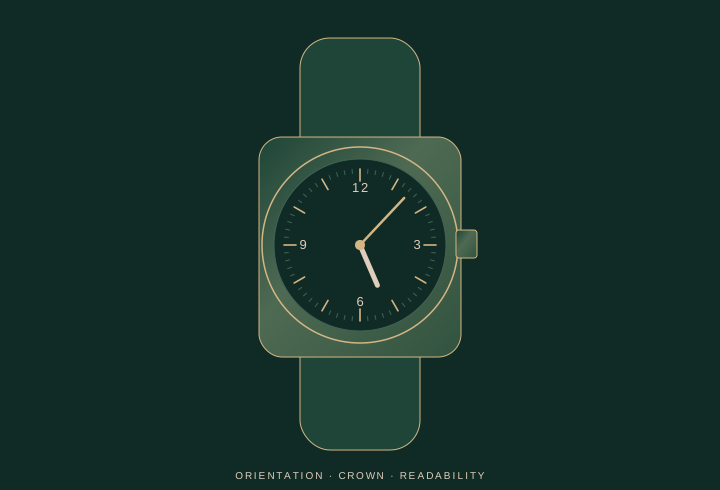
Put a round dial on a strap and the design problem is not finished. Which way should the numerals face? Where should the crown sit? How do the attachment points resist movement? Can a cuff pass over the case?
A watch worn on the wrist experiences exposure and knocks differently from one protected in a pocket. The case, glass and strap become part of the instrument’s usefulness. The interactive study below lets you change orientation, making a design decision visible rather than treating every early form as inevitable.
Sources for this section
- Smithsonian — Elgin Wristwatch
Women’s early use, wristwatch adoption, design and the uncertainty of precise origins.
War accelerates an existing practice
The First World War helped spread wristwatch use among men. It did not invent the idea of wearing a watch on the wrist. The Smithsonian’s 1917 Elgin example includes a protective metal grille over the glass, a detail that makes the concern with exposure easy to see in its collection record.
Avoid turning that one example into evidence for every soldier, army or front. Wartime need is one force in a wider history that also includes women’s watches, sport, travel and civilian fashion. Changes in habit rarely have only one cause.
Sources for this section
- Smithsonian — Elgin Wristwatch
Women’s early use, wristwatch adoption, design and the uncertainty of precise origins.
The inherited object and the new gesture
The earlier coach and pocket watches in this gallery are deliberate comparisons, not photographs of wartime wristwatches. Their protected cases and larger forms help explain what changes when the instrument moves onto the arm. Follow the Smithsonian link for the documented Elgin object.
The wristwatch eventually acquires distinctive visual languages: rectangular and round, discreet and highly legible, decorative and specialized. Our Santos and Calatrava journals examine selected examples. Neither journal stands for the whole transition. A broad history keeps different uses in view while allowing individual designs to receive close attention.
Sources for this section
- The Met — Traveling clock watch with alarm
Collection record and public-domain object photographs; object dating and attribution follow the museum, including qualifications.
- The Met — Pair-case watch
Collection record and public-domain object photographs; object dating and attribution follow the museum, including qualifications.
- Smithsonian — Elgin Wristwatch
Women’s early use, wristwatch adoption, design and the uncertainty of precise origins.
The user in motion
Design can be read through small frustrations: a hidden dial, an awkward crown or a vulnerable glass. The adoption of the wristwatch is partly a story about reducing those interruptions.
Look closer
These gallery objects establish the earlier carrying forms. Their captions keep that chronology explicit; the source record below supplies the wartime comparison.
Milestones
- Before 1900 — Bracelet and women’s wristwatches form part of the background.
- 1914–18 — Military use accelerates wider wristwatch adoption.
- 1917 — The Smithsonian’s Elgin wristwatch provides a documented wartime example.
A question to keep
What must change when an instrument is worn through an active day?
Interactive model: text alternative
Which way is up?
Early wristwatch designers experimented with dial orientation and crown position. Try turning the dial relative to its strap.
Practicality accelerates adoption
Military use helped expand wristwatch adoption during the First World War, alongside earlier civilian and women’s use.
A useful form becomes a signature
Explore our separate Santos and Calatrava journals for two design stories. These examples enrich the journey; they are not the whole history of wristwatches.
Original, unbranded design model. It is not a Cartier or Patek Philippe product rendering.
Archive records and image availability
Museum and archive records
Retained source records. The original images are unavailable here; use the linked collection record. The chapter diagram is an original conceptual illustration.





Chapter sources and reading notes
- Smithsonian — Elgin Wristwatch
Women’s early use, wristwatch adoption, design and the uncertainty of precise origins.
- The Met — Traveling clock watch with alarm
Collection record and public-domain object photographs; object dating and attribution follow the museum, including qualifications.
- The Met — Pair-case watch
Collection record and public-domain object photographs; object dating and attribution follow the museum, including qualifications.